







1 / 10 Questions
0 Points

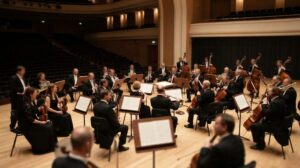
What instrument traditionally gives the tuning note A440 to orchestras?

Violin

Trumpet

Piano

Oboe

Points won
0
Correct score
0%

More Questions

More Articles

Top 10 Forgotten Artists You Should Know

Top 10 Forgotten Artists You Should Know

⏱️ 6 min read

Art history often spotlights the same celebrated names—Picasso, Van Gogh, Monet—while countless talented creators fade into obscurity despite their significant contributions. These overlooked artists challenged conventions, pioneered techniques, and created breathtaking works that deserve recognition alongside their more famous contemporaries. This exploration reveals ten remarkable artists whose legacies have been unjustly overshadowed by time, offering a fresh perspective on art history's hidden treasures.

Rediscovering Lost Masters

1. Hilma af Klint: The True Pioneer of Abstract Art

Swedish artist Hilma af Klint created abstract paintings years before Wassily Kandinsky, yet her work remained largely unknown until decades after her death. Between 1906 and 1915, she produced over 200 abstract works as part of her series "Paintings for the Temple," combining geometric shapes, botanical forms, and vibrant colors inspired by spiritual and mystical concepts. Af Klint stipulated that her work not be shown until 20 years after her death, as she believed the world wasn't ready for her radical vision. Today, scholars recognize her as a groundbreaking figure who challenged both artistic conventions and gender barriers in the early modernist movement.

2. Artemisia Gentileschi: Baroque Drama and Female Strength

Despite being one of the most accomplished painters of the Italian Baroque period, Artemisia Gentileschi struggled for recognition in a male-dominated field. Her powerful depictions of biblical heroines, particularly "Judith Slaying Holofernes," showcase dramatic intensity and technical mastery that rivals Caravaggio. Gentileschi was the first woman accepted into Florence's prestigious Accademia delle Arti del Disegno, yet her contributions were minimized or attributed to her father for centuries. Her work demonstrates extraordinary skill in chiaroscuro and portrays women as active, powerful agents rather than passive subjects.

3. Edmonia Lewis: Sculptural Excellence Across Continents

As the first professional African American and Native American sculptor, Edmonia Lewis achieved international acclaim during her lifetime before fading from historical memory. Working in Rome during the 1860s and 1870s, she created neoclassical marble sculptures that addressed themes of freedom, religion, and identity. Her masterpiece "The Death of Cleopatra," weighing over two tons, disappeared for decades before being rediscovered in a Chicago salvage yard. Lewis navigated extraordinary obstacles related to race and gender while producing technically sophisticated works that challenged prevailing narratives about who could participate in fine art.

4. Egon Schiele: Expressionist Intensity Beyond Klimt's Shadow

Though Gustav Klimt's student and protégé, Egon Schiele developed a raw, expressionist style that departed dramatically from his mentor's decorative approach. His contorted figures, psychological portraits, and unflinching examinations of human vulnerability created controversy during his brief life—he died at 28 during the 1918 flu pandemic. Schiele's angular lines and emotional intensity influenced generations of figurative artists, yet he remains less recognized than Klimt despite producing over 3,000 works. His deeply psychological approach to portraiture and the human form marked a significant evolution in expressionist art.

5. Suzanne Valadon: From Model to Master

Suzanne Valadon began her artistic career as a model for Renoir and Toulouse-Lautrec before becoming an accomplished painter herself. She was the first woman admitted to the Société Nationale des Beaux-Arts and created bold, honest depictions of female nudes that subverted the male gaze dominant in art history. Valadon's work features strong lines, vibrant colors, and unidealized portrayals of women's bodies, offering a female perspective rare in early 20th-century French art. Despite her technical skill and unique viewpoint, she remained overshadowed by the male Impressionists she once modeled for and her son, Maurice Utrillo, who became a celebrated artist.

6. Yves Klein: The Man Who Patented Blue

French artist Yves Klein pioneered performance art and monochromatic painting before his death at age 34. He developed International Klein Blue, a distinctive ultramarine pigment he patented, and created provocative performances including his "Anthropometry" series, where nude models covered in paint pressed their bodies onto canvas. Klein's conceptual approach and his exploration of the immaterial in art influenced minimalism, conceptual art, and performance art movements. Despite his revolutionary ideas about artistic authorship, materiality, and the gallery space, Klein remains less known than many artists he influenced.

7. Alice Neel: Portraits of Uncomfortable Truth

Alice Neel spent decades painting psychologically penetrating portraits in New York City while figurative painting fell out of fashion. Her unflinching depictions of neighbors, family members, and fellow artists captured vulnerability, strength, and humanity with remarkable honesty. Neel painted pregnant nudes, aging bodies, and people from marginalized communities, refusing to idealize her subjects. She didn't receive a major museum retrospective until she was in her seventies, yet her influence on contemporary figurative painting continues to grow as artists rediscover her compassionate yet unsparing approach to portraiture.

8. Joaquín Sorolla: Master of Mediterranean Light

Spanish painter Joaquín Sorolla captured sunlight and seaside life with extraordinary luminosity, yet he remains relatively unknown outside Spain despite achieving international success during his lifetime. His beach scenes featuring Valencian children, fishermen, and families demonstrate virtuoso handling of light, color, and movement. Sorolla completed over 2,200 paintings, including an ambitious series depicting regions of Spain for the Hispanic Society of America in New York. His impressionistic technique and ability to capture fleeting moments of brilliance rival any of his better-known contemporaries.

9. Kathe Kollwitz: Empathy Through Printmaking

German artist Käthe Kollwitz created powerful prints and sculptures depicting war, poverty, and human suffering with profound empathy. Her cycles "The Weavers" and "The Peasants' War" portrayed working-class struggles and social injustice with emotional depth and technical mastery. Kollwitz lost a son in World War I and a grandson in World War II, experiences that deepened the pathos in her work. Despite being the first woman elected to the Prussian Academy of Arts, her socially conscious art has been overshadowed by more abstract modernist movements, though her influence on socially engaged art remains significant.

10. Amrita Sher-Gil: India's Frida Kahlo

Amrita Sher-Gil fused European modernist techniques with Indian artistic traditions, creating a distinctive style that portrayed Indian life with dignity and depth. Often called India's Frida Kahlo, she died tragically at 28, leaving behind approximately 173 paintings that challenged colonial representations of India. Her work features bold colors, simplified forms, and empathetic portrayals of everyday Indian people, particularly women. Sher-Gil's paintings combine the influence of Paul Gauguin with Indian miniature painting traditions, creating a unique synthesis that anticipated postcolonial artistic movements.

The Importance of Remembering

These ten artists represent just a fraction of talented creators overlooked by mainstream art history. Their obscurity often results from systemic biases related to gender, race, nationality, or simply the capriciousness of historical memory. By rediscovering these forgotten masters, we gain a richer, more inclusive understanding of artistic innovation and human creativity. Their works challenge us to question whose stories get told and whose contributions receive recognition, reminding us that artistic genius has never been limited to the famous few celebrated in textbooks. Each of these artists pushed boundaries, developed distinctive voices, and created works of lasting significance that deserve renewed appreciation and study.

10 Facts About the First World War You Didn’t Know

10 Facts About the First World War You Didn’t Know

⏱️ 7 min read

The First World War transformed the world in ways that continue to resonate over a century later. While most people are familiar with the trenches, the assassination of Archduke Franz Ferdinand, and the major battles, the conflict contains numerous lesser-known aspects that reveal its complexity and human dimension. These surprising facts illuminate the war's technological innovations, unusual participants, unexpected consequences, and the remarkable stories that emerged from one of history's most devastating conflicts.

Fascinating Lesser-Known Aspects of WWI

1. Animals Received Military Honors and Medals

During the First World War, animals played crucial combat roles that extended far beyond horses carrying cavalry charges. Pigeons delivered vital messages when radio communications failed, with one bird named Cher Ami saving nearly 200 American soldiers by successfully delivering a message despite being shot through the chest. Dogs detected enemy soldiers, laid telegraph wires, and located wounded men in no-man's land. The British military formally recognized these contributions by awarding the Dickin Medal to animals displaying conspicuous gallantry. Remarkably, a Canadian black bear named Winnipeg became the mascot of a regiment and later inspired A.A. Milne's Winnie-the-Pooh character after the author's son met the bear at the London Zoo.

2. Plastic Surgery Advanced Dramatically Due to Facial Injuries

The horrific nature of trench warfare, particularly the prevalence of shrapnel and high-explosive shells, created unprecedented numbers of facial injuries. Surgeon Harold Gillies pioneered modern reconstructive surgery at the Queen's Hospital in Sidcup, England, treating over 11,000 patients. He developed innovative techniques including skin grafts, facial prosthetics, and reconstructive procedures that formed the foundation of modern plastic surgery. The work was so groundbreaking that surgeons from around the world traveled to observe these techniques, which would later benefit civilian medicine for decades to come.

3. British Tanks Were Divided Into "Male" and "Female" Categories

When Britain introduced tanks to the battlefield in 1916, they classified them by gender based on their armament. "Male" tanks carried heavier weapons including cannons and were designed to destroy enemy fortifications and other tanks. "Female" tanks were equipped with machine guns and served to protect the male tanks from infantry attacks. This peculiar naming convention reflected the era's social attitudes while also serving as practical military terminology. The first tank crews faced tremendous danger, with temperatures inside reaching up to 120 degrees Fahrenheit and carbon monoxide poisoning being a constant threat.

4. German U-Boats Operated Off the American Coast

Most people associate German submarine warfare with the Atlantic shipping lanes near Britain, but U-boats conducted extensive operations along the American coastline. Between 1917 and 1918, German submarines sank dozens of ships within sight of the eastern seaboard, from Nova Scotia to Florida. The U-151 even laid mines outside major American harbors. These attacks created panic among coastal communities, with beaches closed and blackouts imposed. The campaign demonstrated the global reach of the conflict and Germany's willingness to bring warfare directly to American waters.

5. Christmas Truces Occurred Despite Official Prohibitions

The famous Christmas Truce of 1914 is well-documented, but similar unofficial ceasefires occurred throughout the war despite military authorities explicitly forbidding them. Soldiers across various fronts arranged temporary truces to bury their dead, exchange supplies, or simply experience a moment of humanity. Some units developed complex "live and let live" systems where both sides tacitly agreed not to fire during meal times or other predictable moments. These grassroots peace efforts revealed the common humanity shared by soldiers on opposing sides, even as their governments demanded total war.

6. The War Introduced Daylight Saving Time

Germany implemented the first nationwide daylight saving time on April 30, 1916, to conserve coal for the war effort. Britain and other Allied nations quickly followed suit. The logic was that extending daylight hours would reduce the need for artificial lighting and save fuel for military purposes. While the concept had been proposed earlier by various individuals, it took the desperate circumstances of total war to convince governments to implement such a dramatic change to civilian life. Many countries abandoned the practice after the war, only to reinstate it during World War II and eventually make it permanent.

7. Tsar Nicholas II and King George V Were Nearly Identical Cousins

The British and Russian monarchs were first cousins who bore such a striking physical resemblance that they could be mistaken for twins. Their mothers were sisters, and both men sported similar beards and military uniforms. This familial connection made the war particularly tragic, as relatives found themselves on opposing sides of the conflict. When the Russian Revolution overthrew Nicholas in 1917, George V controversially refused to grant his cousin asylum in Britain, partly due to political pressure. Nicholas and his entire family were subsequently executed by the Bolsheviks in 1918, a decision that reportedly haunted George for the rest of his life.

8. Soldiers Developed an Elaborate Trench Language

The unique conditions of trench warfare spawned an entire vocabulary that mixed English, French, German, and invented terms. "Napoo" (from the French "il n'y en a plus" meaning "there is no more") meant something was finished or destroyed. "Wipers" was the British pronunciation of Ypres. "Jack Johnson" referred to German shells, named after the African American heavyweight boxing champion because of the black smoke they produced. This linguistic creativity provided psychological relief and built group identity among soldiers facing unimaginable stress. Many terms disappeared after the war, though some entered general usage.

9. A Football Matched Helped End the War in East Africa

The East African campaign continued even after the armistice in Europe. German commander Paul von Lettow-Vorbeck led a brilliant guerrilla campaign that only ended when he was finally informed of Germany's surrender weeks after the European conflict ceased. In a bizarre twist, British and German officers in East Africa had previously played football matches during the campaign, maintaining sporting relations even while conducting military operations. Von Lettow-Vorbeck returned to Germany as a hero, having never been defeated in battle, and his African askari troops remained loyal throughout the campaign.

10. The Youngest Known Soldier Was Only Twelve Years Old

Sidney Lewis enlisted in the British Army in 1915 at the age of twelve, lying about his age to join up. He fought at the Battle of the Somme in 1916 before his true age was discovered and he was sent home. While Lewis survived, he was far from alone—thousands of underage boys served in various armies, driven by patriotism, economic necessity, or the desire for adventure. Many recruiting officers turned a blind eye to obviously underage volunteers. The practice highlighted both the desperation of nations seeking manpower and the tragedy of childhood cut short by war.

Conclusion

These ten facts reveal dimensions of the First World War that challenge conventional understanding of the conflict. From medical advances and technological innovations to unusual combatants and unexpected human connections, the war's complexity extended far beyond the trenches and major battles. The conflict's legacy includes not just political boundaries and military lessons, but also advances in surgery, changes to civilian timekeeping, and countless personal stories of courage, tragedy, and resilience. Understanding these lesser-known aspects provides a more complete picture of how the Great War shaped the modern world and affected millions of lives in ways both profound and unexpected. The human dimension of the conflict—whether expressed through the loyalty of animals, the creativity of trench slang, or the terrible cost paid by child soldiers—reminds us that behind the statistics of warfare lie individual stories of remarkable complexity.