









1 / 10 Questions
0 Points

Which Sweet Kitchen Staple Has Been Found Edible After 3,000 Years?

Olive Oil

Salt

Honey

Vinegar

Points won
0
Correct score
0%

More Questions

More Articles

Did You Know? 15 Historical Events That Happened by Accident

Did You Know? 15 Historical Events That Happened by Accident

⏱️ 6 min read

Throughout history, some of the most significant discoveries, inventions, and world-changing events occurred not through meticulous planning, but through pure happenstance. These accidental moments have shaped civilizations, advanced science, and altered the course of human progress in ways their originators never intended. From medical breakthroughs to cultural phenomena, the following remarkable events demonstrate that sometimes the best outcomes emerge from the most unexpected circumstances.

Serendipitous Moments That Changed the World

1. The Discovery of Penicillin

In 1928, Scottish bacteriologist Alexander Fleming returned from vacation to find that a petri dish containing Staphylococcus bacteria had been contaminated by mold. Rather than discarding the ruined experiment, Fleming noticed that the bacteria surrounding the mold had been killed. This accidental observation led to the discovery of penicillin, the world's first true antibiotic, which has since saved countless millions of lives and revolutionized modern medicine.

2. The Invention of the Microwave Oven

Percy Spencer, an engineer working for Raytheon in 1945, was conducting radar-related research involving magnetrons when he noticed that a chocolate bar in his pocket had melted. Intrigued by this phenomenon, he experimented with other foods, including popcorn kernels and an egg. His accidental discovery led to the development of the microwave oven, which would eventually become a staple in kitchens worldwide, fundamentally changing how people prepare and consume food.

3. Christopher Columbus Landing in the Americas

When Columbus set sail in 1492, he was attempting to find a western route to Asia for trade purposes. He never intended to discover a "New World" and, in fact, died believing he had reached the East Indies. This navigational miscalculation became one of history's most consequential accidents, leading to European colonization of the Americas and permanently altering the global balance of power, culture, and demographics.

4. The Creation of Coca-Cola

Pharmacist John Pemberton originally created Coca-Cola in 1886 as a medicinal tonic intended to cure headaches and nervous disorders. The carbonated version emerged accidentally when a customer at Jacob's Pharmacy in Atlanta requested that the syrup be mixed with carbonated water instead of plain water. This serendipitous modification transformed a pharmaceutical product into one of the world's most recognizable beverages.

5. The Fall of the Berlin Wall

On November 9, 1989, East German official Günter Schabowski accidentally announced during a press conference that travel restrictions would be lifted "immediately, without delay," when in fact the new policy was meant to be implemented in a controlled manner at a later date. Thousands of East Berliners rushed to the wall, and overwhelmed guards opened the gates. This miscommunication precipitated the wall's destruction and accelerated the reunification of Germany.

6. The Discovery of X-Rays

German physicist Wilhelm Röntgen stumbled upon X-rays in 1895 while experimenting with cathode rays. He noticed that a fluorescent screen in his laboratory began to glow even though it was shielded from direct light. This accidental observation led him to discover a new form of electromagnetic radiation, revolutionizing medical diagnostics and earning him the first Nobel Prize in Physics in 1901.

7. Champagne's Effervescence

The sparkling quality of champagne was initially considered a wine-making fault. In the Champagne region of France, cold winters would halt fermentation, only for it to restart when temperatures rose, creating unwanted bubbles in bottles. Wine makers spent years trying to prevent this "problem" before eventually embracing the effervescence that would make champagne one of the world's most celebrated beverages and a symbol of luxury.

8. The Post-it Note Innovation

In 1968, Dr. Spencer Silver, a scientist at 3M, was attempting to create a super-strong adhesive but instead developed a weak, reusable one. The invention sat unused for years until colleague Art Fry realized it could solve his problem of bookmarks falling out of his hymnal. This accidental "failure" became one of the most successful office products in history, generating billions in revenue.

9. Vulcanized Rubber's Development

Charles Goodyear spent years trying to make rubber more durable and weather-resistant. In 1839, he accidentally dropped a mixture of rubber and sulfur onto a hot stove. Instead of melting, the rubber charred like leather, maintaining its elasticity. This accident led to the vulcanization process, which made rubber practical for industrial use and paved the way for the tire industry.

10. The Great Fire of London's Urban Renewal

While the Great Fire of 1666 was itself an accident—starting in a bakery on Pudding Lane—its aftermath accidentally revolutionized urban planning. The destruction of medieval London forced a rebuilding effort that incorporated wider streets, better sanitation, and fire-resistant materials. This catastrophic accident inadvertently modernized the city and influenced urban design principles used worldwide.

11. Potato Chips' Culinary Birth

In 1853, chef George Crum at Moon's Lake House in Saratoga Springs, New York, became frustrated with a customer who repeatedly complained that his fried potatoes were too thick. In irritation, Crum sliced potatoes paper-thin, fried them until crispy, and heavily salted them. The customer loved them, and the accidental creation of potato chips launched an industry worth billions today.

12. Teflon's Non-Stick Properties

Chemist Roy Plunkett was working with refrigerant gases at DuPont in 1938 when he discovered that one of his pressurized containers had mysteriously solidified into a slippery, waxy substance. This accidental polymerization created polytetrafluoroethylene (PTFE), better known as Teflon. The material's non-stick properties would later revolutionize cookware and find applications in aerospace, medicine, and countless other industries.

13. Saccharin's Sweet Discovery

In 1879, chemist Constantin Fahlberg was working with coal tar derivatives at Johns Hopkins University when he noticed an unusually sweet taste on his hands during dinner. Realizing he hadn't washed after work, he traced the sweetness back to a compound he had synthesized earlier that day. This accidental taste test led to the discovery of saccharin, the first artificial sweetener, fundamentally changing the food and beverage industry.

14. Plastic's Unexpected Invention

Belgian chemist Leo Baekeland was attempting to create a synthetic substitute for shellac in 1907 when his experiment produced an unexpected hard, moldable material that wouldn't dissolve or melt. This accident resulted in Bakelite, the first fully synthetic plastic. His serendipitous discovery launched the plastics industry and initiated the modern age of synthetic materials that now pervade every aspect of daily life.

15. The Slinky's Playful Beginning

Naval engineer Richard James was working in 1943 to develop springs that could stabilize sensitive equipment on ships when he accidentally knocked one off a shelf. Instead of simply falling, the spring "walked" down in an arc. Recognizing the toy potential, James refined the design, and the Slinky became one of the most beloved toys in history, selling over 300 million units worldwide.

The Unpredictable Nature of Progress

These fifteen accidental discoveries and events illustrate a profound truth about human progress: innovation often emerges from unexpected sources. While intention, planning, and hard work remain crucial to advancement, remaining open to serendipity and recognizing opportunity in mistakes can lead to breakthroughs that deliberate effort might never achieve. From life-saving medicines to beloved snacks, from political transformations to technological revolutions, accidents have repeatedly proven to be catalysts for change. These stories remind us that failure, mistakes, and unexpected outcomes deserve closer examination rather than immediate dismissal, as they may hold the seeds of the next great discovery that shapes our world.
18 Fascinating Facts About Africa

18 Fascinating Facts About Africa

⏱️ 6 min read

Africa, the world's second-largest continent, is a land of extraordinary diversity, ancient history, and remarkable natural wonders. From its unique geography to its incredible wildlife and rich cultural heritage, this vast continent continues to captivate researchers, travelers, and geography enthusiasts alike. The following facts reveal the complexity and magnificence of this often-misunderstood landmass.

Geographic Wonders and Physical Features

1. A Continent Large Enough to Contain Multiple Nations

Africa's immense size often surprises people due to the distortions of traditional map projections. With an area of approximately 30.37 million square kilometers, Africa can fit the entire United States, China, India, Japan, and most of Europe combined within its borders. This massive continent covers about 20% of Earth's total land area and 6% of its total surface area.

2. The World's Longest River System

The Nile River, stretching approximately 6,650 kilometers through northeastern Africa, holds the title as the world's longest river. Flowing through eleven countries including Uganda, Sudan, and Egypt, the Nile has been the lifeblood of civilizations for millennia. Its annual flooding patterns historically enabled agricultural development in otherwise arid regions, supporting one of humanity's earliest advanced civilizations.

3. Home to the Largest Hot Desert

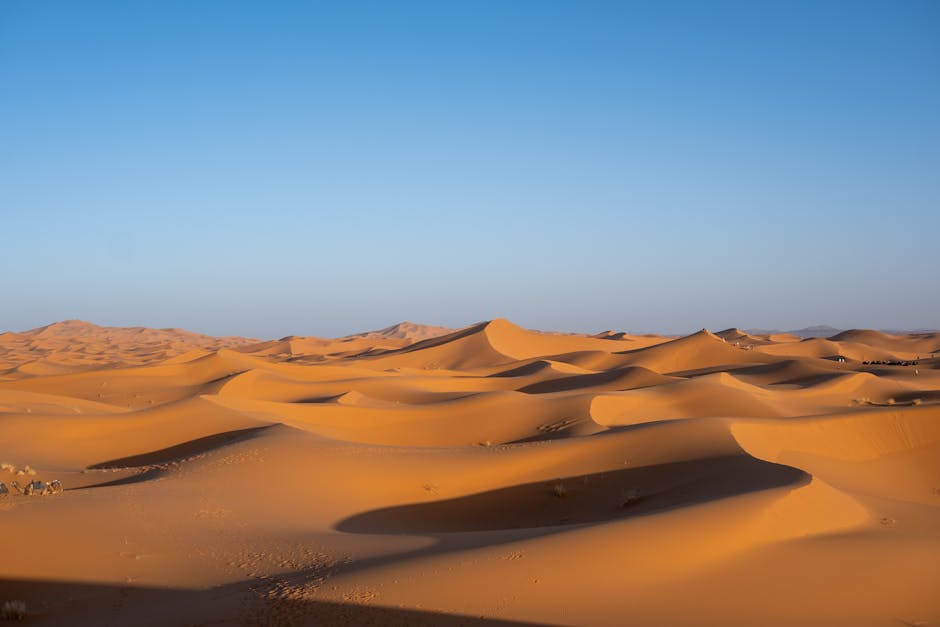
The Sahara Desert spans an astounding 9 million square kilometers, making it the world's largest hot desert. This vast expanse covers much of North Africa and is approximately the same size as the entire United States. Despite its harsh conditions, the Sahara supports diverse ecosystems and has served as an important trade route for thousands of years.

4. The Great Rift Valley's Geological Significance

Africa's Great Rift Valley stretches over 6,000 kilometers from Syria to Mozambique, representing one of Earth's most dramatic geological features. This massive trench, formed by tectonic plate movements, is slowly splitting the African continent apart. The valley contains some of Africa's deepest lakes and highest mountains, and is considered the "Cradle of Humankind" due to the numerous early human fossils discovered there.

Biodiversity and Natural Resources

5. Unparalleled Wildlife Diversity

Africa hosts more than 1,100 mammal species and over 2,600 bird species, representing the most diverse megafauna population on Earth. The continent is home to the "Big Five" game animals—lions, leopards, rhinoceros, elephants, and Cape buffalo—as well as countless other species found nowhere else on the planet. This biodiversity makes Africa crucial for global conservation efforts.

6. The Second-Largest Tropical Rainforest

The Congo Basin contains the world's second-largest tropical rainforest, covering approximately 3.7 million square kilometers across six countries. This vital ecosystem absorbs massive amounts of carbon dioxide and produces significant oxygen, earning it the nickname "the planet's second lung" after the Amazon. The forest harbors thousands of plant species and wildlife, including endangered mountain gorillas and forest elephants.

7. Concentration of Precious Mineral Resources

Africa possesses extraordinary mineral wealth, containing approximately 30% of the world's mineral reserves. The continent produces significant portions of global gold, diamonds, platinum, cobalt, and chromium. South Africa, the Democratic Republic of Congo, and Botswana are particularly rich in these valuable resources, which play crucial roles in modern technology and industry.

Cultural and Demographic Distinctions

8. A Linguistic Treasure Trove

Africa is home to an estimated 2,000 to 3,000 distinct languages, representing approximately one-third of the world's languages. This linguistic diversity reflects the continent's complex cultural tapestry, with major language families including Afro-Asiatic, Nilo-Saharan, Niger-Congo, and Khoisan. Each language carries unique cultural knowledge, traditions, and ways of understanding the world.

9. The Youngest Continental Population

Africa has the world's youngest population, with a median age of approximately 19 years compared to the global median of 30 years. With over 1.3 billion people, the continent's population is projected to double by 2050, making it increasingly important in global demographics and economics. This youthful demographic presents both opportunities and challenges for development.

10. Cradle of Human Civilization

Scientific evidence overwhelmingly indicates that modern humans originated in Africa approximately 300,000 years ago. Archaeological discoveries in Ethiopia, Kenya, and South Africa have provided fossil evidence of early human ancestors and the development of stone tools, art, and complex societies. This makes Africa the birthplace of humanity itself.

Unique Climate and Environmental Features

11. Extreme Temperature Variations

Africa experiences some of Earth's most extreme temperature ranges, from the scorching 58°C recorded in Libya's desert regions to below-freezing temperatures atop mountains like Kilimanjaro. The continent spans multiple climate zones, including tropical, subtropical, arid, and semi-arid regions, creating dramatically different environmental conditions across relatively short distances.

12. Victoria Falls' Thundering Spectacle

Victoria Falls, located on the border between Zambia and Zimbabwe, ranks among the world's most spectacular waterfalls. During peak flow, over 500 million liters of water per minute cascade over its 108-meter height and 1,708-meter width. The local name, "Mosi-oa-Tunya" or "The Smoke That Thunders," perfectly describes the massive spray visible from kilometers away.

Political and Historical Significance

13. Continental Nation Count

Africa comprises 54 recognized sovereign nations, making it the continent with the second-highest number of countries after Asia. This political division largely resulted from colonial-era boundary drawing, which often ignored traditional ethnic and cultural territories. The diversity of governmental systems, from democracies to monarchies, reflects the continent's complex political landscape.

14. Ancient Egyptian Achievements

Ancient Egypt, one of history's most influential civilizations, developed along the Nile River over 5,000 years ago. Egyptians pioneered advances in mathematics, medicine, architecture, and agriculture that influenced subsequent civilizations worldwide. The pyramids at Giza, built as tombs for pharaohs, remain among humanity's most impressive architectural accomplishments.

Modern Developments and Distinctions

15. Rapid Urban Expansion

Africa is experiencing the world's fastest urbanization rate, with cities growing at unprecedented speeds. Lagos, Nigeria, has transformed from a small town to one of the world's largest cities with over 14 million residents. This urban growth presents both opportunities for economic development and challenges for infrastructure and services.

16. Mobile Technology Revolution

Africa has become a global leader in mobile banking and technology innovation, leapfrogging traditional banking infrastructure. Services like Kenya's M-Pesa have revolutionized financial access for millions without bank accounts. This technological advancement demonstrates Africa's capacity for innovative solutions to unique challenges.

17. The Serengeti Migration Phenomenon

The Serengeti ecosystem hosts the world's largest terrestrial mammal migration, with over 1.5 million wildebeest, 200,000 zebras, and numerous other animals traveling in a circular route exceeding 800 kilometers annually. This spectacular natural event, driven by seasonal rainfall patterns, represents one of nature's most impressive displays of wildlife behavior and ecosystem interaction.

18. Island Nations and Territories

Africa includes six island nations—Madagascar, Mauritius, Seychelles, Comoros, Cape Verde, and São Tomé and Príncipe—each with unique ecosystems and cultures. Madagascar, the world's fourth-largest island, is particularly notable for its biodiversity, with approximately 90% of its wildlife found nowhere else on Earth, including all lemur species.

Conclusion

These eighteen facts merely scratch the surface of Africa's complexity and significance. From its role as humanity's birthplace to its position as a rapidly developing region shaping the 21st century, Africa defies simple characterization. The continent's geographic diversity, natural resources, cultural richness, and growing influence make it essential to understanding our planet's past, present, and future. As Africa continues to evolve and assert its place in the global community, appreciating these fundamental facts becomes increasingly important for anyone seeking to understand our interconnected world.