










1 / 10 Questions
0 Points

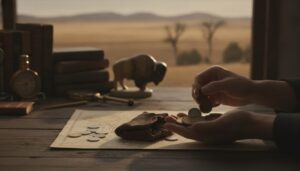
Which American Coin Once Featured A Real Buffalo?

Quarter

Half dollar

Buffalo nickel

Silver dollar

Points won
0
Correct score
0%

More Questions

More Articles

Top 10 Animals That Changed Human History

Top 10 Animals That Changed Human History

⏱️ 6 min read

Throughout history, certain animals have profoundly shaped human civilization, influencing everything from agriculture and transportation to warfare and scientific breakthroughs. These creatures have been instrumental in humanity's development, serving as partners in labor, sources of sustenance, and catalysts for societal transformation. Their impact extends far beyond their biological roles, fundamentally altering the trajectory of human progress across millennia.

Animals That Transformed Civilization

1. Horses: The Engine of Ancient Empires

The domestication of horses around 4000 BCE revolutionized human society in ways few other animals could match. Horses provided unprecedented mobility, transforming warfare, trade, and communication across vast distances. The Mongol Empire, which became the largest contiguous land empire in history, owed its expansion largely to superior horsemanship. Horses enabled the Silk Road trade networks, connected distant civilizations, and powered agricultural development through plowing. Their influence persisted well into the 20th century, and even today, measurements of engine power are calibrated in "horsepower," a testament to their enduring legacy.

2. Cattle: Foundation of Agricultural Societies

Cattle domestication approximately 10,000 years ago marked a pivotal turning point in human civilization. These animals provided multiple resources: meat, milk, leather, and bone, but their most transformative contribution was as draft animals. Oxen pulled plows that enabled large-scale agriculture, allowing human populations to settle permanently and grow exponentially. The surplus food production made possible by cattle-powered farming led to urbanization, specialized labor, and the emergence of complex societies. In many cultures, cattle became symbols of wealth and status, fundamentally shaping economic systems that persist today.

3. Dogs: Humanity's First Domesticated Companion

Dogs hold the distinction of being the first animals domesticated by humans, with evidence suggesting this relationship began between 15,000 and 40,000 years ago. This partnership profoundly affected human survival and development. Dogs assisted in hunting, provided protection from predators and enemies, and helped herd other domesticated animals. Their acute senses extended human capabilities, while their loyalty created a unique interspecies bond. Dogs enabled more efficient hunting strategies, contributed to the success of agricultural societies through herding, and continue to serve humanity in roles ranging from service animals to search and rescue operations.

4. Silkworms: Weavers of International Commerce

The humble silkworm (Bombyx mori) created one of history's most valuable commodities and inspired the world's most famous trade route. Chinese cultivation of silkworms for silk production, dating back to around 3000 BCE, remained a closely guarded secret for millennia. The desire for silk drove the establishment of the Silk Road, facilitating not just trade but cultural exchange, technological transfer, and diplomatic relations between East and West. This single insect species influenced global economics, fashion, and international relations for thousands of years, demonstrating how even small creatures can have outsized historical impacts.

5. Rats: Unwitting Agents of Pandemic

While not domesticated partners, rats dramatically altered human history through their role in spreading the bubonic plague. The Black Death of the 14th century, transmitted by fleas living on black rats, killed an estimated 75-200 million people in Eurasia, eliminating up to 60% of Europe's population. This catastrophic event reshaped European society, ending feudalism, creating labor shortages that improved conditions for surviving workers, and accelerating technological innovation. The plague also influenced art, religion, and philosophy, making rats inadvertent architects of the transition from medieval to modern Europe.

6. Chickens: Democratizing Protein Production

Domesticated from wild jungle fowl in Southeast Asia around 8,000 years ago, chickens have become humanity's most numerous domesticated animal, with over 25 billion alive today. Chickens provided accessible protein through both meat and eggs, requiring minimal space and resources compared to larger livestock. This made protein available to common people, not just the wealthy elite. Their efficiency in converting feed to food has made them central to addressing global food security challenges. Additionally, chickens played important roles in cultural and religious practices across civilizations, from ancient Rome to modern times.

7. Camels: Ships of the Desert

Camels enabled human habitation and commerce in some of Earth's harshest environments. Domesticated around 3,000 BCE, these remarkable animals can survive weeks without water and traverse desert terrain impossible for horses or oxen. Camels made the Arabian trade routes viable, connecting Africa, Asia, and the Middle East. They were essential to the spread of Islam across North Africa and facilitated the trans-Saharan gold and salt trade that enriched medieval African kingdoms. Without camels, vast desert regions would have remained barriers rather than bridges between civilizations, fundamentally altering the development of multiple continents.

8. Honeybees: Pollinators of Civilization

Honeybees have shaped human history through both honey production and pollination services. Ancient Egyptians practiced beekeeping as early as 2400 BCE, and honey was the primary sweetener for most civilizations until sugar became widely available. Beyond honey, beeswax provided light through candles and materials for art and writing tablets. More critically, bee pollination enables approximately one-third of the food crops humans consume. Their role in agriculture cannot be overstated—without bees, human food systems would collapse. Modern concerns about colony collapse disorder highlight how dependent civilization remains on these industrious insects.

9. Sheep: Clothiers of Ancient Peoples

Sheep domestication around 10,000 years ago provided humanity with a renewable source of warm clothing through wool, transforming human ability to inhabit cold climates. Unlike leather, wool could be harvested repeatedly without killing the animal, making it economically sustainable. Sheep also provided meat, milk, and parchment for writing. The wool trade became a major economic force in medieval Europe, enriching entire regions and cities. The textile industry built on sheep wool drove early industrialization, making sheep indirect contributors to the Industrial Revolution that reshaped modern society.

10. Pigeons: Messengers Before Telecommunications

Pigeons, specifically homing pigeons, served as humanity's most reliable long-distance communication method for thousands of years. Ancient Egyptians, Persians, and Romans used pigeons to carry messages across vast distances. Their ability to return home from unfamiliar locations at speeds up to 60 miles per hour made them invaluable for military communications, news dissemination, and financial information transfer. During both World Wars, pigeons saved countless lives by delivering crucial messages when other communication methods failed. Reuters news agency was built on a pigeon-based information network, demonstrating these birds' impact on modern journalism and financial markets.

The Continuing Partnership

These ten animals represent only a fraction of the species that have shaped human destiny, yet their collective impact is immeasurable. From enabling agricultural revolutions to facilitating global trade networks, from serving as engines of war to providing sustenance and labor, these creatures have been indispensable partners in humanity's journey. Understanding their historical roles reminds us that human progress has never been a solitary endeavor but rather a collaboration with the natural world. As we face modern challenges, recognizing this interdependence becomes ever more crucial for ensuring a sustainable future for both humanity and the animals upon which we continue to depend.

Did You Know? 12 Amazing Facts About Michelangelo

Did You Know? 12 Amazing Facts About Michelangelo

⏱️ 8 min read

Michelangelo Buonarroti stands as one of the most influential artists in Western civilization, yet many fascinating details about his life and work remain unknown to even devoted art enthusiasts. From his unconventional working methods to his hidden talents and quirky personality traits, the Renaissance master was far more complex than his famous sculptures and frescoes suggest. These remarkable facts reveal the human side of genius and demonstrate why his legacy continues to captivate audiences more than five centuries after his birth.

Extraordinary Details About the Renaissance Master

1. He Rarely Bathed and Slept in His Clothes

Michelangelo was notorious for his poor hygiene habits. According to his contemporary and biographer Ascanio Condivi, the artist was so consumed by his work that he often slept in his clothes and boots, sometimes for weeks at a time. When he finally removed his boots, his skin would peel off with them. He considered bathing a waste of precious time that could be spent creating art. This obsessive dedication to his craft, while contributing to his productivity, likely made him an unpleasant companion and may have contributed to various health problems throughout his life.

2. The Sistine Chapel Ceiling Was Painted Standing Up, Not Lying Down

Contrary to popular belief and numerous artistic depictions, Michelangelo did not paint the Sistine Chapel ceiling while lying on his back. He designed a special scaffolding system that allowed him to stand while working, though he had to bend backward at an uncomfortable angle. He documented this experience in a humorous poem accompanied by a sketch showing himself painting with his head tilted back, complaining about paint dripping onto his face. The four years spent in this awkward position caused him lasting physical problems, including chronic neck and back pain that plagued him for the rest of his life.

3. His Masterpiece David Has Disproportionate Features

While David is celebrated as the epitome of Renaissance sculpture, Michelangelo intentionally gave the statue exaggerated proportions. The head and hands are notably oversized compared to the rest of the body. This wasn't an error but a calculated artistic decision. The sculpture was originally designed to be displayed on the roofline of Florence Cathedral, where it would be viewed from below. The disproportionate features would have appeared correct from that perspective. When city officials decided to place David in the public square instead, the distortions became apparent, yet the sculpture's power and beauty transcended these intentional imperfections.

4. He Was an Accomplished Poet

Beyond his visual artistry, Michelangelo wrote nearly 300 poems throughout his lifetime, including sonnets and madrigals. His poetry often explored themes of love, faith, mortality, and the nature of artistic creation. Many of his poems were addressed to Vittoria Colonna, a noblewoman and poet with whom he shared a deep platonic friendship in his later years, and to Tommaso dei Cavalieri, a young Roman nobleman. His verses reveal a sensitive, introspective side that contrasts sharply with his reputation for being difficult and temperamental. Several of his poems were set to music by Renaissance composers, and they continue to be studied for their literary merit.

5. The Sistine Chapel Ceiling Almost Wasn't His Project

Michelangelo initially resisted Pope Julius II's commission to paint the Sistine Chapel ceiling, insisting he was a sculptor, not a painter. He suspected that rival architect Bramante had suggested him for the project as a setup for failure, knowing Michelangelo had limited fresco experience. The artist even fled Rome to avoid the commission. Eventually persuaded to return, he negotiated to expand the project from depicting only the twelve apostles to the complex theological narrative we see today. This reluctant project became his most famous work, proving that sometimes our greatest achievements come from stepping outside our comfort zones.

6. He Forged an Antique Sculpture Early in His Career

As a young artist seeking to establish his reputation, Michelangelo carved a sculpture of a sleeping Cupid and artificially aged it to appear as an ancient Roman work. He sold it to Cardinal Riario through an intermediary. When the cardinal discovered the deception, rather than being angry, he was impressed by the young artist's skill. This incident actually launched Michelangelo's career in Rome, as the cardinal invited him to the city and introduced him to influential patrons. The forgery demonstrated not only his technical mastery but also his deep understanding of classical sculpture at just twenty-one years old.

7. He Never Married and May Have Been Gay

Michelangelo never married and left no children, which was unusual for men of his social standing during the Renaissance. Historical evidence, including his passionate poetry and letters to male companions, particularly Tommaso dei Cavalieri and Gherardo Perini, has led many scholars to conclude he was homosexual or bisexual. His devotion to Cavalieri lasted decades, and he wrote some of his most passionate sonnets to the young nobleman. During an era when same-sex relationships were officially condemned but often tolerated in artistic circles, Michelangelo expressed his feelings through the socially acceptable medium of Neoplatonic love poetry.

8. He Lived to the Remarkable Age of 88

In an era when the average life expectancy was around 40 years, Michelangelo lived to be 88 years old, remaining productive almost until his death in 1564. He worked on the Rondanini Pietà just days before he died. His longevity was exceptional for the Renaissance period, especially considering his poor hygiene, physical strain from his work, and the various health complaints documented throughout his life. He attributed his long life to his abstemious habits—he ate simply and sparingly, drank wine moderately, and maintained a rigorous work schedule that kept both his mind and body active.

9. Hidden Drawings Were Discovered Under the Medici Chapel

In 1975, the director of the Medici Chapel museum discovered a hidden room beneath the chapel containing charcoal drawings on the walls. Evidence suggests Michelangelo created these sketches while hiding in this secret chamber for three months in 1530, after the Medici family regained control of Florence. As a supporter of the Republican government, Michelangelo feared for his life. The drawings include studies for some of his famous works and demonstrate how even in fear and isolation, he continued to practice his craft. These sketches provide invaluable insight into his creative process and working methods.

10. His Nose Was Permanently Disfigured in a Fight

As a young man, Michelangelo got into an argument with fellow sculptor Pietro Torrigiano, who punched him in the nose, permanently disfiguring his face. Torrigiano later described the incident with pride, claiming he felt the bone and cartilage crush under his fist. The broken nose became one of Michelangelo's most distinctive features, visible in portraits throughout his life. This injury may have contributed to his reputation for being irritable and difficult, and it certainly affected his self-image during an era that prized classical beauty and physical perfection.

11. The Sistine Chapel Frescoes Were Nearly Destroyed by Mold

Shortly after completing sections of the Sistine Chapel ceiling, Michelangelo discovered mold growing on the fresh frescoes. Distraught, he informed the Pope that he had warned everyone he wasn't a painter and that the project was doomed to failure. However, the problem was eventually identified as excessive moisture in the plaster mixture. Once the technical issue was corrected, Michelangelo continued, and the frescoes have survived for over 500 years, though they required extensive cleaning and restoration in the 1980s and 1990s to remove centuries of accumulated grime and previous restoration attempts.

12. His Body Was Secretly Smuggled Out of Rome

When Michelangelo died in Rome in 1564, Pope Pius IV wanted him buried in St. Peter's Basilica. However, Michelangelo had expressed a wish to be buried in Florence, his beloved hometown. His nephew Leonardo arranged for the body to be secretly smuggled out of Rome in a hay bale to avoid papal authorities. When the body arrived in Florence, it was said to be remarkably well-preserved. The city gave him an elaborate state funeral, and he was buried in the Basilica of Santa Croce, where his tomb, designed by Giorgio Vasari, can be visited today.

The Enduring Legacy of a Complex Genius

These twelve facts illuminate the remarkable life of Michelangelo Buonarroti, revealing him as far more than the sum of his artistic achievements. From his obsessive work habits and personal relationships to his hidden talents and the dramatic circumstances surrounding his greatest works, Michelangelo emerges as a fully human figure—brilliant yet flawed, confident yet insecure, passionate yet disciplined. His willingness to take on projects outside his expertise, his dedication despite physical discomfort, and his ability to continue creating into extreme old age offer inspiration beyond the artistic realm. Understanding these aspects of his life enriches our appreciation of his contributions to art history and reminds us that genius often comes packaged with complexity, contradiction, and an unwavering commitment to craft above all else.