







1 / 10 Questions
0 Points

How Many Continents Are There On Earth?

5

8

7

6

Points won
0
Correct score
0%

More Questions

More Articles

Top 10 Fun Facts About Communication

Top 10 Fun Facts About Communication

⏱️ 6 min read

Communication is the foundation of human interaction, shaping civilizations, relationships, and the very fabric of society. While we communicate countless times each day, there are fascinating aspects of this essential human activity that often go unnoticed. From the intricate ways our bodies convey messages to the surprising evolution of language itself, the world of communication holds remarkable insights that illuminate how we connect with one another.

Surprising Discoveries About How We Connect

1. Body Language Dominates Our Messages

Research has consistently shown that a staggering 93% of communication is nonverbal, with only 7% of our message conveyed through actual words. This breakdown includes 55% body language and 38% tone of voice. When someone says they're fine with crossed arms, a tense posture, and a sharp tone, we instinctively believe the nonverbal cues over the spoken words. This phenomenon explains why face-to-face communication remains so powerful in an increasingly digital world, and why misunderstandings frequently occur in text-based conversations where these critical nonverbal elements are absent.

2. The Human Voice Can Express Over 20 Emotions

Scientists have discovered that the human voice can reliably convey at least 24 distinct emotions through tone, pitch, and inflection alone. These range from obvious emotions like happiness and sadness to more nuanced feelings such as sympathy, awe, and relief. This remarkable vocal flexibility allows us to communicate complex emotional states without ever choosing specific words, making the human voice one of the most sophisticated instruments for emotional expression in the natural world.

3. We Speak Faster Than We Think We Do

The average person speaks at approximately 150-160 words per minute during normal conversation, but our brains can process information at much higher speeds—up to 400 words per minute. This gap between speaking and processing speeds explains why our minds sometimes wander during conversations and why we can listen to podcasts or audiobooks at accelerated speeds without losing comprehension. Interestingly, when people become excited or nervous, their speaking rate can increase to over 200 words per minute.

4. Babies Communicate Before They Can Talk

Infants begin communicating long before they utter their first word, typically around 2-3 months of age through cooing and intentional eye contact. By six months, babies engage in complex nonverbal communication through gestures, facial expressions, and varied vocal sounds. Research shows that babies as young as six months old can distinguish between different emotional tones and respond accordingly, demonstrating that human communication abilities are deeply hardwired and begin developing from the earliest stages of life.

5. Digital Communication Has Created New Languages

The rise of texting and social media has spawned entirely new forms of communication, including emoji languages and internet slang that function as legitimate linguistic systems. Linguists now recognize that emoji sequences can convey complex meanings and grammatical structures similar to traditional languages. Some estimates suggest there are over 3,600 emoji in existence, and certain emoji combinations have become so universally understood that they transcend traditional language barriers, creating a form of global visual communication.

6. Eye Contact Duration Varies Dramatically Across Cultures

While Western cultures often interpret direct eye contact as a sign of honesty and confidence, this communication norm varies significantly worldwide. In some Asian, African, and Latin American cultures, prolonged eye contact can be considered disrespectful or aggressive, particularly when directed at authority figures or elders. The ideal duration for eye contact also differs: Americans typically maintain eye contact for 7-10 seconds, while in Japan, brief glances are more culturally appropriate. Understanding these variations is crucial for effective cross-cultural communication.

7. Humans Are the Only Species With True Language

While many animals communicate through sounds, gestures, and chemical signals, humans remain the only species with true linguistic capability characterized by syntax, grammar, and the ability to create infinite meanings from finite elements. Our capacity for language includes the unique ability to discuss abstract concepts, past and future events, and hypothetical situations—capabilities that no animal communication system has demonstrated. This linguistic uniqueness has been fundamental to human advancement and the development of complex societies.

8. Written Communication Is Surprisingly Recent

Despite humans having the capacity for speech for approximately 100,000 years, written communication only emerged around 5,000 years ago with ancient Sumerian cuneiform. This means that for 95% of human linguistic history, all communication was oral. The invention of writing represented a revolutionary leap in human capability, allowing information to be preserved across generations and enabling the accumulation of knowledge that sparked civilizational advancement. Even today, many languages worldwide have no written form, existing purely as spoken traditions.

9. Smiling Is a Universal Communication Tool

Research has demonstrated that smiling is one of the few truly universal forms of human communication, recognized across all cultures and even by individuals who have been blind since birth. Studies show that people can distinguish between genuine smiles (Duchenne smiles, which involve both mouth and eye muscles) and fake smiles, even in photographs. Remarkably, smiling is also contagious—seeing someone smile activates the mirror neurons in our brains, often causing us to smile involuntarily in response, creating a powerful tool for positive social bonding.

10. Communication Technology Evolves Faster Than Ever

The pace of communication technology advancement has accelerated dramatically throughout history. While it took radio 38 years to reach 50 million users and television 13 years to achieve the same milestone, the internet reached 50 million users in just 4 years. Facebook accomplished this in 3.5 years, and more recently, ChatGPT reached 100 million users in merely 2 months. This exponential acceleration in adoption rates reflects not only technological advancement but also humanity's fundamental drive to connect and communicate more efficiently with one another.

The Endless Complexity of Human Connection

These fascinating facts reveal just how intricate and multifaceted human communication truly is. From the dominance of nonverbal cues to the universal power of a smile, from ancient oral traditions to cutting-edge digital platforms, communication continues to evolve while maintaining certain fundamental characteristics. Understanding these aspects of how we communicate can enhance our interactions, improve cross-cultural understanding, and deepen our appreciation for this uniquely human capability that connects us all. As technology continues to advance and our world becomes increasingly interconnected, the fundamental human need to communicate remains constant, reminding us that despite our differences, we all share this powerful tool for building relationships and understanding one another.
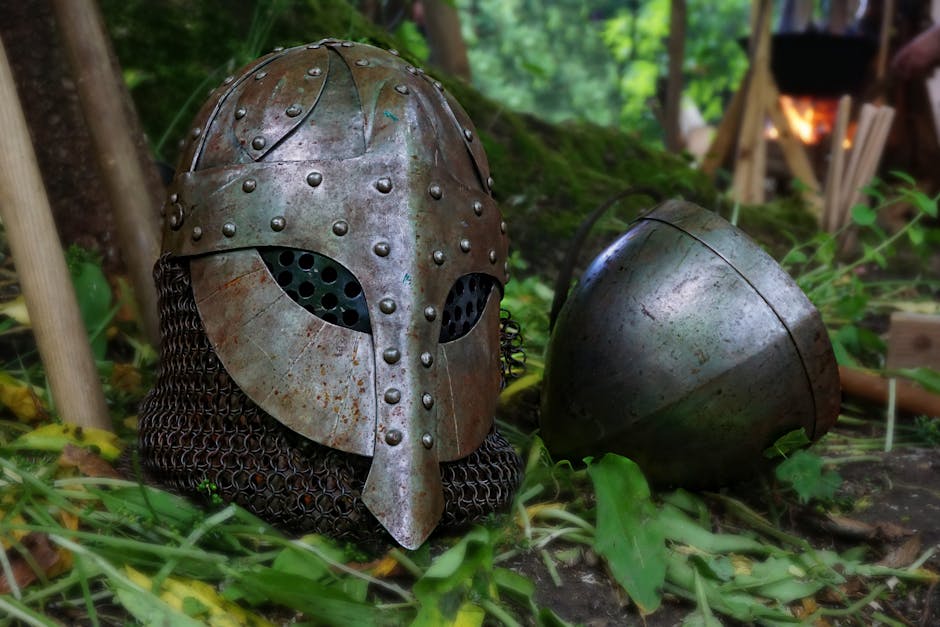
Did You Know? 15 Incredible Facts About Ancient Warfare

Did You Know? 15 Incredible Facts About Ancient Warfare

⏱️ 8 min read

The battlefields of antiquity were far more sophisticated and surprising than many people realize. Ancient civilizations developed ingenious tactics, devastating weapons, and military innovations that would influence warfare for millennia. From psychological warfare to revolutionary technologies, the ancient world was a crucible of military evolution that shaped the course of human history. Here are fifteen remarkable facts about ancient warfare that reveal the complexity and ingenuity of our martial ancestors.

Ancient Military Innovations and Tactics

1. Greek Fire: The Incendiary Weapon That Burned on Water

The Byzantine Empire possessed one of history's most feared secret weapons: Greek Fire. This incendiary mixture, whose exact composition remains unknown to this day, could burn on water and was nearly impossible to extinguish. Used primarily in naval warfare from the 7th century onwards, Greek Fire was deployed through siphons mounted on ships, creating devastating streams of flame that could incinerate entire enemy fleets. The Byzantines guarded this formula so zealously that its secret died with the empire, making it one of history's lost technologies.

2. The Assyrian Army's Psychological Terror Campaign

The Assyrian military machine, dominant from approximately 900 to 600 BCE, understood that fear could be as powerful as swords. They systematically documented and publicized their brutal treatment of conquered peoples, including impalement, flaying, and mass deportations. These accounts weren't merely boastful records—they were deliberate psychological warfare designed to encourage cities to surrender without resistance. This strategy of terror was so effective that many cities opened their gates rather than face Assyrian wrath.

3. Roman Soldiers Built Roads as They Conquered

Roman legions weren't just fighting forces; they were mobile engineering corps. Soldiers were required to carry tools and construction equipment weighing up to 80 pounds, in addition to weapons and armor. As they campaigned, they constructed roads, bridges, and fortifications, creating the famous Roman road network that spanned over 250,000 miles. This infrastructure not only facilitated military movements but also ensured rapid communication and economic integration of conquered territories.

4. The Mysterious Disappearance of the Persian Immortals

The Persian Immortals were an elite fighting force of exactly 10,000 soldiers who served as the personal guard of the Persian emperor. They earned their name because whenever a soldier died, was wounded, or became seriously ill, he was immediately replaced to maintain the unit's constant strength of 10,000. These warriors were equipped with the finest armor and weapons, and their reputation for invincibility struck fear throughout the ancient world.

Weapons and Technology

5. Ancient Chinese Crossbows Could Pierce Multiple Soldiers

Chinese crossbow technology during the Warring States period (475-221 BCE) was centuries ahead of the West. Archaeological evidence reveals crossbows with bronze triggers so sophisticated they included adjustment mechanisms for draw weight and precision. Some Chinese crossbows were powerful enough to pierce multiple enemies or shoot through armor at considerable distances. Mass-produced with interchangeable parts, these weapons represented an early form of standardized manufacturing.

6. War Elephants Created Ancient Tanks on the Battlefield

From India to Carthage, war elephants served as living tanks that could break enemy formations and spread terror among troops and horses unfamiliar with these massive beasts. Hannibal famously transported 37 elephants over the Alps to invade Italy, though most perished during the journey. In the Battle of Hydaspes in 326 BCE, King Porus of India deployed nearly 200 war elephants against Alexander the Great, creating one of history's most spectacular battlefield spectacles.

7. The Macedonian Sarissa Pike Revolutionized Infantry Combat

Alexander the Great's father, Philip II of Macedon, transformed infantry warfare with the sarissa—a pike measuring 13 to 20 feet in length. This weapon, wielded by the famed Macedonian phalanx, was twice as long as traditional spears, allowing soldiers to strike enemies well before they could close to fighting distance. The first five ranks of the phalanx could present their pikes forward simultaneously, creating an impenetrable wall of bronze points that helped Alexander conquer most of the known world.

8. Ancient Siege Towers Reached Ten Stories High

Ancient siege warfare produced architectural marvels in the form of massive siege towers, some reaching heights of 100 feet or more—equivalent to a modern ten-story building. The largest recorded siege tower was built by Demetrius I during the siege of Rhodes in 305-304 BCE. Called the "Helepolis" or "Taker of Cities," it stood approximately 130 feet tall, weighed over 160 tons, and required 3,400 men to move it. These mobile fortresses allowed attackers to overcome city walls and rain projectiles down on defenders.

Tactical Brilliance and Strategy

9. Hannibal's Double Envelopment at Cannae Remains a Military Masterpiece

At the Battle of Cannae in 216 BCE, Carthaginian general Hannibal executed perhaps the most perfect tactical victory in military history. Facing a Roman army nearly twice his size (approximately 86,000 Romans against 50,000 Carthaginians), Hannibal deliberately weakened his center and strengthened his flanks. When the Romans pushed forward, they found themselves surrounded as Hannibal's cavalry and wings closed around them like a vice. Between 50,000 and 70,000 Roman soldiers were killed in a single day—a casualty rate that made Cannae one of the bloodiest battles in human history.

10. The Spartan Agoge Created History's Most Feared Warriors

Spartan military dominance stemmed from the agoge, a brutal state-sponsored education system that began at age seven. Boys were deliberately underfed to encourage stealing (developing cunning), forced to fight one another, and subjected to harsh physical training. They slept on reed beds they made themselves and were given minimal clothing regardless of weather. This system produced warriors so formidable that a force of just 300 Spartans and their allies held off hundreds of thousands of Persian invaders at Thermopylae for three days.

11. Naval Warfare Evolved with the Devastating Trireme

The ancient Greek trireme revolutionized naval combat around the 7th century BCE. These vessels featured three banks of oars on each side, with approximately 170 rowers providing remarkable speed and maneuverability. Armed with a bronze ram at the waterline, triremes turned naval battles into high-speed collision courses where ships attempted to hole enemy vessels below the waterline. The Battle of Salamis in 480 BCE, where Greek triremes defeated the larger Persian fleet in narrow waters, demonstrated the devastating effectiveness of these warships.

Cultural Aspects of Ancient Warfare

12. Roman Decimation Punished Cowardly Legions Through Lottery of Death

Roman military discipline included one of history's most terrifying punishments: decimation. When an entire unit displayed cowardice or mutiny, the soldiers would be divided into groups of ten, and lots would be drawn. The one soldier in each group who drew the short lot would be clubbed or stoned to death by his nine comrades. This practice, though rarely employed, ensured that Roman soldiers feared their own commanders as much as the enemy, maintaining the legendary discipline of the legions.

13. Ancient Armies Carried Siege Equipment Across Continents

Contrary to popular belief, ancient armies didn't always construct siege engines on-site. Alexander the Great's campaigns demonstrate that armies transported pre-fabricated components for catapults, ballistae, and towers across thousands of miles. His siege train included engineers, carpenters, and specialized equipment that could be rapidly assembled. This mobile siege capability allowed Alexander to reduce fortified cities throughout Persia and India, making his conquests possible.

14. The Scythed Chariot Was Both Terrifying and Impractical

Persian and Seleucid armies employed scythed chariots—vehicles with blades extending from their wheel hubs designed to mow down infantry formations. While terrifying in concept, these weapons proved largely ineffective in practice. Disciplined troops learned to simply open their ranks and let the chariots pass harmlessly through, then close ranks again. Horses naturally avoided charging into dense formations of men, and rough terrain could render the chariots useless. Despite their fearsome reputation, scythed chariots represented more psychological than actual threat.

15. Ancient Battlefield Medicine Was Surprisingly Advanced

Ancient military medicine achieved remarkable sophistication, particularly in the Roman legions. Each legion included trained medics (capsarii) and field hospitals (valetudinaria) with surgical instruments, including scalpels, forceps, and bone saws that would look familiar to modern doctors. Roman military surgeons performed complex operations, including amputations, arrow extractions, and trepanation. They understood the importance of cleanliness, boiling instruments and washing wounds. Survival rates for Roman soldiers wounded in battle exceeded those of soldiers in many conflicts up through the American Civil War.

The Legacy of Ancient Military Innovation

These fifteen facts reveal that ancient warfare was far more sophisticated than simple sword-and-shield combat. Ancient civilizations developed complex logistics, revolutionary weapons technology, psychological warfare, professional military medicine, and tactical innovations that military theorists still study today. The ingenuity displayed on ancient battlefields—from Greek Fire's mysterious chemistry to Hannibal's tactical genius at Cannae—demonstrates that our ancestors possessed remarkable creativity and intelligence. Many principles established in ancient warfare, such as combined arms tactics, psychological operations, and military engineering, remain fundamental to modern military doctrine. Understanding these historical developments provides not only fascinating insights into human history but also reveals the continuous thread of innovation that connects ancient battlefields to contemporary military science.