







1 / 10 Questions
0 Points

Which Country Has Three Capital Cities?

Kenya

South Africa

Egypt

Nigeria

Points won
0
Correct score
0%

More Questions

More Articles

Did You Know Potatoes Were the First Vegetable Grown in Space?

Did You Know Potatoes Were the First Vegetable Grown in Space?

⏱️ 5 min read

In October 1995, a humble potato made history by becoming the first vegetable to be grown in space. This groundbreaking achievement marked a significant milestone in agricultural science and space exploration, opening new possibilities for long-duration space missions and future colonization efforts. The experiment, conducted aboard the Space Shuttle Columbia during the STS-73 mission, demonstrated that humanity could potentially sustain itself beyond Earth by cultivating food in the harsh conditions of space.

The Historic Space Shuttle Columbia Mission

The potato cultivation experiment was part of NASA's broader research into bioregenerative life support systems. Scientists selected potato plants for this pioneering experiment due to their nutritional value, relatively quick growth cycle, and the plant's adaptability to various growing conditions. The research team used specialized growth chambers that carefully controlled light, temperature, humidity, and nutrient delivery to create an environment where the potato plants could thrive in microgravity.

The experiment utilized potato stem cuttings rather than seeds, which allowed for faster growth and more predictable results. The technology developed for this mission, including the sophisticated growth chambers and monitoring systems, laid the groundwork for future space agriculture initiatives and influenced the design of plant growth facilities on the International Space Station.

Why Potatoes Were Chosen for Space Cultivation

The selection of potatoes as the first space-grown vegetable was far from arbitrary. Scientists evaluated numerous factors before making this historic choice:

  • High nutritional density providing essential carbohydrates, vitamin C, potassium, and dietary fiber
  • Efficient conversion of resources into edible biomass compared to other crops
  • Relatively compact growth requirements suitable for space station limitations
  • Proven track record as a staple food that has sustained civilizations throughout history
  • Ability to reproduce vegetatively, eliminating the need for pollination in space
  • Substantial research base from terrestrial agriculture that could be applied to space conditions

Overcoming the Challenges of Space Agriculture

Growing vegetables in space presents numerous challenges that Earth-based agriculture never encounters. The absence of gravity affects how water and nutrients move through soil and plant tissues. On Earth, gravity helps distribute water throughout the growing medium and assists roots in orientation. In microgravity, surface tension and capillary action become the primary forces governing fluid movement, requiring entirely new approaches to irrigation and root zone management.

Additionally, the lack of natural air convection in space means that carbon dioxide and oxygen don't circulate naturally around plants. Without forced air circulation, plants could suffocate in pockets of their own oxygen production while being deprived of the carbon dioxide they need for photosynthesis. The Columbia mission's growth chambers incorporated fans and air circulation systems to address this critical issue.

Impact on Future Space Exploration

The successful cultivation of potatoes in space has profound implications for long-duration space missions and permanent space settlements. Current space missions rely entirely on pre-packaged food supplies brought from Earth, which is feasible for short missions but becomes impractical and prohibitively expensive for extended stays or missions to Mars and beyond.

A journey to Mars, for instance, would take approximately six to nine months each way, plus time spent on the planet's surface. Carrying enough preserved food for such an extended mission would require enormous cargo capacity and add tremendous weight to the spacecraft. Fresh food production in space solves multiple problems simultaneously: reducing launch weight, providing fresh nutrition, recycling carbon dioxide into oxygen, and offering psychological benefits through gardening activities.

The Evolution of Space Farming Since 1995

Since the landmark potato experiment, space agriculture has advanced considerably. The International Space Station now features sophisticated plant growth facilities like the Veggie plant growth system and the Advanced Plant Habitat. Astronauts have successfully grown and consumed various crops including lettuce, radishes, peppers, tomatoes, and herbs.

These ongoing experiments continue to refine techniques for space agriculture, testing different crop varieties, growth substrates, lighting conditions, and nutrient delivery methods. Each success builds upon the foundation established by that first potato experiment, bringing humanity closer to achieving true self-sufficiency in space.

Nutritional and Psychological Benefits

Beyond the practical aspects of food production, growing fresh vegetables in space provides significant psychological benefits for astronauts. The monotony of preserved food during long missions can lead to menu fatigue, where crew members lose interest in eating, potentially compromising their nutrition and health. Fresh vegetables add variety, flavor, and sensory stimulation to the space diet.

Furthermore, the act of tending to plants offers therapeutic benefits. Studies have shown that gardening activities reduce stress and improve mental well-being, factors that are particularly important in the isolated, confined environment of a spacecraft. The presence of living, growing plants also creates a connection to Earth and nature that helps combat the psychological challenges of space travel.

Looking Toward Future Planetary Colonization

The lessons learned from growing potatoes and other vegetables in space are directly applicable to potential colonies on the Moon or Mars. These future settlements will need to establish sustainable food production systems to reduce dependence on Earth-based supplies. Potatoes, with their proven ability to grow in space conditions, remain a prime candidate for extraterrestrial agriculture.

Scientists are now researching how to adapt space farming techniques to the unique conditions of other celestial bodies, including working with reduced gravity, utilizing local resources like Martian soil, and protecting crops from radiation. The humble potato that made history in 1995 continues to play a crucial role in these ambitious plans, reminding us that sometimes the most revolutionary advances come from the most familiar sources.
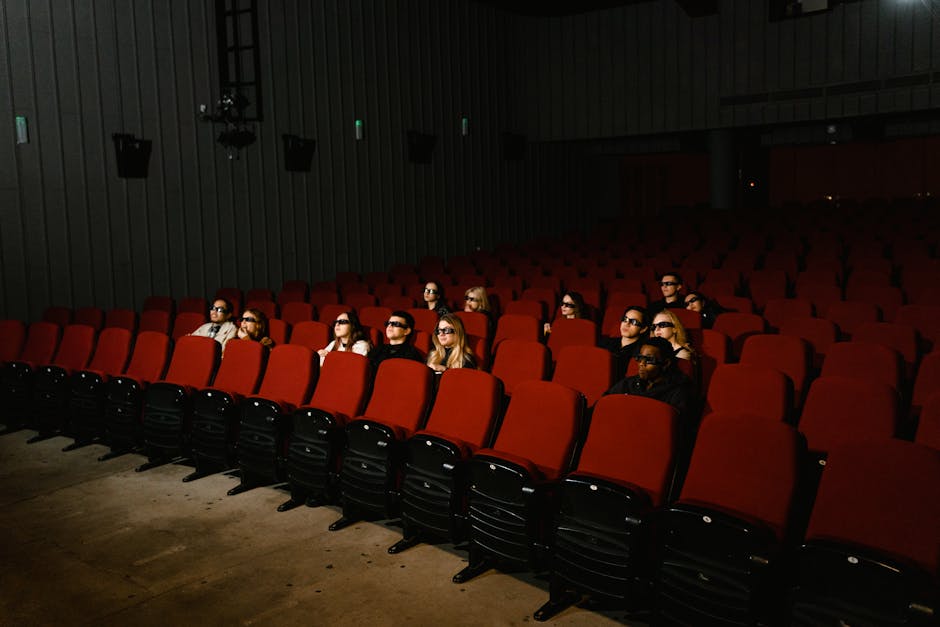
Did You Know? 12 Movies That Took Decades to Finish

Did You Know? 12 Movies That Took Decades to Finish

⏱️ 6 min read

In the world of cinema, production timelines can vary dramatically. While most films are completed within a year or two, some ambitious projects have taken extraordinarily long periods to reach completion. These extended production timelines often result from financial constraints, creative challenges, technical innovations, or the unwavering vision of dedicated filmmakers. The following films represent remarkable examples of cinematic persistence, spanning decades from initial conception to final release.

Extraordinary Production Journeys in Cinema History

1. The Thief and the Cobbler: Richard Williams' 28-Year Passion Project

Animation legend Richard Williams began work on "The Thief and the Cobbler" in 1964, envisioning it as his masterpiece. The film's production stretched for 28 years, with Williams obsessively perfecting every frame. His meticulous approach and constantly evolving artistic vision meant that completion remained perpetually out of reach. Unfortunately, Williams was removed from the project in 1992, and the film was completed without his involvement and released in heavily edited form in 1993. The original vision for this animated epic remains one of cinema's great "what could have been" stories.

2. Boyhood: Filming a Childhood in Real Time

Director Richard Linklater embarked on an unprecedented experiment in 2002, filming "Boyhood" over the course of 12 years. Rather than using different actors to portray aging characters, Linklater filmed the same cast annually, capturing authentic growth and development. This innovative approach resulted in a genuine coming-of-age story that resonated deeply with audiences when it was finally released in 2014, earning critical acclaim and multiple Oscar nominations.

3. Mad Max: Fury Road's Development Hell

George Miller first conceived "Mad Max: Fury Road" in 1987, but the film didn't reach theaters until 2015—nearly 30 years later. The project faced numerous obstacles including the September 11 attacks postponing production, conflicts in Iraq affecting planned shooting locations, and years spent developing groundbreaking practical effects. Despite these delays, the wait proved worthwhile, as the film became a critical and commercial success, winning six Academy Awards.

4. The Man Who Killed Don Quixote: Terry Gilliam's 29-Year Odyssey

Terry Gilliam's attempt to adapt "The Man Who Killed Don Quixote" became legendary for its troubled production. Beginning in 1989, the project faced catastrophic setbacks including flash floods destroying sets, lead actors falling ill, and multiple financial collapses. The documentary "Lost in La Mancha" chronicled one failed attempt in 2000. Gilliam persevered through various iterations with different casts before finally completing the film in 2018, making it a 29-year journey from conception to completion.

5. Apocalypse Now's Nightmarish Production

While Francis Ford Coppola's "Apocalypse Now" took "only" a decade from initial script development in 1969 to theatrical release in 1979, the actual filming became one of cinema's most notorious productions. The Philippine jungle shoot was plagued by typhoons, Martin Sheen's heart attack, Marlon Brando's difficult behavior, and Coppola's mental breakdown. The director mortgaged his personal assets and nearly lost everything bringing his vision of Conrad's "Heart of Darkness" to life.

6. Eyes Wide Shut: Stanley Kubrick's Final Perfectionist Vision

Stanley Kubrick's final film, "Eyes Wide Shut," spent over a decade in development before cameras rolled in 1996. The actual shoot then became one of the longest continuous film productions in history, lasting 15 months. Kubrick's legendary perfectionism meant some scenes were shot dozens or even hundreds of times. From initial conception to the 1999 release, the project consumed approximately 12 years of Kubrick's life, released just months after his death.

7. Avatar's Technological Wait

James Cameron wrote an 80-page treatment for "Avatar" in 1994, but determined that the technology needed to realize his vision didn't exist yet. Rather than compromise, Cameron waited and helped develop the necessary motion-capture and 3D technologies. Production finally began in earnest in 2005, with the film releasing in 2009—15 years after initial conception. The patience paid off, as "Avatar" became the highest-grossing film of all time.

8. Shine: A Two-Decade Journey to the Screen

The biographical drama "Shine," about pianist David Helfgott, took director Scott Hicks nearly 20 years to bring to fruition. Hicks first met Helfgott in the mid-1970s and became fascinated with his story. However, securing financing for such an unconventional biographical drama proved extremely difficult. The film finally reached theaters in 1996, earning Geoffrey Rush an Academy Award for Best Actor and validating Hicks' decades-long commitment.

9. Eraserhead: David Lynch's Five-Year Art Film

David Lynch's surrealist debut feature "Eraserhead" took five years to complete, from 1972 to 1977. Shot piecemeal as funding became available, Lynch and his small crew worked intermittently, sometimes with years-long gaps between shooting sessions. The director supported himself with a paper route during production. This extended timeline actually benefited the film's dreamlike, disorienting atmosphere, and "Eraserhead" became a midnight movie cult classic that launched Lynch's career.

10. The Other Side of the Wind: Orson Welles' Unfinished Legacy

Orson Welles began filming "The Other Side of the Wind" in 1970, but the project became entangled in legal and financial complications that prevented its completion during his lifetime. After Welles' death in 1985, the footage remained locked away for decades due to rights disputes. Finally, in 2018—48 years after principal photography began—the film was completed using Welles' notes and released on Netflix, giving audiences a glimpse of the master filmmaker's final vision.

11. The Magnificent Ambersons: RKO's Ill-Fated Production

While Orson Welles filmed "The Magnificent Ambersons" relatively quickly in 1941-1942, post-production stretched for years due to studio interference. RKO drastically re-edited the film while Welles was abroad, cutting over 40 minutes and shooting a new ending. Welles spent years attempting to restore his vision, making this a decades-long battle, though the original cut remains lost. The compromised version was finally released in 1942, representing one of cinema's great artistic tragedies.

12. It's Such a Beautiful Day: Don Hertzfeldt's Trilogy Approach

Animator Don Hertzfeldt created "It's Such a Beautiful Day" by combining three short films produced between 2006 and 2011. While each segment was released independently, Hertzfeldt always envisioned them as chapters of a larger whole. The complete feature wasn't assembled and released theatrically until 2012, representing six years of meticulous hand-drawn animation. This deliberate, methodical approach allowed Hertzfeldt to craft one of the most emotionally powerful animated films ever made.

The Value of Persistence in Filmmaking

These twelve films demonstrate that great cinema sometimes requires extraordinary patience and dedication. Whether due to technological limitations, financial challenges, creative perfectionism, or legal complications, these projects tested their creators' resolve across decades. Yet in many cases, the extended timelines contributed to the final products' richness and depth. These stories remind us that artistic vision, when combined with unwavering determination, can overcome seemingly impossible obstacles. While not every delayed film becomes a masterpiece, these examples prove that some cinematic achievements are worth the wait, no matter how long that wait might be.