










1 / 10 Questions
0 Points

Which Country Only Can you access Point Roberts, WA by Land ?

Canada

Greenland

Mexico

Cuba

Points won
0
Correct score
0%

More Questions

More Articles

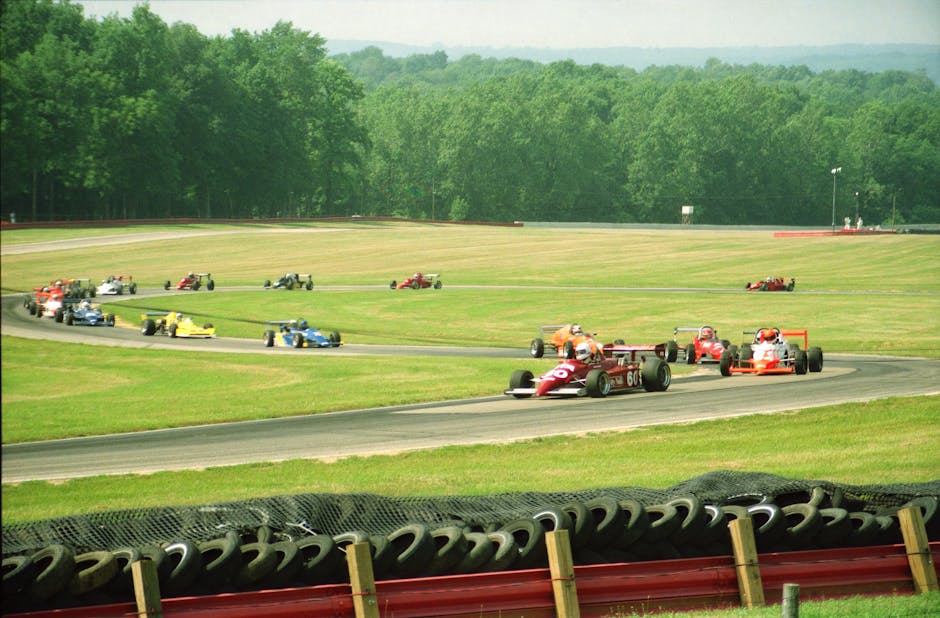
Did You Know Formula 1 Cars Can Drive Upside Down?

Did You Know Formula 1 Cars Can Drive Upside Down?

⏱️ 5 min read

One of the most fascinating claims in motorsport is that Formula 1 cars generate enough downforce to theoretically drive upside down on a ceiling. While this sounds like pure science fiction, the aerodynamic capabilities of modern F1 cars make this assertion surprisingly credible. The combination of advanced engineering, cutting-edge materials, and sophisticated aerodynamic principles has created machines that produce forces far beyond what most people imagine possible.

The Science Behind Downforce Generation

Downforce is the aerodynamic force that pushes a racing car down onto the track surface, increasing tire grip and allowing for higher cornering speeds. Formula 1 cars are essentially inverted aircraft wings on wheels. While airplane wings generate lift to overcome gravity, F1 cars use their aerodynamic components to create negative lift, forcing the vehicle firmly against the track surface.

Modern Formula 1 cars can generate downforce equivalent to approximately 3.5 to 4 times their own weight at high speeds. Considering that an F1 car weighs around 798 kilograms (including the driver), this means these machines can produce downforce exceeding 3,000 kilograms at speeds around 240-260 kilometers per hour. This enormous force is what theoretically makes ceiling-driving possible.

Key Aerodynamic Components Creating This Phenomenon

Front and Rear Wings

The most visible aerodynamic elements on an F1 car are the front and rear wings. These precisely engineered components work like upside-down airplane wings, directing airflow to push the car downward. The front wing alone can generate up to 25-30% of the car's total downforce, while the rear wing contributes approximately 25-35%. These wings feature multiple adjustable elements that teams fine-tune for different tracks and conditions.

The Underbody and Diffuser

Perhaps the most crucial component for downforce generation is the car's floor and rear diffuser. The flat underside of an F1 car is carefully shaped to accelerate air flowing beneath the vehicle. As air speeds up under the car, it creates a low-pressure zone according to Bernoulli's principle. This pressure difference between the top and bottom of the car literally sucks it toward the ground, accounting for up to 40-50% of total downforce in modern regulations.

Venturi Tunnels

Recent regulation changes have reintroduced ground-effect aerodynamics through Venturi tunnels sculpted into the car's floor. These channels further accelerate airflow beneath the car, dramatically increasing the suction effect. This technology, which dominated F1 in the late 1970s and early 1980s, has returned in a refined and safer form.

The Critical Speed Threshold

The theoretical ability to drive upside down doesn't apply at all speeds. Downforce is proportional to the square of velocity, meaning it increases exponentially with speed. At low speeds, an F1 car would simply fall from a ceiling due to insufficient downforce to overcome gravity.

Engineers estimate that a Formula 1 car would need to travel at approximately 190-210 kilometers per hour on a ceiling to generate enough downforce to counteract gravity and maintain adhesion. This speed varies depending on the specific car design, aerodynamic configuration, and track conditions. Below this threshold, the downforce wouldn't exceed the car's weight, and the vehicle would drop.

Why This Has Never Been Tested

Despite the theoretical possibility, no team has ever attempted to drive an F1 car upside down in a tunnel. Several practical and safety considerations make this experiment extraordinarily dangerous and likely impossible in reality:

  • Engine lubrication systems are designed for right-side-up operation; running inverted would cause immediate engine failure due to oil starvation
  • Fuel systems rely on gravity and would malfunction when inverted
  • Driver safety concerns make the risk unacceptable, as any momentary loss of speed or downforce would result in catastrophic consequences
  • Tire adhesion in inverted conditions remains untested and unpredictable
  • No suitable testing facility exists with the required specifications

Real-World Demonstrations of Extreme Downforce

While upside-down driving remains untested, Formula 1 has provided numerous demonstrations of extreme downforce capabilities. The sport features several corners worldwide where cars experience forces exceeding 5G during cornering, possible only due to massive aerodynamic grip.

The famous 130R corner at Suzuka Circuit and Copse corner at Silverstone showcase cars maintaining speeds that would be impossible without substantial downforce. Drivers regularly pull lateral forces that would cause ordinary vehicles to slide off the track, yet F1 cars corner as if glued to the asphalt.

The Engineering Trade-offs

Creating maximum downforce isn't without consequences. Increased downforce creates aerodynamic drag, which reduces straight-line speed and increases fuel consumption. Teams constantly balance downforce levels based on circuit characteristics, adjusting wing angles and aerodynamic elements to optimize performance.

High-downforce circuits like Monaco or Hungary require maximum aerodynamic grip for tight corners, while low-downforce tracks like Monza prioritize straight-line speed. This delicate balance demonstrates the sophisticated engineering optimization required in modern Formula 1.

The Future of Aerodynamic Performance

As Formula 1 continues evolving, aerodynamic regulations regularly change to manage performance levels and promote competitive racing. Future developments may see even more impressive downforce figures, though always within carefully controlled parameters to maintain safety and competition integrity. The theoretical ceiling-driving capability remains one of motorsport's most intriguing "what if" scenarios, showcasing the remarkable engineering achievements that make Formula 1 the pinnacle of automotive technology.

12 Amazing Facts About the Evolution of Hip-Hop

12 Amazing Facts About the Evolution of Hip-Hop

⏱️ 6 min read

Hip-hop has transformed from underground block parties in the Bronx to a dominant global cultural force that influences music, fashion, language, and art worldwide. This journey spans five decades of innovation, creativity, and social commentary. Understanding the pivotal moments and surprising developments in hip-hop's evolution reveals not just the history of a genre, but the story of cultural revolution and artistic perseverance.

The Foundation and Growth of Hip-Hop Culture

1. DJ Kool Herc's Breakbeat Innovation Created the Blueprint

In 1973, Jamaican-born DJ Kool Herc revolutionized music by isolating and extending the instrumental "break" sections of funk and soul records at a party on Sedgwick Avenue in the Bronx. This technique, called the "Merry-Go-Round," allowed dancers to showcase their moves during these percussive breaks. Herc's innovation laid the rhythmic foundation for hip-hop, demonstrating that DJs could be creative artists rather than simply playing records. His sound system culture, influenced by Jamaican dancehall traditions, introduced the concept of the DJ as a central figure in the music experience.

2. The Four Elements Were Established as Cultural Pillars

Hip-hop culture crystallized around four essential elements: MCing (rapping), DJing, breaking (breakdancing), and graffiti art. Afrika Bambaataa, one of hip-hop's founding fathers, formally recognized these pillars as interconnected aspects of a unified culture. Later, a fifth element—knowledge—was added to emphasize consciousness and understanding. This framework distinguished hip-hop from being merely a musical genre, establishing it as a comprehensive cultural movement with multiple forms of artistic expression working in harmony.

3. "Rapper's Delight" Brought Hip-Hop to Mainstream Radio

When the Sugarhill Gang released "Rapper's Delight" in 1979, it became the first hip-hop single to reach the top 40 on the Billboard charts. The 14-minute track introduced millions of listeners worldwide to rap music, proving that hip-hop had commercial viability beyond New York City neighborhoods. Despite controversy over the group's authenticity within the hip-hop community, the song's success opened doors for countless artists and established hip-hop as a legitimate force in the music industry.

Technological and Artistic Innovations

4. Sampling Technology Revolutionized Production Techniques

The introduction of affordable samplers like the E-mu SP-1200 and Akai MPC60 in the mid-1980s transformed hip-hop production. Producers could now digitally capture and manipulate sounds from existing records, creating entirely new compositions. This technology enabled producers like Marley Marl, DJ Premier, and Pete Rock to craft complex, layered soundscapes. Sampling became both an art form and a controversial practice, leading to landmark copyright cases that reshaped music law and forced producers to either clear samples or develop new creative approaches.

5. Run-DMC Merged Hip-Hop with Rock Music

Run-DMC's 1986 collaboration with Aerosmith on "Walk This Way" shattered genre boundaries and expanded hip-hop's audience exponentially. The fusion brought hip-hop to rock radio stations and MTV, introducing the culture to suburban America and international markets. This crossover success demonstrated hip-hop's versatility and its potential to dialogue with other musical traditions, paving the way for future genre-blending experiments that would keep hip-hop innovative and relevant.

6. The Golden Age Elevated Lyrical Complexity

The late 1980s through the early 1990s witnessed unprecedented lyrical sophistication. Artists like Rakim, Big Daddy Kane, Kool G Rap, and KRS-One developed intricate rhyme schemes, internal rhyme patterns, and complex metaphors that elevated rap to a legitimate literary art form. This era emphasized technical skill, with MCs competing to demonstrate superior wordplay, multisyllabic rhyming, and conceptual depth. The Golden Age established standards of lyrical excellence that continue to influence contemporary artists.

Regional Diversity and Commercial Expansion

7. West Coast Hip-Hop Created a Distinct Sound and Identity

While hip-hop originated on the East Coast, the West Coast developed its own distinctive style in the late 1980s. Artists like N.W.A., Ice-T, and Too Short created harder-edged narratives reflecting Los Angeles street life, while producers used funk samples and synthesizers to craft a sound markedly different from East Coast boom-bap. This regional diversification proved that hip-hop could adapt to different environments and perspectives, establishing a pattern of regional innovation that would spread nationwide.

8. Southern Hip-Hop Transformed the Genre's Commercial Landscape

Throughout the 1990s and 2000s, Southern cities like Atlanta, Houston, Memphis, and New Orleans developed unique hip-hop styles that eventually dominated mainstream charts. Artists like OutKast, UGK, Three 6 Mafia, and Lil Wayne introduced distinct production styles, slang, and approaches to rhythm that challenged New York and Los Angeles's cultural dominance. The South's rise demonstrated hip-hop's democratic nature—success could come from anywhere with authentic artistic vision and connection to local culture.

Cultural Impact and Global Reach

9. Hip-Hop Became a Billion-Dollar Industry

From humble beginnings at park jams, hip-hop evolved into a multi-billion-dollar global industry. By the 2000s, hip-hop artists weren't just musicians but entrepreneurs building empires in fashion, technology, beverages, and media. Figures like Jay-Z, Diddy, and Dr. Dre demonstrated that hip-hop moguls could achieve billionaire status, fundamentally changing perceptions of the genre's economic potential and the business acumen of its practitioners.

10. The Internet and Social Media Democratized Distribution

Digital platforms revolutionized how hip-hop music reaches audiences. Artists no longer needed major label support to find listeners; platforms like SoundCloud, YouTube, and later Spotify allowed independent artists to build massive followings. This democratization enabled the rise of artists like Chance the Rapper, who achieved mainstream success without traditional record deals, and fostered regional scenes that might have remained obscure in previous eras. Social media also allowed direct artist-fan relationships that transformed marketing and community building.

11. Trap Music Dominated Modern Hip-Hop Soundscapes

Emerging from Atlanta in the early 2000s, trap music—characterized by rolling hi-hats, booming 808 bass, and dark synthesizers—became the dominant sound in contemporary hip-hop. Producers like Shawty Redd, Lex Luger, and Metro Boomin crafted atmospheric, hard-hitting beats that influenced not just hip-hop but pop, EDM, and international music. Trap's global influence demonstrates hip-hop's continued evolution and its ability to generate new subgenres that reshape popular music.

12. Hip-Hop Became the Most Popular Music Genre in America

In 2017, hip-hop officially surpassed rock as the most consumed music genre in the United States, according to Nielsen Music. This milestone represented a complete cultural shift—what began as an underground movement dismissed by mainstream culture had become the dominant force in American music. Hip-hop's streaming numbers, cultural influence, and crossover appeal demonstrate its transformation from rebellious subculture to central pillar of global popular culture.

Continuing Evolution

Hip-hop's evolution reflects broader changes in technology, society, and global culture. From DJ Kool Herc's first breakbeat experiments to its current status as the world's most influential music genre, hip-hop has consistently innovated while maintaining connection to its foundational elements. Each generation of artists has pushed boundaries while respecting tradition, ensuring the culture remains vital and relevant. As hip-hop continues evolving, it carries forward the creativity, resilience, and authentic expression that defined it from the beginning, promising future innovations that will surprise and inspire new generations of fans and artists alike.