











1 / 10 Questions
0 Points

What causes most temporary islands to appear in the ocean?

Earthquakes only

Tsunamis

Melting icebergs

Volcanic eruptions

Points won
0
Correct score
0%

More Questions

More Articles

Top 10 Facts About Soundtracks That Made History

Top 10 Facts About Soundtracks That Made History

⏱️ 6 min read

Movie soundtracks have the remarkable power to elevate cinema from mere visual entertainment into unforgettable emotional experiences. Throughout film history, certain scores and songs have transcended their original purpose, becoming cultural phenomena that shaped the music industry and influenced generations of composers. These groundbreaking soundtracks didn't just accompany films—they fundamentally changed how audiences experience movies and how filmmakers approach the marriage of sound and image.

Landmark Moments in Film Music History

1. The First Synchronized Sound Film Changed Everything

When "The Jazz Singer" premiered in 1927, it revolutionized cinema by introducing synchronized dialogue and music. Al Jolson's performance of songs like "My Mammy" marked the end of the silent film era and established that music could be an integral part of storytelling rather than just live accompaniment. This watershed moment forced Hollywood to completely reimagine production methods and proved that audiences craved the emotional connection that synchronized sound provided. The film's success launched the "talkie" era and established the foundation for all future film soundtracks.

2. "Star Wars" Created the Symphonic Comeback

John Williams' 1977 score for "Star Wars" single-handedly revived the symphonic film score when Hollywood had largely abandoned orchestral music in favor of pop and rock. The soundtrack became a bestselling album, spent ten weeks at number one on the Billboard charts, and won an Academy Award. Williams' use of leitmotifs—recurring themes for characters and concepts—created an operatic structure that made the music inseparable from the storytelling. This success convinced studios to reinvest in full orchestral scores, influencing decades of blockbuster filmmaking.

3. The First Soundtrack to Win Album of the Year

"Saturday Night Fever" achieved what no soundtrack had before when it won the Grammy Award for Album of the Year in 1978. The Bee Gees-dominated soundtrack sold over 40 million copies worldwide and spent 24 consecutive weeks at number one on the Billboard 200. This unprecedented success proved that soundtracks could compete with traditional albums commercially and artistically, establishing a new paradigm for how music could be marketed through film. The disco phenomenon it sparked also demonstrated cinema's power to influence mainstream music trends on a global scale.

4. "Psycho" Proved String Instruments Could Terrify

Bernard Herrmann's 1960 score for Alfred Hitchcock's "Psycho" revolutionized horror film music by using only string instruments to create unprecedented tension and terror. The infamous shower scene's shrieking violins became one of cinema's most recognizable musical moments, proving that orchestration choices could be as important as melody. Herrmann's decision to forego traditional brass and woodwinds created a cold, intimate sound that perfectly matched the film's psychological horror. This innovative approach influenced countless horror scores and established that restraint and unusual instrumentation could be more effective than bombastic orchestration.

5. The Motown Sound Conquered Cinema

When "Superfly" was released in 1972 with Curtis Mayfield's complete soundtrack, it marked the first time a major film was built around pre-existing songs from a single artist. Mayfield composed and performed the entire album before filming was complete, and the soundtrack actually outperformed the film commercially. This reversed the traditional relationship between film and music, proving that the soundtrack could be the primary draw. The success of "Superfly" opened doors for Black artists in film music and established the viability of soul and funk in cinema.

6. Electronic Music Found Its Cinematic Voice

Vangelis' synthesizer-based score for "Chariots of Fire" in 1981 demonstrated that electronic music could carry the emotional weight of a major dramatic film. The main theme became a cultural phenomenon, winning the Academy Award for Best Original Score and topping charts worldwide. This achievement legitimized electronic instrumentation in serious filmmaking when synthesizers were still viewed skeptically by the classical music establishment. The score's success encouraged composers to explore electronic sounds and paved the way for hybrid orchestral-electronic scores that dominate contemporary cinema.

7. A Director Conducting His Own Vision

Charlie Chaplin composed the score for "Modern Times" in 1936, becoming one of the first major filmmakers to exert complete creative control over both visual and musical elements. Though not formally trained in composition, Chaplin's instinctive understanding of how music should synchronize with action resulted in a score perfectly tailored to his comedic timing. This holistic approach to filmmaking influenced directors like Stanley Kubrick and Quentin Tarantino, who would later assert similar control over their films' musical identities. Chaplin's work proved that the filmmaker's vision should extend to every artistic element.

8. "The Graduate" Launched the Singer-Songwriter Era

Mike Nichols' decision to build "The Graduate" (1967) around existing Simon & Garfunkel songs, particularly "The Sound of Silence" and "Mrs. Robinson," established a new model for soundtrack construction. Rather than commissioning an original orchestral score, Nichols used contemporary popular music to connect with younger audiences and establish cultural authenticity. The soundtrack's massive success—selling over five million copies—proved that folk and rock music could provide dramatic underscore as effectively as traditional composition. This approach became standard practice for filmmakers seeking to capture specific cultural moments or appeal to youth demographics.

9. The Longest Continuously Running Soundtrack

"The Sound of Music" soundtrack spent 109 weeks in the top ten of the Billboard 200 between 1965 and 1968, with 73 weeks at number one. This extraordinary commercial performance demonstrated that family-oriented musical films could generate sustained, multigenerational appeal. The Rodgers and Hammerstein songs became cultural touchstones, with tracks like "My Favorite Things" and "Edelweiss" transcending the film to become standards. This success influenced Hollywood's continued investment in movie musicals and proved that theatrical sensibilities could translate to blockbuster cinema when executed properly.

10. Temp Music That Became Permanent History

Stanley Kubrick's use of existing classical pieces in "2001: A Space Odyssey" (1968), particularly Richard Strauss' "Also Sprach Zarathustra," revolutionized how directors think about film music. Kubrick originally used these pieces as temporary tracks but found them so effective that he abandoned Alex North's commissioned original score entirely. This controversial decision established the practice of temp music—using existing recordings during editing—which has since become standard in filmmaking. The iconic pairing of Strauss' fanfare with the film's opening demonstrated that sometimes the perfect music already exists, influencing directors to prioritize what works over what's original.

The Lasting Impact of Musical Innovation

These ten groundbreaking soundtracks demonstrate that film music extends far beyond mere accompaniment. Each represents a pivotal moment when composers, directors, and musicians pushed boundaries, challenged conventions, and discovered new ways to enhance storytelling through sound. From the introduction of synchronized sound to the legitimization of electronic music, from the revival of orchestral grandeur to the integration of popular songs, these achievements collectively shaped how we experience cinema. They remind us that the most memorable films engage both our eyes and ears, creating unified artistic experiences that resonate across generations. The influence of these landmark soundtracks continues to echo through contemporary filmmaking, proving that innovation in film music remains as vital to cinema's evolution as advances in visual technology.
Did You Know? 10 Animals That Change Color

Did You Know? 10 Animals That Change Color

⏱️ 6 min read

In the animal kingdom, survival often depends on the ability to adapt to changing environments. One of nature's most fascinating adaptations is the ability to change color—a remarkable feat that serves purposes ranging from camouflage and temperature regulation to communication and hunting. While chameleons are the poster children for this ability, they're far from alone. Numerous creatures across various habitats have evolved sophisticated mechanisms to alter their appearance, sometimes in the blink of an eye. These transformations involve complex biological processes including specialized cells, hormones, and neural responses that work in perfect harmony.

Masters of Color Transformation

1. The Cuttlefish: The Ocean's Quick-Change Artist

Cuttlefish possess perhaps the most sophisticated color-changing system in nature. These marine mollusks can transform their appearance in less than a second using millions of chromatophores—specialized pigment-containing cells in their skin. Beneath these lie iridophores and leucophores that reflect light, creating shimmering effects and patterns. What makes cuttlefish particularly remarkable is their ability to change color despite being colorblind themselves. They use this ability for camouflage against predators, communication with other cuttlefish, and mesmerizing prey during hunting. Scientists have documented cuttlefish displaying moving wave patterns and psychedelic shows that rival any digital display technology.

2. The Arctic Fox: Seasonal Wardrobe Changes

The Arctic fox undergoes one of nature's most dramatic seasonal transformations. During winter, these foxes sport thick, pristine white coats that provide perfect camouflage against snow and ice while offering superior insulation. As spring arrives and snow melts, their fur gradually transitions to brown or gray, matching the tundra's rocky, earthy terrain. This molting process takes several weeks and is triggered by changes in daylight duration rather than temperature. The color change serves dual purposes: concealment from both prey and predators, and temperature regulation suited to seasonal conditions.

3. The Mimic Octopus: Nature's Ultimate Impersonator

Beyond simple color changes, the mimic octopus can alter both its color and body shape to impersonate other marine animals. This Indonesian species can mimic at least fifteen different animals, including lionfish, sea snakes, and flatfish. Using specialized muscle cells and chromatophores, it can create patterns matching poisonous species, deterring predators through deception. The mimic octopus assesses threats in its environment and chooses which animal to imitate based on the specific predator it encounters, demonstrating remarkable intelligence alongside its physical transformation abilities.

4. The Panther Chameleon: Color Communication Specialists

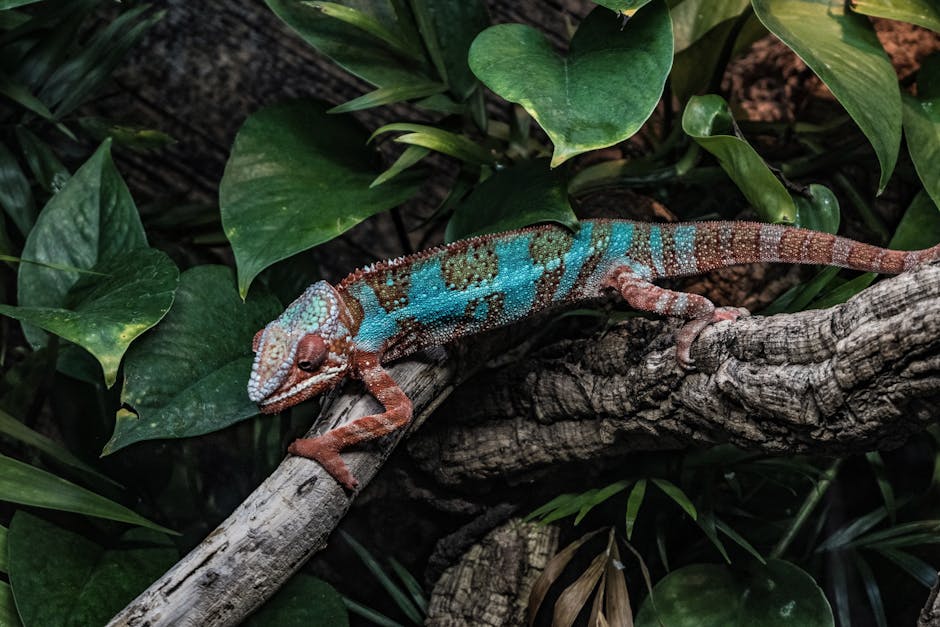
While all chameleons can change color to some degree, the panther chameleon native to Madagascar exhibits the most vibrant transformations. Contrary to popular belief, chameleons don't change color primarily for camouflage but rather for communication and temperature regulation. Males display brilliant reds, blues, and yellows during territorial disputes or courtship rituals. Recent research has revealed that chameleons change color by actively tuning nanocrystals in their skin cells, expanding or contracting the space between these crystals to reflect different wavelengths of light. When relaxed, the crystals are densely packed, reflecting blue light; when excited, they spread apart, reflecting yellow and red wavelengths.

5. The Peacock Flounder: Masters of Texture and Pattern

Peacock flounders possess extraordinary camouflage abilities that extend beyond color to include texture matching. These flatfish can replicate the exact pattern and texture of their surroundings, whether sandy bottoms, rocky surfaces, or even checkerboard patterns in laboratory settings. They achieve this by using their vision to analyze their environment, then adjusting thousands of chromatophores across their body. Remarkably, flounders can match complex backgrounds within eight seconds. Their eyes work independently to scan their surroundings, feeding information to their nervous system that orchestrates the transformation across their entire body surface.

6. The Golden Tortoise Beetle: Living Jewelry

This tiny beetle appears like a drop of molten gold under normal conditions, but can shift to a dull reddish-brown when disturbed or during mating. The transformation occurs through moisture control in the layers of their exoskeleton. The beetle's shell contains multiple transparent layers separated by liquid-filled grooves. By controlling the amount of moisture in these grooves, the beetle changes how light reflects through the layers, altering its appearance from shiny gold to matte orange-red. This process is reversible and can occur within minutes, serving as both camouflage and a distraction mechanism when threatened.

7. The Seahorse: Slow but Steady Color Shifters

Seahorses may change color more slowly than cephalopods, but their transformations are no less impressive. These unique fish alter their appearance to blend with coral, seagrass, and other marine environments where they anchor themselves. Their color changes serve multiple purposes: camouflage from predators, ambush hunting strategy, social signaling, and stress responses. During courtship, seahorses may brighten considerably or display synchronized color changes with their mates. Their color-changing ability relies on chromatophores controlled by hormones and their nervous system, with complete transformations taking anywhere from several minutes to hours.

8. The Pacific Tree Frog: Adapting to Humidity and Light

Pacific tree frogs can transition from brown to bright green and various shades in between, depending on environmental conditions. Temperature, humidity, and light levels all influence their coloration. Unlike some rapid color-changers, tree frogs' transformations occur over hours rather than seconds, making them better suited for long-term environmental matching than quick escape responses. The color change involves chromatophores and is regulated by hormones released in response to environmental stimuli detected through their skin. Darker colors help them absorb heat in cooler conditions, while lighter shades reflect light when temperatures rise.

9. The Crab Spider: Patient Predatory Camouflage

Crab spiders, particularly the white and yellow species, can change color to match the flowers where they hunt. These spiders don't spin webs but instead wait motionless on flower petals for pollinators to arrive. The color transformation from white to yellow or vice versa takes several days to complete, involving the secretion or circulation of pigments throughout their body. This slow change indicates the spider is committing to a particular hunting ground. The camouflage is so effective that even ultraviolet-sensitive insects, which see flowers differently than humans, fail to detect the hidden predator.

10. The Squid: Bioluminescent Light Shows

Many squid species combine color-changing chromatophores with bioluminescence—the ability to produce light through chemical reactions. The Hawaiian bobtail squid, for instance, uses bioluminescent bacteria housed in special organs to match the moonlight filtering through water, making it invisible to predators looking up from below. Other deep-sea squids create flashing light displays in various colors to communicate, confuse predators, or attract prey. This dual system of pigment-based color change and light production represents one of evolution's most sophisticated camouflage and communication systems.

The Science Behind the Spectacle

These remarkable abilities showcase the diverse evolutionary paths animals have taken to solve similar survival challenges. From the near-instantaneous transformations of cephalopods to the gradual seasonal changes of Arctic foxes, each species has developed color-changing abilities perfectly suited to its ecological niche. Understanding these mechanisms continues to inspire technological innovations in materials science, military camouflage, and display technologies. These ten animals remind us that nature's solutions to survival challenges often exceed anything human engineering has yet achieved, combining speed, precision, and beauty in ways that continue to astonish researchers and nature enthusiasts alike.