




1 / 10 Questions
0 Points

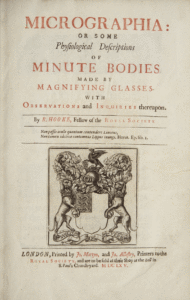
What did Robert Hooke examine and call 'cells' in 1665?

Pond water

Cork tissue

Bacteria

Blood cells

Points won
0
Correct score
0%

More Questions

More Articles

Did You Know There Were Female Samurai in Japan?

Did You Know There Were Female Samurai in Japan?

⏱️ 5 min read

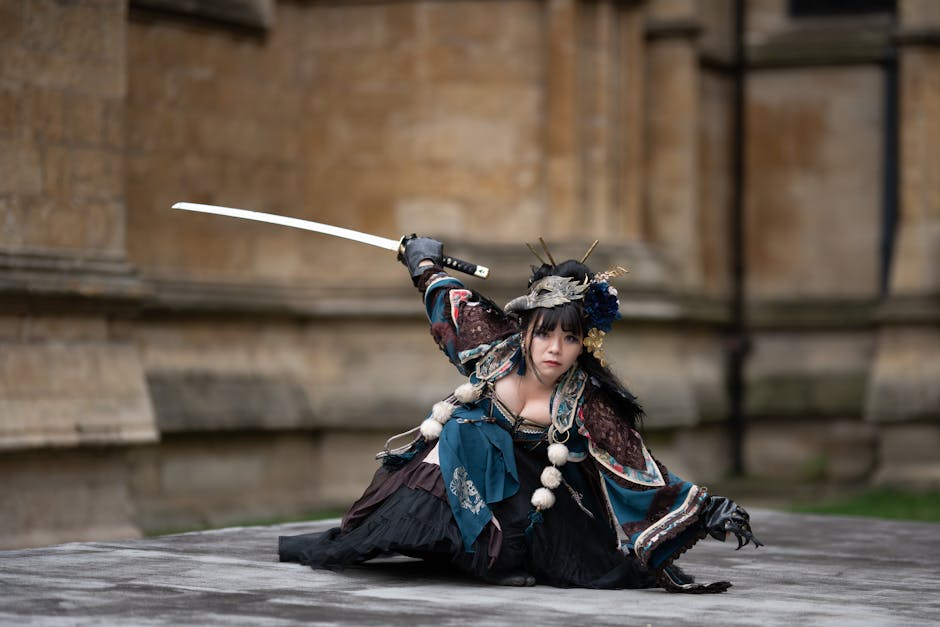
While the samurai warrior class is often depicted as an exclusively male domain in popular culture, historical records reveal a fascinating truth: women not only participated in samurai warfare but held respected positions as skilled warriors in feudal Japan. These female warriors, known as onna-bugeisha, trained in combat techniques, defended their homes and honor, and left an indelible mark on Japanese military history that has only recently begun to receive broader recognition.

The Onna-Bugeisha: Japan's Female Warriors

The onna-bugeisha were members of the Japanese nobility who received martial training and participated in combat alongside their male counterparts. Unlike the popular misconception that samurai culture excluded women entirely, these warriors were an integral part of feudal Japanese society from as early as the 12th century through the end of the samurai era in the 19th century.

The term "onna-bugeisha" translates literally to "female martial artist," and these women were expected to protect their households, family honor, and territory when necessary. They weren't merely symbolic figures or rare exceptions—DNA analysis of remains from ancient battle sites has revealed that approximately 30% of the bodies excavated showed female skeletal structures, suggesting that women's participation in warfare was far more common than previously believed.

Weapons and Training of Female Samurai

Female warriors typically specialized in the naginata, a pole weapon with a curved blade at the end, which became closely associated with women of the samurai class. The naginata's design offered several advantages: its length provided reach and leverage, compensating for potential differences in physical strength, while its sweeping motions were highly effective against multiple opponents or mounted warriors.

However, onna-bugeisha were not limited to just one weapon. Their training included:

  • Tantojutsu: the art of knife fighting, using a small blade that could be concealed
  • Kyujutsu: archery, which required precision and discipline
  • Tessenjutsu: combat with war fans, which could be used both defensively and offensively
  • Various hand-to-hand combat techniques adapted for self-defense

Training began in childhood for daughters of samurai families, just as it did for sons. They learned not only physical combat skills but also strategy, tactics, and the philosophical underpinnings of bushido—the samurai code of honor.

Legendary Female Samurai Warriors

Tomoe Gozen

Perhaps the most celebrated female warrior in Japanese history, Tomoe Gozen served during the Genpei War (1180-1185). Historical texts describe her as "exceptionally beautiful, a fearsome archer, and a swordswoman worth a thousand warriors." She fought in the Battle of Awazu in 1184, where accounts describe her beheading an enemy warrior after capturing him. Her legendary status has been preserved in "The Tale of the Heike," one of Japan's most important historical epics.

Nakano Takeko

Leading an army of female warriors during the Boshin War in 1868, Nakano Takeko demonstrated exceptional courage during the Battle of Aizu. She commanded a unit of approximately 20 women, fighting with the naginata against imperial Japanese forces equipped with modern weaponry. Despite being mortally wounded by a gunshot, her legacy lived on, and she became a symbol of female warrior spirit. Today, her memory is honored annually at the Aizu Autumn Festival.

Hangaku Gozen

Renowned for her defensive leadership during the Kennin Uprising in 1201, Hangaku Gozen commanded 3,000 warriors at Torisakayama Castle. She was celebrated for her archery skills and defensive strategies, holding off government forces for over a month before being captured. Her martial prowess earned her respect even from her captors.

The Social Role and Expectations

Female samurai occupied a unique position in Japanese society. While they were trained warriors, they also managed household affairs and were responsible for protecting the home during their husbands' absences. This dual role required both martial prowess and administrative capability.

During the peaceful Edo period (1603-1868), when actual combat became less frequent, the role of onna-bugeisha evolved. Martial training remained important for daughters of samurai families, but the emphasis shifted toward preparation for defending the home rather than battlefield service. Nevertheless, the tradition of training noble women in martial arts continued, preserving these skills through generations.

Why Their History Was Overlooked

Several factors contributed to the historical obscurity of female samurai warriors. The gradual consolidation of male-dominated power structures during the Edo period increasingly restricted women's roles. As Japan modernized during the Meiji Restoration, Western influences brought Victorian-era gender expectations that further marginalized historical accounts of female warriors.

Additionally, much of samurai history was recorded and preserved by male chroniclers who may have minimized or omitted women's contributions. The romanticization of the samurai in later periods often focused exclusively on male warriors, creating the persistent stereotype that continues today.

Modern Recognition and Legacy

Contemporary historians and archaeologists have worked to restore the onna-bugeisha to their rightful place in Japanese history. Archaeological evidence, including the DNA analysis mentioned earlier, has provided concrete proof of women's participation in battles. Academic research has also uncovered numerous historical documents, diaries, and records that reference female warriors and their accomplishments.

Today, the legacy of female samurai serves as an inspiration and a reminder that women have always been warriors, defenders, and leaders throughout history. Their story challenges modern assumptions about historical gender roles and enriches our understanding of feudal Japanese society. The onna-bugeisha demonstrate that courage, honor, and martial skill transcend gender, offering a more complete and accurate picture of Japan's fascinating warrior culture.

Top 10 Fun Facts About Communication

Top 10 Fun Facts About Communication

⏱️ 6 min read

Communication is the foundation of human interaction, shaping civilizations, relationships, and the very fabric of society. While we communicate countless times each day, there are fascinating aspects of this essential human activity that often go unnoticed. From the intricate ways our bodies convey messages to the surprising evolution of language itself, the world of communication holds remarkable insights that illuminate how we connect with one another.

Surprising Discoveries About How We Connect

1. Body Language Dominates Our Messages

Research has consistently shown that a staggering 93% of communication is nonverbal, with only 7% of our message conveyed through actual words. This breakdown includes 55% body language and 38% tone of voice. When someone says they're fine with crossed arms, a tense posture, and a sharp tone, we instinctively believe the nonverbal cues over the spoken words. This phenomenon explains why face-to-face communication remains so powerful in an increasingly digital world, and why misunderstandings frequently occur in text-based conversations where these critical nonverbal elements are absent.

2. The Human Voice Can Express Over 20 Emotions

Scientists have discovered that the human voice can reliably convey at least 24 distinct emotions through tone, pitch, and inflection alone. These range from obvious emotions like happiness and sadness to more nuanced feelings such as sympathy, awe, and relief. This remarkable vocal flexibility allows us to communicate complex emotional states without ever choosing specific words, making the human voice one of the most sophisticated instruments for emotional expression in the natural world.

3. We Speak Faster Than We Think We Do

The average person speaks at approximately 150-160 words per minute during normal conversation, but our brains can process information at much higher speeds—up to 400 words per minute. This gap between speaking and processing speeds explains why our minds sometimes wander during conversations and why we can listen to podcasts or audiobooks at accelerated speeds without losing comprehension. Interestingly, when people become excited or nervous, their speaking rate can increase to over 200 words per minute.

4. Babies Communicate Before They Can Talk

Infants begin communicating long before they utter their first word, typically around 2-3 months of age through cooing and intentional eye contact. By six months, babies engage in complex nonverbal communication through gestures, facial expressions, and varied vocal sounds. Research shows that babies as young as six months old can distinguish between different emotional tones and respond accordingly, demonstrating that human communication abilities are deeply hardwired and begin developing from the earliest stages of life.

5. Digital Communication Has Created New Languages

The rise of texting and social media has spawned entirely new forms of communication, including emoji languages and internet slang that function as legitimate linguistic systems. Linguists now recognize that emoji sequences can convey complex meanings and grammatical structures similar to traditional languages. Some estimates suggest there are over 3,600 emoji in existence, and certain emoji combinations have become so universally understood that they transcend traditional language barriers, creating a form of global visual communication.

6. Eye Contact Duration Varies Dramatically Across Cultures

While Western cultures often interpret direct eye contact as a sign of honesty and confidence, this communication norm varies significantly worldwide. In some Asian, African, and Latin American cultures, prolonged eye contact can be considered disrespectful or aggressive, particularly when directed at authority figures or elders. The ideal duration for eye contact also differs: Americans typically maintain eye contact for 7-10 seconds, while in Japan, brief glances are more culturally appropriate. Understanding these variations is crucial for effective cross-cultural communication.

7. Humans Are the Only Species With True Language

While many animals communicate through sounds, gestures, and chemical signals, humans remain the only species with true linguistic capability characterized by syntax, grammar, and the ability to create infinite meanings from finite elements. Our capacity for language includes the unique ability to discuss abstract concepts, past and future events, and hypothetical situations—capabilities that no animal communication system has demonstrated. This linguistic uniqueness has been fundamental to human advancement and the development of complex societies.

8. Written Communication Is Surprisingly Recent

Despite humans having the capacity for speech for approximately 100,000 years, written communication only emerged around 5,000 years ago with ancient Sumerian cuneiform. This means that for 95% of human linguistic history, all communication was oral. The invention of writing represented a revolutionary leap in human capability, allowing information to be preserved across generations and enabling the accumulation of knowledge that sparked civilizational advancement. Even today, many languages worldwide have no written form, existing purely as spoken traditions.

9. Smiling Is a Universal Communication Tool

Research has demonstrated that smiling is one of the few truly universal forms of human communication, recognized across all cultures and even by individuals who have been blind since birth. Studies show that people can distinguish between genuine smiles (Duchenne smiles, which involve both mouth and eye muscles) and fake smiles, even in photographs. Remarkably, smiling is also contagious—seeing someone smile activates the mirror neurons in our brains, often causing us to smile involuntarily in response, creating a powerful tool for positive social bonding.

10. Communication Technology Evolves Faster Than Ever

The pace of communication technology advancement has accelerated dramatically throughout history. While it took radio 38 years to reach 50 million users and television 13 years to achieve the same milestone, the internet reached 50 million users in just 4 years. Facebook accomplished this in 3.5 years, and more recently, ChatGPT reached 100 million users in merely 2 months. This exponential acceleration in adoption rates reflects not only technological advancement but also humanity's fundamental drive to connect and communicate more efficiently with one another.

The Endless Complexity of Human Connection

These fascinating facts reveal just how intricate and multifaceted human communication truly is. From the dominance of nonverbal cues to the universal power of a smile, from ancient oral traditions to cutting-edge digital platforms, communication continues to evolve while maintaining certain fundamental characteristics. Understanding these aspects of how we communicate can enhance our interactions, improve cross-cultural understanding, and deepen our appreciation for this uniquely human capability that connects us all. As technology continues to advance and our world becomes increasingly interconnected, the fundamental human need to communicate remains constant, reminding us that despite our differences, we all share this powerful tool for building relationships and understanding one another.