


1 / 10 Questions
0 Points

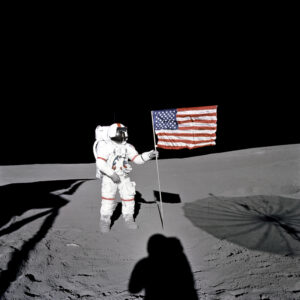
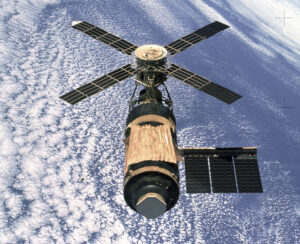
Which NASA program first landed humans on the Moon?

Skylab

Apollo

Mercury

Gemini

Points won
0
Correct score
0%

More Questions

More Articles

20 Interesting Facts About the Earth’s Continents

20 Interesting Facts About the Earth’s Continents

⏱️ 6 min read

The Earth's seven continents represent some of the most fascinating geological, geographical, and biological features on our planet. From ancient landmasses that have drifted across the globe to unique ecosystems found nowhere else, the continents hold countless secrets and remarkable characteristics that continue to surprise scientists and geography enthusiasts alike. Understanding these continental features helps us appreciate the dynamic nature of our planet and the incredible diversity it supports.

Remarkable Continental Features and Characteristics

1. Asia Contains More Than Half the World's Population

Asia stands as the largest and most populous continent, housing approximately 60% of the entire global population. With over 4.7 billion people calling it home, this massive landmass spans from the Arctic Ocean to the Indian Ocean and contains 48 countries, including population giants like China and India.

2. Africa Is Splitting Apart Along the Great Rift Valley

The African continent is literally tearing itself apart at the East African Rift System. This geological phenomenon is creating a new ocean as the Somali and Nubian tectonic plates slowly separate at a rate of about 7 millimeters per year. In approximately 50 million years, East Africa will likely become a separate landmass.

3. Antarctica Holds 70% of the World's Fresh Water

Despite being the driest continent with virtually no rainfall in its interior, Antarctica contains roughly 70% of Earth's fresh water, locked away in massive ice sheets. These ice sheets are up to 4.8 kilometers thick in some places and contain approximately 26.5 million cubic kilometers of ice.

4. Australia Is the Flattest Continent on Earth

Australia claims the distinction of being the world's flattest continent, with an average elevation of just 330 meters above sea level. This geological characteristic results from millions of years of erosion wearing down ancient mountain ranges, leaving behind vast plains and plateaus.

5. South America Hosts the World's Largest Rainforest

The Amazon Rainforest, located primarily in South America, covers approximately 5.5 million square kilometers across nine countries. This biological treasure produces roughly 20% of the world's oxygen and contains an estimated 10% of all species on Earth, making it vital for global climate regulation.

6. Europe Has No True Deserts

Europe is the only inhabited continent without a genuine hot desert, thanks to its temperate climate and proximity to large bodies of water. The continent's geography, influenced by the Atlantic Ocean and Mediterranean Sea, ensures sufficient moisture distribution throughout most regions.

7. North America Contains Every Climate Type

From Arctic tundra in northern Canada to tropical rainforests in Central America, North America showcases every major climate classification found on Earth. This incredible diversity spans across the continent's 24.7 million square kilometers, making it a geographical showcase of global climate patterns.

8. The Sahara Desert Wasn't Always Dry

Africa's Sahara Desert, the world's largest hot desert, was actually a lush, green landscape filled with lakes and vegetation approximately 6,000 years ago. Ancient rock art and archaeological evidence reveal that this region once supported diverse wildlife including hippos, crocodiles, and human settlements.

9. Antarctica Is Technically a Desert

Despite being covered in ice, Antarctica qualifies as a desert because it receives less than 50 millimeters of precipitation annually in its interior regions. This makes it not only the coldest continent but also the largest desert on Earth when measured by area.

10. Asia and Europe Share the Same Landmass

Asia and Europe are actually part of one continuous landmass called Eurasia, with no natural water boundary separating them. The division between these continents is cultural and historical rather than geological, typically marked by the Ural Mountains, Ural River, and Caucasus Mountains.

11. South America Was Once Connected to Africa

Geological evidence overwhelmingly demonstrates that South America and Africa were once joined as part of the supercontinent Gondwana. The coastlines of these continents fit together like puzzle pieces, and they share similar rock formations and fossil records from approximately 200 million years ago.

12. Australia Is Moving Northward at 7 Centimeters Per Year

The Australian continent is currently moving north toward Asia at approximately 7 centimeters annually due to tectonic plate movement. This relatively rapid continental drift means Australia's position on maps needs periodic updating to maintain GPS accuracy.

13. North America's Great Lakes Hold 21% of Earth's Surface Fresh Water

The five Great Lakes of North America contain approximately 21% of the world's surface fresh water by volume. These massive bodies of water, formed by glacial activity during the last ice age, hold about 22,810 cubic kilometers of water.

14. Antarctica Has Active Volcanoes Beneath Its Ice

Despite its frozen appearance, Antarctica hosts numerous volcanoes, including Mount Erebus, one of the few volcanoes on Earth with a permanent lava lake. Scientists have discovered at least 138 volcanoes beneath the ice sheet, some of which remain active and could potentially accelerate ice melting.

15. Africa Straddles All Four Hemispheres

Africa is the only continent that spans all four hemispheres—Northern, Southern, Eastern, and Western. The Equator runs through the middle of the continent, while the Prime Meridian passes through Ghana, creating this unique geographical distinction.

16. Europe Has More Castles Than Any Other Continent

Europe's long feudal history has left it with an estimated 25,000 castles, more than any other continent. Countries like Germany, Wales, and France contain particularly high concentrations of these medieval fortifications, many of which remain standing today.

17. Asia Contains Both the Highest and Lowest Points on Land

Asia holds the extreme records for terrestrial elevation, hosting Mount Everest at 8,849 meters above sea level and the Dead Sea shore at 430 meters below sea level. This dramatic range of over 9,000 meters showcases the continent's remarkable topographical diversity.

18. South America Has the World's Driest Place

The Atacama Desert in Chile, South America, is considered the driest place on Earth, with some weather stations having never recorded any rainfall. Parts of this desert have experienced no significant precipitation for over 400 years, creating Mars-like conditions.

19. Antarctica Was Once a Tropical Paradise

Fossil evidence reveals that Antarctica was once located near the Equator and featured tropical forests with palm trees and diverse animal life approximately 100 million years ago. Continental drift gradually moved it to its current polar position.

20. North America and Asia Are Only 85 Kilometers Apart

The Bering Strait separates North America and Asia by just 85 kilometers at its narrowest point between Alaska and Russia. During ice ages, this gap was bridged by a land connection called Beringia, allowing human migration between continents approximately 20,000 years ago.

Conclusion

The Earth's continents represent an extraordinary tapestry of geological history, climatic diversity, and geographical wonder. From Antarctica's hidden volcanoes to Africa's ongoing split, from Australia's northward journey to Asia's extreme elevations, each continent tells a unique story of planetary evolution. These remarkable features remind us that our planet remains dynamic and ever-changing, with continental processes that have shaped life on Earth for billions of years and will continue to do so for millions more. Understanding these continental characteristics not only enriches our geographical knowledge but also helps us appreciate the complex systems that make Earth such a remarkable and diverse planet.
12 Secrets Behind Famous Movie Scenes

12 Secrets Behind Famous Movie Scenes

⏱️ 7 min read

Movie magic often involves far more than meets the eye. Behind some of cinema's most iconic moments lie fascinating stories of innovation, improvisation, and occasionally dangerous stunts that transformed ordinary filming into extraordinary art. The techniques, accidents, and creative decisions that shaped these legendary scenes reveal the true artistry of filmmaking and the dedication of cast and crew members who brought these visions to life.

Behind the Curtain of Cinema's Greatest Moments

1. The Chest-Bursting Terror in Alien Was Genuine

The iconic chest-burster scene in Ridley Scott's "Alien" (1979) featured authentic shock from the cast members. Director Ridley Scott deliberately kept the specifics of the scene secret from most actors, only informing John Hurt about what would happen. When the alien creature violently emerged, splattering blood across the cast, their horrified reactions were completely genuine. Veronica Cartwright's scream and stunned expression captured real terror, and she was reportedly so shocked that she fell backward. The practical effects team used actual animal organs and high-pressure blood pumps to create the gruesome spectacle, resulting in one of horror cinema's most memorable moments.

2. The Helicopter Apocalypse in Apocalypse Now Nearly Killed the Production

Francis Ford Coppola's "Apocalypse Now" (1979) featured spectacular helicopter sequences that came at tremendous cost. The production borrowed helicopters from the Philippine Air Force, but these military assets were frequently recalled to fight actual rebels, disrupting filming schedules. The famous "Ride of the Valkyries" attack sequence required precise coordination with real military helicopters performing dangerous maneuvers. Typhoon-related destruction of sets, Martin Sheen's near-fatal heart attack, and budget overruns turned the production into its own journey into madness, mirroring the film's themes.

3. The Backwards-Talking Dream Sequences Required Intense Training

David Lynch's "Twin Peaks" series featured the mysterious Red Room sequences where characters spoke in reverse. To achieve this effect, actors learned their lines backward phonetically, performed them in reverse, and then Lynch reversed the footage in post-production. The result created an otherworldly, unsettling quality that became iconic. Actor Michael J. Anderson spent weeks perfecting his backwards speech patterns, and the strange movements resulted from actors performing actions in reverse, which, when reversed again, created uncannily odd gestures.

4. The Rotating Hallway Fight Took Three Weeks to Film

Christopher Nolan's "Inception" (2010) featured a gravity-defying fight scene in a rotating hotel corridor. Rather than relying on CGI, the production team built a massive rotating corridor set that actually spun 360 degrees. Actor Joseph Gordon-Levitt performed most of his own stunts inside this rotating environment, fighting while the entire hallway turned around him. The construction cost over $500,000 and required careful choreography to prevent injuries. The scene took three weeks to complete and resulted in one of modern cinema's most impressive practical effects sequences.

5. The Shower Murder Was Shot in Seven Days with Seventy Camera Setups

Alfred Hitchcock's "Psycho" (1960) featured perhaps cinema's most famous murder scene. The shower sequence, lasting just 45 seconds on screen, required seven days of filming with over seventy different camera angles. Hitchcock used a combination of quick cuts, strategic camera placement, and clever editing to suggest violence without showing the knife actually penetrating flesh. Chocolate syrup served as blood in the black-and-white footage, and a casaba melon was stabbed to create the unsettling sound effects. The scene revolutionized film editing and remains a masterclass in creating horror through suggestion.

6. The Docking Scene Used Actual Mathematical Calculations

Christopher Nolan's "Interstellar" (2014) featured a tense docking sequence where the spaceship spins rapidly. The scene's visual effects were grounded in actual physics calculations provided by theoretical physicist Kip Thorne. The spinning spacecraft rotation was calculated at 68 revolutions per minute, and the visual effects team ensured every detail matched realistic physics. Actor Matthew McConaughey studied actual astronaut training footage to understand the physical effects of such maneuvers, bringing authenticity to his performance during the high-stakes sequence.

7. The Spider-Man Kiss Required Tobey Maguire to Nearly Suffocate

The upside-down kiss between Spider-Man and Mary Jane in Sam Raimi's "Spider-Man" (2002) created an iconic romantic moment, but it came at physical cost to Tobey Maguire. Hanging upside down in pouring rain, Maguire found water running into his nose through the mask's nostrils, making it nearly impossible to breathe. The actor held his breath during takes, and the scene required multiple attempts. Kirsten Dunst had to carefully peel back only the lower portion of the mask to allow the kiss while maintaining Spider-Man's secret identity, adding technical complexity to the romantic scene.

8. The T-Rex Attack Used Malfunctioning Animatronics

Steven Spielberg's "Jurassic Park" (1993) featured a terrifying T-Rex attack during a rainstorm. However, the rain caused the sophisticated animatronic dinosaur to malfunction, making unplanned movements. The massive mechanical creature would occasionally shake and move when it wasn't supposed to, genuinely frightening the actors. Spielberg incorporated these unpredictable movements into the final cut, as they added to the terror and unpredictability of the scene. The T-Rex weighed approximately 12,000 pounds and required constant maintenance between takes to keep functioning.

9. The Omaha Beach Landing Featured Real Amputee Veterans

Steven Spielberg's "Saving Private Ryan" (1998) opened with the visceral Omaha Beach invasion sequence. To achieve brutal authenticity, Spielberg cast several military amputees to portray wounded soldiers, lending heartbreaking realism to the casualties. The director also removed the camera stabilizers to create documentary-style shaky footage, and special effects artists developed new techniques for depicting realistic wounds and dismemberment. The sequence's graphic violence and chaotic filming approach revolutionized how war was depicted on screen, influencing countless subsequent films.

10. The Zero Gravity Sequences Were Actually Filmed in Freefall

Ron Howard's "Apollo 13" (1995) achieved authentic weightlessness by filming inside NASA's "Vomit Comet," a KC-135 aircraft that creates brief periods of zero gravity through parabolic flight paths. The cast and crew endured hundreds of parabolic flights, each providing approximately 23 seconds of weightlessness. Tom Hanks, Kevin Bacon, and Bill Paxton performed their scenes during these genuine freefall moments rather than relying on wire work or CGI. The commitment to authenticity resulted in unparalleled realism but also caused motion sickness among cast and crew members.

11. The Joker's Hospital Explosion Included a Real Pause

In "The Dark Knight" (2008), the Joker walks away from a exploding hospital while triggering the detonator. Heath Ledger's confused fiddling with the remote control appeared to be improvisation when the explosives didn't immediately detonate, but it was actually choreographed. However, Ledger's reaction timing and character choices in that moment were his own creation. The entire explosion was captured in one take using a real controlled demolition of a partially demolished building. The scene required precise timing and extensive planning, with no possibility for a second attempt.

12. The Floating Pen Was Achieved Through Invisible Trickery

Stanley Kubrick's "2001: A Space Odyssey" (1968) featured a stewardess retrieving a floating pen in zero gravity, years before CGI existed. The effect was achieved using a rotating set and a pen attached to a sheet of glass positioned in front of the camera. As the set rotated, the pen appeared to float while the actress walked along the curved wall. Kubrick's meticulous attention to detail and innovative practical effects techniques created believable space sequences that influenced science fiction cinema for decades. The scene demonstrated that creative problem-solving could overcome technological limitations.

The Art Behind the Magic

These twelve secrets reveal that cinema's most memorable moments often resulted from combinations of meticulous planning, happy accidents, physical danger, and creative problem-solving. Whether through practical effects, method acting, or revolutionary techniques, filmmakers and actors have continually pushed boundaries to create authentic experiences. The dedication, innovation, and sometimes risks taken behind these famous scenes remind us that movie magic requires real-world craftsmanship, imagination, and courage. Understanding these secrets doesn't diminish the wonder of these moments but rather deepens appreciation for the artistry involved in transforming scripts into unforgettable cinematic experiences that continue to captivate audiences decades after their creation.