



1 / 20 Questions
0 Points

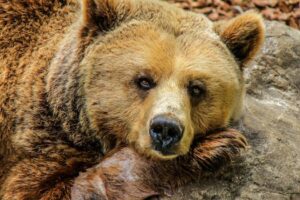
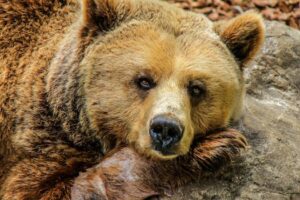
Which animal hibernates up to 7.5 months yearly?

Black Bear

Groundhog

Arctic Ground Squirrel

Chipmunk

Points won
0
Correct score
0%

More Questions

More Articles

Top 10 Longest Rivers in the World

Top 10 Longest Rivers in the World

⏱️ 6 min read

Rivers have shaped civilizations, carved landscapes, and sustained life for millennia. These flowing waterways serve as vital arteries for commerce, agriculture, and human settlement. While thousands of rivers traverse our planet, a select few stand out for their extraordinary length, spanning multiple countries and ecosystems. Understanding these magnificent water systems provides insight into geography, climate patterns, and the interconnectedness of our world's natural resources.

The World's Most Extensive River Systems

1. The Nile River: Africa's Life-Giving Waterway

Stretching approximately 6,650 kilometers (4,130 miles), the Nile River has long been recognized as the world's longest river. This iconic waterway flows northward through eleven countries in northeastern Africa before emptying into the Mediterranean Sea. The Nile has two major tributaries: the White Nile, originating from Lake Victoria, and the Blue Nile, which begins at Lake Tana in Ethiopia. For thousands of years, the Nile's annual flooding deposited nutrient-rich sediment along its banks, enabling ancient Egyptian civilization to flourish. Today, over 300 million people depend on the Nile for water, making it one of the most crucial rivers for human survival.

2. The Amazon River: South America's Mighty Giant

Measuring approximately 6,400 kilometers (3,976 miles) in length, the Amazon River flows through South America and holds the distinction of being the world's largest river by discharge volume. Originating in the Peruvian Andes, it traverses Brazil and several other countries before reaching the Atlantic Ocean. The Amazon carries more water than the next seven largest rivers combined and accounts for roughly 20% of all freshwater entering the world's oceans. Its basin encompasses the largest tropical rainforest on Earth, supporting unparalleled biodiversity with millions of species of plants, animals, and insects.

3. The Yangtze River: China's Cultural Heartland

At approximately 6,300 kilometers (3,917 miles), the Yangtze River ranks as Asia's longest river and the world's third-longest. Flowing entirely within China, it originates from the Tanggula Mountains on the Tibetan Plateau and empties into the East China Sea near Shanghai. The Yangtze has been central to Chinese civilization for millennia, supporting agriculture, transportation, and industry. The river basin is home to nearly one-third of China's population and houses the Three Gorges Dam, the world's largest hydroelectric power station. Its cultural significance is reflected in countless poems, paintings, and historical accounts spanning thousands of years.

4. The Mississippi-Missouri River System: North America's Waterway Network

The combined Mississippi-Missouri river system extends approximately 6,275 kilometers (3,902 miles), making it North America's longest river system. The Missouri River, the longer tributary, originates in Montana's Rocky Mountains, while the Mississippi begins at Lake Itasca in Minnesota. Together, they drain 31 U.S. states and two Canadian provinces, creating a vast watershed that covers roughly 40% of the continental United States. This river system has been instrumental in American history, facilitating westward expansion, trade, and agricultural development throughout the nation's heartland.

5. The Yenisei River: Siberia's Frozen Giant

Flowing approximately 5,539 kilometers (3,445 miles) through Siberia, the Yenisei River is the largest river system draining into the Arctic Ocean. Beginning in Mongolia, it flows northward through Russia before emptying into the Kara Sea. The Yenisei divides Siberia into western and eastern regions and remains frozen for several months each year. Despite its harsh climate, the river supports significant populations and serves as a crucial transportation route in a region where roads are scarce. The river basin contains vast mineral resources and timber reserves that have been essential to Russia's economic development.

6. The Yellow River: China's Cradle of Civilization

Known as Huang He in Chinese, the Yellow River stretches approximately 5,464 kilometers (3,395 miles) and is considered the birthplace of Chinese civilization. The river gets its name from the massive amounts of yellow-colored sediment it carries, making it the world's muddiest major river. Originating in the Bayan Har Mountains of western China, it flows through nine provinces before reaching the Bohai Sea. Throughout history, the Yellow River has been both a blessing and a curse, providing fertile soil for agriculture while also causing devastating floods that have claimed millions of lives, earning it the nickname "China's Sorrow."

7. The Ob-Irtysh River System: Western Siberia's Waterway

The Ob-Irtysh river system extends approximately 5,410 kilometers (3,364 miles) through Russia, Kazakhstan, China, and Mongolia. The Irtysh River originates in the Altai Mountains and flows into the Ob River, which continues northward to the Gulf of Ob in the Arctic Ocean. This river system drains a vast area of western Siberia and forms one of the world's longest estuaries where it meets the sea. The region's extreme continental climate means the river remains frozen for up to half the year, yet it supports important fisheries and provides water for agriculture and industry in this remote region.

8. The Paraná River: South America's Silver Pathway

Flowing approximately 4,880 kilometers (3,032 miles) through Brazil, Paraguay, and Argentina, the Paraná River is South America's second-longest river. It merges with the Paraguay and Uruguay rivers to form the Río de la Plata estuary, one of the world's widest river mouths. The Paraná has been crucial for South American commerce and transportation, connecting the continent's interior to the Atlantic Ocean. The river basin supports intensive agriculture, particularly soybean production, and hosts several major hydroelectric dams, including the massive Itaipu Dam, one of the world's largest power-generating facilities.

9. The Congo River: Africa's Deepest Waterway

At approximately 4,700 kilometers (2,922 miles), the Congo River is Africa's second-longest river and the world's deepest, reaching depths exceeding 220 meters in some sections. Flowing through the heart of equatorial Africa, it is the only major river to cross the equator twice. The Congo Basin encompasses the world's second-largest rainforest after the Amazon, supporting extraordinary biodiversity. The river's massive discharge volume, second only to the Amazon, creates tremendous hydroelectric potential. Despite its importance, much of the Congo River remains relatively undeveloped due to political instability and challenging terrain, including dangerous rapids and waterfalls.

10. The Amur River: The Far Eastern Border

Stretching approximately 4,444 kilometers (2,763 miles), the Amur River forms much of the border between northeastern China and Russia. Known as Heilong Jiang in Chinese, meaning "Black Dragon River," it originates from the confluence of the Shilka and Argun rivers and flows eastward to the Sea of Okhotsk. The Amur basin spans diverse ecosystems, from steppes and wetlands to temperate forests, supporting unique wildlife including the endangered Amur leopard and Siberian tiger. The river experiences dramatic seasonal variations, with powerful floods during the summer monsoon season creating significant challenges for riverside communities.

Understanding River Length Measurements

Determining precise river lengths presents scientific challenges, as measurements can vary depending on which tributaries and sources are included. Geographic surveys continuously refine data using satellite technology and improved mapping techniques. Seasonal variations, changing channels, and the definition of river sources all contribute to ongoing debates about exact rankings. Nevertheless, these ten rivers indisputably represent the world's most extensive freshwater systems, each playing irreplaceable roles in their respective regions' ecology, economy, and culture.

Top 10 Unknown Facts About Pablo Picasso

Top 10 Unknown Facts About Pablo Picasso

⏱️ 7 min read

Pablo Picasso stands as one of the most influential artists of the 20th century, renowned for co-founding Cubism and creating over 50,000 artworks during his lifetime. While many people recognize his name and iconic paintings like "Guernica" and "Les Demoiselles d'Avignon," numerous fascinating aspects of his life and career remain relatively unknown to the general public. These lesser-known facts reveal the complexity, eccentricity, and genius of this revolutionary artist who forever changed the landscape of modern art.

Revealing the Hidden Dimensions of a Master Artist

1. His Full Name Contains 23 Words

Pablo Picasso's complete baptismal name was Pablo Diego José Francisco de Paula Juan Nepomuceno María de los Remedios Cipriano de la Santísima Trinidad Ruiz y Picasso. This extraordinarily long name honored various saints and relatives, following Spanish naming customs of the time. He was named after saints and family members, with "Ruiz" being his father's surname and "Picasso" his mother's maiden name. Picasso eventually chose to sign his works with his mother's surname, an unusual decision in Spanish culture where paternal surnames traditionally take precedence. This choice not only distinguished him from his artist father but also created a more memorable and distinctive artistic identity.

2. He Created His First Masterpiece at Age Nine

While most nine-year-olds are still mastering basic artistic techniques, Picasso completed "Le Picador," an oil painting depicting a mounted bullfighter, in 1890. This early work demonstrated technical proficiency far beyond his years, showcasing his innate understanding of composition, perspective, and human anatomy. His father, José Ruiz Blasco, was an art teacher and painter who recognized his son's exceptional talent early on. According to legend, Picasso's father gave up painting after witnessing his son's superior abilities, dedicating himself instead to nurturing the young prodigy's development. This early mastery laid the foundation for Picasso's later revolutionary innovations in art.

3. He Was a Suspected Thief of the Mona Lisa

In 1911, when Leonardo da Vinci's "Mona Lisa" was stolen from the Louvre, Picasso was brought in for questioning as a suspect. The investigation connected him to Géry Piéret, a Belgian con artist who had previously stolen Iberian sculptures from the Louvre and sold them to Picasso and his friend, poet Guillaume Apollinaire. Although Picasso had nothing to do with the Mona Lisa theft—which was actually carried out by Italian handyman Vincenzo Peruggia—the artist reportedly feared deportation and was genuinely terrified during the interrogation. This incident revealed Picasso's complicated relationship with legality and his willingness to acquire artworks through questionable means for artistic inspiration.

4. He Survived the Spanish Flu and World War II in Paris

During the Nazi occupation of Paris in World War II, Picasso refused to flee France despite being labeled a degenerate artist by the Nazi regime. His artwork was banned from exhibition, and he faced constant surveillance and harassment. Nazi officers who visited his apartment allegedly asked about "Guernica," his powerful anti-war painting, to which Picasso famously replied, "No, you did that." He continued working in his studio throughout the occupation, producing some of his most politically charged works. Additionally, Picasso survived the devastating Spanish Flu pandemic of 1918, which killed millions worldwide, demonstrating remarkable resilience during multiple historic crises.

5. He Painted With Flashlights in Thin Air

In 1949, photographer Gjon Mili visited Picasso and introduced him to the concept of light painting photography. Using a small flashlight in a darkened room, Picasso created temporary drawings in the air while Mili's camera captured the light trails with long exposure photography. These "light drawings" demonstrated Picasso's ability to create art in any medium, transforming even light itself into artistic expression. The resulting images showed centaurs, bulls, and various figures characteristic of Picasso's visual vocabulary, proving that his artistic genius transcended traditional materials and could manifest in the most ephemeral of mediums.

6. He Carried a Revolver Loaded With Blank Cartridges

Picasso often carried a revolver loaded with blank ammunition, which he would allegedly fire at people who annoyed him or asked unintelligent questions about art. This eccentric habit reflected his contempt for pretension and his mercurial temperament. He particularly disliked people who asked him to explain the meaning of his artwork, believing that art should speak for itself without verbal interpretation. While seemingly dangerous and certainly theatrical, this behavior exemplified Picasso's rebellious nature and his disdain for bourgeois conventions, reinforcing his image as an untamed artistic genius who refused to conform to social expectations.

7. He Never Attended Formal Art School Beyond His Youth

Despite his father's academic position and early enrollment in prestigious institutions like La Llotja art school in Barcelona and the Royal Academy of San Fernando in Madrid, Picasso largely abandoned formal education as a teenager. He found traditional academic instruction stifling and preferred to study works in museums and develop his own techniques through experimentation. By age 16, he was already spending time with older artists in Barcelona's bohemian circles rather than attending classes. This rejection of conventional art education allowed him to develop revolutionary approaches unburdened by academic strictures, ultimately enabling him to break fundamental rules of representation and perspective that defined Western art for centuries.

8. He Owned a Siamese Cat Named Minou

While Picasso painted numerous animals throughout his career—bulls, horses, doves, and dogs—he maintained a personal menagerie that included a Siamese cat named Minou. Animals played significant roles in both his personal life and artistic symbolism, with pets providing companionship in his studios. Minou appears in various photographs from the 1950s, often perched near the artist while he worked. Beyond cats, Picasso kept dogs, an owl, a monkey, and even a goat named Esmeralda at his villa in the south of France. These animals weren't merely pets but often served as artistic subjects and muses, reflecting his deep connection to the natural world and its creatures.

9. He Produced Artwork Until the Final Day of His Life

Picasso remained extraordinarily productive until his death at age 91 in 1973, creating artwork literally hours before he passed away. His final years saw an explosive burst of creativity, with some critics initially dismissing his late works as the products of a declining mind. However, these late paintings, characterized by bold colors, raw sexuality, and confrontations with mortality, have since been recognized as profound meditations on aging, death, and artistic legacy. His relentless work ethic—producing an estimated 50,000 artworks including paintings, sculptures, ceramics, and prints throughout his lifetime—demonstrates an almost superhuman dedication to artistic creation that never diminished with age.

10. He Left Behind a Complex Estate Battle

When Picasso died, he left no will, creating a massive legal battle over his estate that took six years to settle. His fortune included not only thousands of his own artworks but also properties, cash, and works by other famous artists. The legal proceedings involved multiple wives, children, and grandchildren, revealing the complicated personal life behind the artistic genius. The estate was eventually divided among six heirs, and the French government received numerous artworks in lieu of inheritance taxes, which formed the core collection of the Musée Picasso in Paris. This chaotic aftermath reflected the tumultuous personal relationships that characterized much of Picasso's life, where his artistic brilliance coexisted with often-difficult interpersonal dynamics.

Understanding the Complete Picasso

These lesser-known facts illuminate dimensions of Pablo Picasso that extend far beyond his artistic innovations and famous paintings. From his remarkably long name and precocious talent to his eccentric habits and complicated personal life, Picasso emerges as a figure of contradictions—simultaneously generous and difficult, traditional and revolutionary, playful and serious. His influence on modern art remains unparalleled, but understanding these hidden aspects of his life provides crucial context for appreciating not just what he created, but who he was as a person navigating extraordinary historical circumstances while fundamentally transforming artistic expression for future generations.