


















1 / 20 Questions
0 Points

What is the most popular frozen vegetable in the United States?

Corn

Peas

Broccoli

Green Beans

Points won
0
Correct score
0%

More Questions

More Articles

20 Fun Facts About Dogs That Will Surprise You

20 Fun Facts About Dogs That Will Surprise You

⏱️ 7 min read

Dogs have been humanity's faithful companions for thousands of years, yet these remarkable animals continue to surprise us with their incredible abilities, unique behaviors, and fascinating biological traits. From their extraordinary senses to their complex social intelligence, canines possess numerous qualities that even the most devoted dog lovers might not know about. The following collection reveals some of the most astonishing and delightful facts about our four-legged friends.

Remarkable Physical Abilities and Senses

1. Dogs Can Smell Human Emotions

Dogs possess approximately 300 million olfactory receptors in their noses, compared to about 6 million in humans. This extraordinary sense of smell allows them to detect chemical changes in human sweat and breath that occur when people experience different emotions like fear, anxiety, or happiness. Research has shown that dogs can literally smell when their owners are stressed or scared, which explains their uncanny ability to provide comfort during difficult times.

2. Puppies Are Born Deaf and Blind

Newborn puppies enter the world completely dependent on their mothers, unable to see or hear for the first two to three weeks of life. Their ear canals and eyes remain closed to protect these delicate organs during the final stages of development. During this vulnerable period, they rely entirely on their sense of touch and smell to navigate their environment and find nourishment.

3. Three Eyelids Provide Extra Protection

Dogs have an additional eyelid called the nictitating membrane or "haw" that humans lack. This third eyelid is located in the inner corner of each eye and sweeps horizontally across the eyeball to provide extra moisture and protection. It acts like a windshield wiper, distributing tears and removing debris while keeping the eye lubricated.

4. Nose Prints Are Unique Identifiers

Just as human fingerprints are unique to each individual, every dog's nose print is completely distinctive. The patterns of ridges and creases on a dog's nose are so specific that they can be used for identification purposes. Some organizations have even created databases of nose prints to help locate lost or stolen dogs.

Extraordinary Behavioral Traits

5. Dogs Experience Jealousy Like Humans

Scientific studies have confirmed that dogs genuinely experience jealousy, particularly when their owners show affection to other dogs or even inanimate objects that resemble dogs. Brain scans have revealed that dogs show similar neural responses to jealousy-inducing situations as humans do, demonstrating the depth of their emotional capacity.

6. The Tail-Wagging Direction Reveals Emotions

The direction in which a dog wags its tail actually communicates different emotions. Research indicates that when dogs wag their tails more to the right side of their bodies, they're feeling positive emotions. Conversely, wagging more to the left suggests negative feelings or uncertainty. This asymmetric tail wagging reflects the different hemispheres of the brain processing various emotions.

7. Dogs Can Learn Over 250 Words

The average dog can understand approximately 165 words, signals, and gestures, comparable to a two-year-old child. However, dogs in the top 20% of canine intelligence can learn more than 250 words. Border Collies, Poodles, and German Shepherds typically rank among the breeds with the highest capacity for word comprehension.

8. Dreaming Dogs Replay Their Day

When dogs twitch, whimper, or move their paws during sleep, they're likely dreaming. Studies suggest that dogs experience similar sleep patterns to humans, including REM (rapid eye movement) sleep where dreaming occurs. Researchers believe dogs dream about their daily activities, such as playing, running, or interacting with their owners.

Amazing Historical and Evolutionary Facts

9. Dogs Were the First Domesticated Animals

Archaeological evidence suggests that dogs were domesticated between 20,000 and 40,000 years ago, making them the first animals to form a partnership with humans. This relationship predates agriculture and the domestication of any other species, highlighting the special bond between humans and canines that has existed for millennia.

10. Basenji Dogs Don't Bark

The Basenji breed from Central Africa is known as the "barkless dog" because of its unusually shaped larynx. Instead of barking, Basenjis produce unique sounds including yodels, howls, and crow-like noises. This distinctive trait made them valuable hunting companions in their native regions, where silence was essential.

11. Dalmatians Are Born Completely White

Dalmatian puppies enter the world with pure white coats, and their characteristic black or liver-colored spots begin to appear when they're about two weeks old. The spots continue to develop and darken as the puppies mature, with the final spot pattern not fully established until they're around seven months old.

Health and Biological Wonders

12. Dogs Can Detect Medical Conditions

Trained medical detection dogs can identify various health conditions including cancer, diabetes, and seizures before symptoms become apparent to humans or medical equipment. Some dogs can detect blood sugar changes in diabetic patients or smell chemical changes that precede seizures, providing potentially life-saving alerts to their owners.

13. Wet Noses Enhance Smell Detection

A dog's nose secretes a thin layer of mucus that helps absorb scent chemicals, enhancing their already remarkable sense of smell. The moisture also helps dogs determine which direction a smell is coming from. Additionally, dogs lick their noses to sample the scent chemicals and gather even more information about their environment.

14. Heart Rates Sync With Their Owners

Research has shown that when dogs and their owners interact positively, their heart rates and breathing patterns can synchronize. This physiological mirroring demonstrates the deep emotional connection between dogs and humans, and it occurs during activities like petting, playing, or simply sitting together quietly.

15. Dogs Have a Sixth Sense for Time

Dogs possess an impressive ability to track time and can predict regular events with surprising accuracy. They can sense when their owners typically arrive home, when it's time for walks, or when meals are due. This temporal awareness likely combines their internal circadian rhythms with environmental cues and scent trails that change throughout the day.

Social and Communication Skills

16. Yawning Is Contagious From Humans to Dogs

Dogs can "catch" yawns from humans, a phenomenon typically associated with empathy and social bonding. Studies have shown that dogs are more likely to yawn when they see their owners yawn compared to strangers yawning, suggesting this contagious behavior is linked to emotional connections.

17. Dogs Understand Pointing Better Than Wolves

Despite being genetically similar to wolves, dogs have evolved to understand human pointing gestures in ways that wolves cannot. This ability demonstrates how domestication has shaped dogs' cognitive abilities specifically for communicating with humans, making them uniquely adapted to interpret our body language and intentions.

18. Greyhounds Can Outrun Most Racehorses

Over short distances, Greyhounds are faster than racehorses, capable of reaching speeds up to 45 miles per hour. While horses have greater endurance over long distances, Greyhounds' acceleration and top speed make them the second-fastest land animals, surpassed only by cheetahs.

Surprising Breed-Specific Characteristics

19. Norwegian Lundehunds Have Extra Toes

The Norwegian Lundehund breed possesses at least six fully-functioning toes on each foot, rather than the typical four. These extra digits, along with their extraordinarily flexible joints, allowed them to climb steep cliffs and navigate narrow crevices while hunting puffins in their native Norway.

20. The Oldest Known Dog Breed Dates Back Millennia

The Saluki is considered one of the oldest dog breeds, with evidence of its existence dating back to approximately 7000 BCE in ancient Egypt. These elegant sighthounds were so revered in ancient cultures that they were often mummified alongside pharaohs, and their images appear in ancient Egyptian tombs and artifacts.

Conclusion

These remarkable facts demonstrate that dogs are far more complex and capable than many people realize. From their extraordinary sensory abilities and emotional intelligence to their unique physical characteristics and historical significance, dogs continue to amaze researchers and pet owners alike. Understanding these fascinating aspects of canine biology and behavior not only deepens our appreciation for these beloved companions but also helps us provide better care and strengthen the bonds we share with them. Whether detecting diseases, synchronizing with our emotions, or simply bringing joy to our lives, dogs prove time and again why they've earned their title as humanity's best friend.
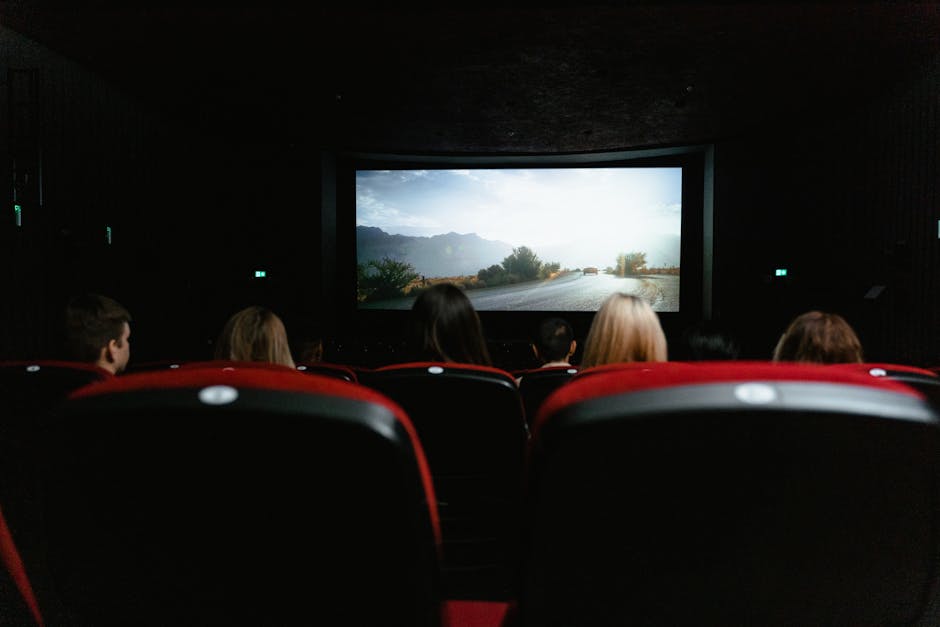
Did You Know? 10 Fun Facts About CGI in Movies

Did You Know? 10 Fun Facts About CGI in Movies

⏱️ 7 min read

Computer-generated imagery has revolutionized filmmaking over the past few decades, transforming impossible visions into stunning on-screen realities. From bringing dinosaurs back to life to creating entire fantasy worlds, CGI has become an indispensable tool in modern cinema. While audiences are familiar with the spectacular results, the behind-the-scenes stories and technical achievements are often just as fascinating as what appears on screen. Here are some remarkable facts about CGI in movies that reveal the innovation, creativity, and sheer determination that goes into creating movie magic.

The Evolution and Impact of CGI Technology

1. The First Feature Film to Use CGI Was a Science Fiction Classic

While many people assume that CGI is a relatively recent innovation, the first feature film to incorporate computer-generated imagery was actually "Westworld" in 1973. The Michael Crichton-directed thriller used digital image processing to create the point-of-view shots of the android gunslinger, portrayed by Yul Brynner. This pixelated, computer-generated perspective gave audiences their first glimpse of what would become a revolutionary technology. The process was rudimentary by today's standards, taking hours to render just seconds of footage, but it opened the door to endless possibilities in visual storytelling.

2. Pixar's Rendering Farm Is More Powerful Than Most Supercomputers

Creating animated films like "Toy Story" or "Finding Nemo" requires astronomical computing power. Pixar's rendering farm contains thousands of processors working simultaneously to generate the final images seen on screen. A single frame of a Pixar movie can take anywhere from several hours to days to render, depending on its complexity. For "Monsters University," some of the more intricate frames took up to 29 hours each to complete. When you consider that films run at 24 frames per second, the computational power required becomes staggering. This rendering farm represents more processing capability than some of the world's most advanced supercomputers from just a decade earlier.

3. Gollum Required an Entire Team and Groundbreaking Motion Capture Technology

The character of Gollum in "The Lord of the Rings" trilogy represented a watershed moment for CGI and motion capture performance. Actor Andy Serkis performed the role on set wearing a motion capture suit covered in reflective markers, while cameras tracked his movements and facial expressions. A team of animators at Weta Digital then translated this performance data into the digital character. The team developed new facial animation software specifically for Gollum, creating a system that could capture and translate the subtle nuances of human expression. The result was so convincing that it sparked debates about whether motion capture performances should be eligible for acting awards.

4. Jurassic Park Used Only Minutes of CGI Despite Its Revolutionary Impact

Steven Spielberg's "Jurassic Park" is often credited with ushering in the modern era of CGI, yet the film actually contains only about four minutes of computer-generated dinosaurs in its entire runtime. The majority of dinosaur shots were achieved using animatronics and practical effects created by Stan Winston Studio. However, those four minutes were so groundbreaking and seamlessly integrated that they changed Hollywood's perception of what CGI could achieve. The film's visual effects supervisor, Dennis Muren, won an Academy Award for his work, and studios immediately began investing heavily in digital effects technology.

Technical Innovations and Creative Solutions

5. The Matrix's Bullet Time Required 120 Still Cameras and Custom Software

The iconic "bullet time" effect from "The Matrix" wasn't created through traditional CGI alone. The Wachowskis and visual effects supervisor John Gaeta developed a technique using 120 still cameras arranged in a circle, all triggered in rapid sequence. These images were then processed using custom software to create the illusion of the camera rotating around frozen or slow-motion action. The technique combined photography, CGI interpolation, and innovative thinking to create one of cinema's most memorable visual effects. The rig took months to design and calibrate, and the sequence required extensive planning to execute properly.

6. Avatar's Virtual Camera System Changed How Directors Work

James Cameron developed a revolutionary virtual camera system for "Avatar" that allowed him to see CGI characters and environments in real-time while filming. This technology enabled Cameron to direct performance capture scenes while simultaneously viewing how they would appear in the final, digitally-rendered world of Pandora. Actors performed in a motion capture volume while Cameron used a device resembling a camera to frame shots, but instead of seeing the bare stage, he saw the finished CGI environment on a monitor. This innovation has since been adopted by other filmmakers and has fundamentally changed how directors approach filming in digital environments.

7. CGI Hair and Fur Were Once the Holy Grail of Animation

For years, realistic hair and fur represented one of the biggest challenges in CGI. Each strand must move independently while also interacting with other strands and responding to movement, gravity, and wind. Pixar developed proprietary software called "Fizt" specifically to handle Sulley's 2.3 million individual hairs in "Monsters, Inc." Each frame required significant rendering time just to calculate how the fur should look and move. Similarly, Disney's "Tangled" required the development of new technology to animate Rapunzel's 70 feet of hair convincingly. These technical achievements in digital hair simulation have since become standard tools in the industry.

Surprising Applications and Hidden CGI

8. Many Modern Films Use CGI to Remove Everyday Objects

While audiences typically notice CGI when it adds fantastical elements, the technology is frequently used in invisible ways to remove unwanted items from shots. Safety wires, camera equipment, crew members, and modern buildings are routinely erased from footage. Films set in historical periods use CGI extensively to remove contemporary elements like power lines, satellite dishes, and modern signage. David Fincher is famous for using CGI in nearly every shot of his films, often to make subtle adjustments that most viewers never notice. This "invisible" CGI represents a significant portion of post-production work on many films.

9. The Entire City of Wakanda Was Created Digitally

The stunning African nation of Wakanda in "Black Panther" existed almost entirely in computers. The production design team created detailed concepts and designs, which were then translated into fully-realized digital environments by visual effects teams. The sprawling cityscape visible in establishing shots, the advanced technology throughout the city, and even many of the building interiors were computer-generated. The film's visual effects team worked closely with the production designer and costume designer to ensure that the CGI elements maintained consistency with the practical sets and costumes, creating a cohesive visual world that felt authentic despite being largely digital.

10. Modern CGI Can De-Age Actors Decades

Recent films have demonstrated the ability to make actors appear significantly younger using CGI techniques. "The Irishman" used digital de-aging technology on Robert De Niro, Al Pacino, and Joe Pesci to portray them across several decades. Rather than using traditional motion capture, the technology analyzed the actors' performances and digitally altered their features frame by frame. Marvel Studios has also employed this technique in films like "Captain Marvel" to show Samuel L. Jackson's Nick Fury in the 1990s. The technology has advanced to the point where filmmakers can now tell stories spanning entire lifetimes with the same actors, though the process remains expensive and time-consuming.

Conclusion

These fascinating aspects of CGI technology reveal that the magic of modern movies extends far beyond what appears on screen. From the pioneering days of basic digital effects to today's photorealistic creations, CGI has continuously pushed the boundaries of what's possible in visual storytelling. Whether creating fantastical creatures, building entire worlds, or simply removing unwanted elements from everyday scenes, computer-generated imagery has become an essential tool that works hand-in-hand with traditional filmmaking techniques. As technology continues to evolve, the line between practical and digital effects becomes increasingly blurred, opening new creative possibilities for filmmakers while challenging our perceptions of what's real and what's computer-generated. Understanding these technical achievements and creative innovations gives us a deeper appreciation for the artistry and innovation that goes into creating the movies we love.