






1 / 10 Questions
0 Points

What term describes people moving permanently between different countries?

Migration

Exploration

Tourism

Vacation

Points won
0
Correct score
0%

More Questions

More Articles

10 Incredible Facts About Antarctica

10 Incredible Facts About Antarctica

⏱️ 6 min read

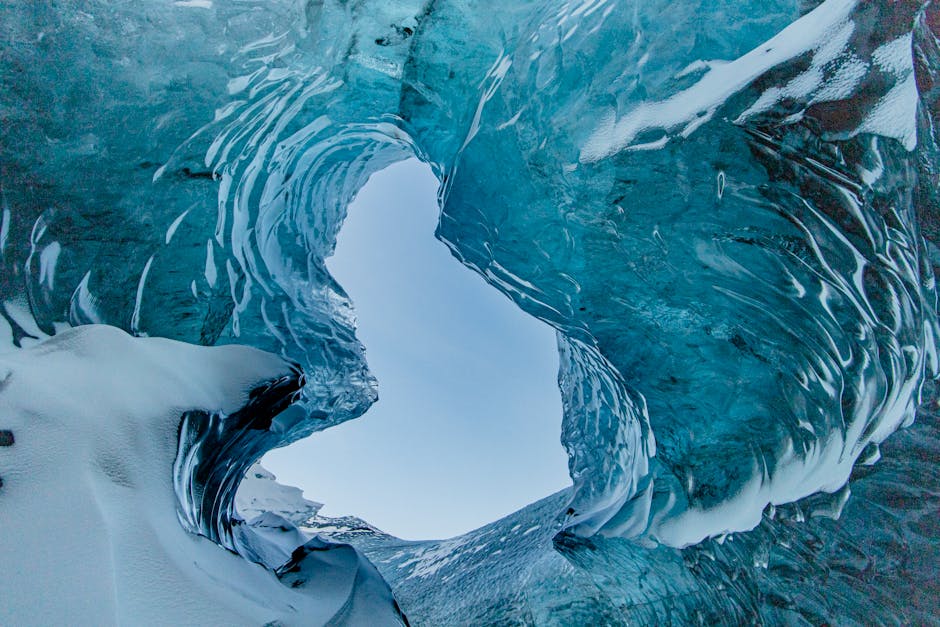
Antarctica stands as Earth's most extreme and enigmatic continent, a vast frozen wilderness that continues to captivate scientists, explorers, and geography enthusiasts alike. This remote landmass at the bottom of our planet holds secrets that challenge our understanding of climate, biology, geology, and human endurance. From its staggering ice sheets to its surprising ecosystems, Antarctica defies expectations at every turn. The following remarkable facts reveal why this continent remains one of the most fascinating places on Earth.

The Southern Ice Giant

1. The World's Largest Desert

Contrary to popular belief, Antarctica qualifies as the world's largest desert. While most people associate deserts with scorching heat and sand dunes, the technical definition of a desert depends on precipitation levels, not temperature. Antarctica receives less than two inches of precipitation annually in its interior regions, making it drier than the Sahara. This polar desert spans approximately 5.5 million square miles, containing about 90% of the world's ice and 70% of its fresh water—all locked in frozen form. The extreme cold prevents moisture from accumulating in the atmosphere, creating one of the driest environments on the planet.

2. A Continent Without a Native Population

Antarctica holds the unique distinction of being the only continent without an indigenous human population or permanent residents. While research stations host between 1,000 to 5,000 people depending on the season, no one has ever been born and raised on this continent throughout history. The extreme conditions—with temperatures plummeting to -128.6°F (-89.2°C)—make permanent settlement virtually impossible without substantial technological support. The Antarctic Treaty of 1959 further ensures that the continent remains dedicated to peaceful scientific research rather than territorial claims or commercial exploitation.

3. The Ice Sheet Time Capsule

Antarctica's ice sheet serves as a remarkable archive of Earth's atmospheric history. Scientists have drilled ice cores reaching depths of over two miles, extracting samples that contain air bubbles trapped up to 800,000 years ago. These ancient air pockets provide invaluable data about past climate conditions, atmospheric composition, and global temperature fluctuations. By analyzing these cores, researchers have reconstructed detailed climate records that help predict future environmental changes and understand the long-term patterns of our planet's climate system.

Geological and Geographical Wonders

4. Hidden Mountain Ranges and Subglacial Lakes

Beneath Antarctica's thick ice sheet lies a hidden landscape of mountains, valleys, and over 400 known subglacial lakes. Lake Vostok, the largest of these hidden bodies of water, sits beneath 2.5 miles of ice and contains liquid water that has been isolated from the rest of Earth's biosphere for millions of years. This massive lake spans an area similar to Lake Ontario and may harbor unique microbial life forms that have evolved in complete darkness and isolation. These discoveries have revolutionized our understanding of where life can exist and have implications for the search for extraterrestrial life on ice-covered moons.

5. The Driest Valley on Earth

The McMurdo Dry Valleys represent one of Antarctica's most bizarre features. These valleys have seen no rainfall for nearly two million years, making them the driest location on Earth. Strong winds, reaching up to 200 miles per hour, evaporate all moisture and prevent ice accumulation, creating a landscape that closely resembles the surface of Mars. NASA has used these valleys as testing grounds for Mars missions, and scientists study their unique microorganisms to understand how life might survive in extreme extraterrestrial environments.

Extraordinary Wildlife and Ecosystems

6. Thriving Marine Life in Frozen Waters

Despite surface conditions that seem incompatible with life, Antarctic waters teem with biodiversity. The Southern Ocean surrounding Antarctica hosts an incredibly productive ecosystem, supported by nutrient-rich currents and abundant krill populations. These tiny crustaceans form the foundation of the food web, sustaining whales, seals, penguins, and numerous fish species. Some Antarctic fish have evolved antifreeze proteins in their blood, allowing them to survive in waters that would freeze ordinary fish solid. The continent's coastal regions support breeding colonies of millions of penguins, including the iconic Emperor penguin, which endures the harshest breeding conditions of any bird on Earth.

7. The Ozone Hole Discovery Site

Antarctica plays a crucial role in atmospheric science, particularly regarding the ozone layer. British scientists working at Halley Research Station first discovered the Antarctic ozone hole in 1985, revealing severe seasonal depletion of stratospheric ozone above the continent. This discovery led to the Montreal Protocol, one of the most successful international environmental agreements, which phased out ozone-depleting substances. The unique atmospheric conditions over Antarctica, including extreme cold and polar stratospheric clouds, create the perfect environment for studying atmospheric chemistry and monitoring the recovery of the ozone layer.

Climate and Environmental Significance

8. The Global Climate Regulator

Antarctica functions as Earth's climate regulator, influencing global weather patterns, ocean currents, and sea levels. The Antarctic Circumpolar Current, the world's largest ocean current, flows clockwise around the continent and connects the Atlantic, Pacific, and Indian Oceans. This current helps distribute heat around the planet and drives deep ocean circulation patterns. The continent's brilliant white ice reflects solar radiation back into space, helping to cool the planet. If Antarctica's ice sheet were to melt completely, global sea levels would rise by approximately 200 feet, fundamentally reshaping coastlines worldwide.

9. Meteorite Collection Hotspot

Antarctica serves as the world's best location for finding meteorites. The continent's white ice surface makes dark meteorites easy to spot, while the cold, dry conditions preserve them exceptionally well. Glacial movements concentrate meteorites in specific areas, creating natural collection zones. Scientists have recovered over 40,000 meteorite specimens from Antarctica, including rare Martian and lunar meteorites. These cosmic samples provide crucial insights into the formation of our solar system and the composition of other planetary bodies, making Antarctica an invaluable laboratory for planetary science.

10. The Coldest Temperature Ever Recorded

Antarctica holds the record for the coldest temperature ever measured on Earth's surface. The Russian Vostok Station recorded -128.6°F (-89.2°C) on July 21, 1983. More recently, satellite data revealed even colder temperatures in small pockets along the East Antarctic Ice Sheet, with readings reaching -144°F (-98°C). At these extreme temperatures, exposed skin freezes in seconds, fuel becomes gel-like, and metals become brittle and shatter. These conditions push the boundaries of what life and technology can endure, making Antarctica the ultimate testing ground for extreme-environment engineering and survival strategies.

The Frozen Frontier

Antarctica continues to reveal surprising discoveries that reshape our understanding of Earth's systems and history. From its role as a climate archive to its hidden ecosystems and geological mysteries, this frozen continent demonstrates that even in the most inhospitable environments, our planet harbors extraordinary phenomena. As climate change accelerates, Antarctica's importance grows, serving as both an early warning system for global environmental shifts and a reminder of nature's power and fragility. The continent's protection through international cooperation represents humanity's commitment to preserving Earth's last great wilderness for scientific discovery and future generations.

12 Fun Facts About the History of Football

12 Fun Facts About the History of Football

⏱️ 8 min read

Football, known as soccer in some parts of the world, stands as the planet's most beloved sport, captivating billions of fans across every continent. Yet behind the modern spectacle of packed stadiums and billion-dollar transfers lies a rich tapestry of surprising origins, peculiar rules, and remarkable evolutionary moments. The journey from ancient ball games to today's global phenomenon is filled with fascinating twists that even dedicated fans might not know.

The Ancient Origins and Modern Evolution

1. Medieval Football Was a Chaotic Village Battle

Long before organized leagues and referees, medieval England practiced a form of football that resembled organized chaos more than sport. Entire villages would compete against neighboring towns in matches that involved hundreds of participants, with goals sometimes miles apart. These brutal contests had virtually no rules, allowing players to kick, punch, and wrestle the ball—often an inflated pig's bladder—across fields, through streams, and even into opponents' homes. Injuries were common, and the mayhem grew so disruptive that multiple English kings, including Edward II in 1314 and Richard II in 1389, actually banned the game, fearing it distracted men from archery practice needed for military defense.

2. Public Schools Created the First Official Rules

The transformation from mob football to the modern game began in England's elite public schools during the 1800s. Each institution developed its own version, creating confusion when schools competed against one another. Some allowed handling the ball, while others forbade it entirely. This chaos prompted representatives from multiple schools to meet at Cambridge University in 1848, producing the "Cambridge Rules"—the first serious attempt to standardize football. These rules laid the groundwork for the Football Association's formation in 1863, when clubs finally agreed on a unified code that prohibited carrying the ball with hands, effectively creating the split between football and rugby.

3. The First International Match Featured Two British Teams

When England faced Scotland in 1872 in what's recognized as the first official international football match, both teams were essentially representing the same island nation. Played at the West of Scotland Cricket Club in Partick, the match ended in a 0-0 draw before approximately 4,000 spectators. Each team fielded eleven players, establishing the standard that continues today. Remarkably, the match was played with virtually no rules about offside positioning, defensive organization, or tactical formations—concepts that would develop over subsequent decades.

Revolutionary Changes to the Game

4. Goalkeepers Could Originally Handle the Ball Anywhere

Modern fans might be shocked to learn that until 1912, goalkeepers enjoyed the privilege of handling the ball anywhere in their own half of the pitch. This extraordinary advantage meant a keeper could literally catch or pick up the ball near the halfway line, making attacking play significantly more challenging. The rule was eventually restricted to the penalty area, fundamentally changing the game's dynamics and opening up more offensive possibilities. Further restrictions came in 1992 when FIFA banned goalkeepers from handling deliberate back-passes from teammates, a change that revolutionized defensive play and increased the game's tempo.

5. The Penalty Kick Was Invented After a Deliberate Foul

The penalty kick, one of football's most dramatic moments, was introduced in 1891 following a controversial incident. During an FA Cup quarter-final, a Notts County defender deliberately punched the ball off the goal line to prevent a certain goal. While the defending team was penalized with an indirect free kick, the attacking side still couldn't score, prompting widespread outrage. Irish businessman William McCrum proposed the penalty kick as a solution—a direct shot from twelve yards with only the goalkeeper to beat. Initially derided as "a death penalty" and contrary to football's gentlemanly spirit, it became an essential element of the sport.

6. Red and Yellow Cards Weren't Always Part of Football

For over a century, football operated without the now-iconic colored card system. Referees communicated disciplinary decisions verbally, often creating confusion in international matches where language barriers existed. English referee Ken Aston conceived the card system after the chaotic 1966 World Cup quarter-final between England and Argentina, where communication breakdowns led to controversies. Inspired by traffic lights while sitting at a London intersection, Aston developed the yellow card for cautions and red card for dismissals. FIFA officially introduced the system at the 1970 World Cup in Mexico, and it has since become universal across football and many other sports.

Global Expansion and Cultural Impact

7. The World Cup Trophy Was Stolen and Found by a Dog

In one of sport's strangest stories, the Jules Rimet Trophy was stolen in March 1966, just months before England hosted the World Cup. The solid gold trophy vanished during a public exhibition in London, triggering a massive police investigation and national embarrassment. Seven days later, a dog named Pickles discovered the trophy wrapped in newspaper while sniffing around bushes in South London during a walk with his owner. Pickles became a national hero, appearing on television and receiving a year's supply of dog food, while his owner collected reward money. The trophy was stolen again in 1983 from the Brazilian Football Confederation and has never been recovered, likely melted down for its gold content.

8. Women's Football Was Once Banned for Fifty Years

During World War I, women's football flourished in England as women filled factory jobs and formed workplace teams. Dick, Kerr's Ladies FC regularly attracted crowds exceeding 50,000 spectators, sometimes outdrawing men's matches. However, in 1921, the Football Association banned women from playing at FA-affiliated grounds, citing dubious medical claims that football was "quite unsuitable for females." This devastating decision effectively killed the women's game's momentum in England for decades. The ban wasn't lifted until 1971, setting women's football back by half a century. Despite this setback, women's football has experienced remarkable growth in recent decades, with the 2019 Women's World Cup attracting over one billion television viewers worldwide.

9. The Fastest Goal in History Took Just Two Seconds

While FIFA doesn't maintain official records for the fastest goal, numerous claims exist for strikes scored within seconds of kickoff. In 2011, Nawaf Al-Abed of Saudi Arabia reportedly scored after just two seconds for Al-Hilal, though verification remains disputed. What's certain is that several goals have been scored within the first five seconds across various leagues worldwide, typically occurring when teams execute rehearsed kickoff routines that exploit defensive positioning. These lightning-quick strikes demonstrate how even seemingly routine moments contain possibilities for extraordinary achievement.

Unique Historical Milestones

10. A Match Once Lasted Three and a Half Hours

The longest football match in history occurred during the 1946 FA Cup tie between Stockport County and Doncaster Rovers. Played in thick fog, the match was eventually abandoned after 203 minutes of play—over three hours—with the score at 2-2. The referee finally called off the match when visibility became so poor that players couldn't see across the pitch. Before modern floodlights and strict weather protocols, such extended matches occasionally occurred when officials were reluctant to abandon games, sometimes continuing play despite deteriorating conditions that would immediately halt modern matches.

11. The Offside Rule Has Changed Dramatically

Football's offside rule has undergone numerous revisions that fundamentally altered tactics and scoring. Originally, players were offside if they were ahead of the ball when it was played forward—similar to rugby. By 1925, the rule required only two defenders between an attacker and the goal line, down from three, leading to an immediate surge in scoring across leagues. The change was necessitated by defensive tactics that had become so effective they were strangling the game's entertainment value. More recently, modifications clarified that players in offside positions don't commit an offense unless actively involved in play, encouraging more attacking football and higher-scoring matches.

12. Football Stopped Wars and Started Them

Football's cultural power has occasionally transcended sport into geopolitics with dramatic consequences. The famous Christmas Truce of 1914 saw British and German soldiers emerge from World War I trenches to play impromptu football matches in no-man's land, temporarily humanizing enemies in the midst of industrial warfare. Conversely, the 1969 "Football War" between El Salvador and Honduras was partly triggered by violence surrounding World Cup qualifying matches, though deeper economic and social tensions were the true causes. This brief conflict resulted in thousands of casualties, demonstrating how football could inflame rather than calm international tensions when combined with underlying political instability.

The Beautiful Game's Enduring Legacy

These twelve fascinating facts reveal how football evolved from chaotic medieval contests into the sophisticated global phenomenon we recognize today. The sport's history encompasses bizarre rule changes, remarkable individual moments, cultural significance, and occasionally controversial episodes that shaped its development. From goalkeepers who once roamed freely across half the pitch to penalty kicks invented after cynical fouls, from stolen trophies found by dogs to women banned from playing for half a century, football's past is as dramatic as any match played today. Understanding these historical curiosities enriches appreciation for the modern game, reminding us that football's rules, traditions, and cultural impact resulted from countless decisions, accidents, and innovations across generations. As the sport continues evolving with video assistant referees and tactical innovations, future generations will undoubtedly look back at today's game with similar fascination, discovering their own surprising facts about football's never-ending story.