









1 / 10 Questions
0 Points

What lawn game uses mallets to hit balls through hoops?

Bocce

Horseshoes

Lawn Bowling

Croquet

Points won
0
Correct score
0%

More Questions

More Articles

10 Fun Facts About the History of Writing

10 Fun Facts About the History of Writing

⏱️ 6 min read

The evolution of writing represents one of humanity's most transformative achievements, fundamentally changing how we communicate, preserve knowledge, and understand our world. From ancient clay tablets to digital screens, the journey of written language spans thousands of years and countless innovations. The following fascinating facts reveal surprising truths about how writing systems developed, spread, and shaped civilizations across the globe.

Ancient Mesopotamian Accountants Invented Writing

Contrary to popular belief, writing wasn't invented to record epic poetry or religious texts. The earliest known writing system, cuneiform, emerged in ancient Mesopotamia around 3400 BCE primarily for accounting purposes. Sumerian merchants and temple administrators needed a reliable method to track grain supplies, livestock, and trade transactions. These early accountants pressed wedge-shaped marks into wet clay tablets using reed styluses, creating the world's first written records. What began as simple pictographs representing commodities gradually evolved into a sophisticated system capable of expressing complex ideas, laws, and literature.

The Rosetta Stone Was Ancient Egypt's Translation Key

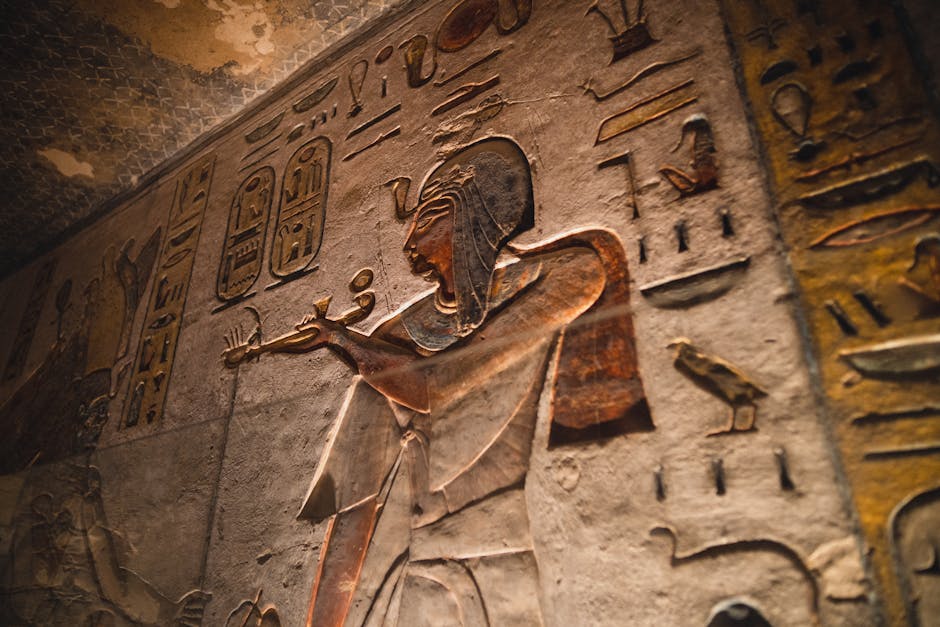
Discovered in 1799 by French soldiers in Egypt, the Rosetta Stone became the crucial breakthrough in deciphering Egyptian hieroglyphics after centuries of mystery. This granodiorite stele contained the same decree written in three scripts: ancient Greek, Demotic, and hieroglyphic Egyptian. Since scholars could read ancient Greek, they used it as a reference to unlock the meaning of hieroglyphics. French scholar Jean-François Champollion finally cracked the code in 1822, revealing that hieroglyphics combined logographic and alphabetic elements. This discovery opened the door to understanding three thousand years of Egyptian civilization that had been locked away in undecipherable texts.

Chinese Characters Have Remained Remarkably Stable for Millennia

The Chinese writing system boasts an extraordinary continuity spanning over three thousand years. Oracle bone inscriptions from the Shang Dynasty (1600-1046 BCE) show recognizable ancestors of modern Chinese characters. Unlike alphabetic systems that have undergone radical transformations, many Chinese characters retain visual connections to their ancient forms. This stability has allowed Chinese scholars to read texts written centuries or even millennia ago, creating an unbroken cultural and literary tradition. The system's complexity, containing tens of thousands of characters, has also influenced neighboring cultures, with Japan, Korea, and Vietnam historically adopting Chinese characters for their own writing systems.

The Alphabet Originated from Egyptian Workers, Not Scholars

The alphabetic writing system that most of the world uses today didn't originate in palaces or temples but among Semitic workers in Egyptian turquoise mines around 1800 BCE. These laborers, familiar with Egyptian hieroglyphics but seeking a simpler system, created the first alphabet by adapting Egyptian symbols to represent individual sounds in their own language. This Proto-Sinaitic script contained roughly 30 characters, dramatically fewer than the hundreds of symbols in Egyptian or cuneiform writing. This revolutionary simplification made literacy accessible beyond elite scribes, eventually evolving into the Phoenician alphabet, which became the ancestor of Greek, Latin, Arabic, and Hebrew scripts.

Medieval Manuscripts Used Bizarre Ingredients

Creating manuscripts in medieval Europe involved ingredients that would shock modern readers. Black ink was often made from oak galls—abnormal growths on trees caused by wasp larvae—mixed with iron salts and gum arabic. Red ink for decorative initials came from cinnabar, a toxic mercury compound. Even more surprisingly, manuscript pages themselves were made from animal skins. A single Bible could require the hides of 300 sheep or calves, making books extraordinarily expensive. Some medieval scribes added bizarre ingredients to their inks, including egg whites, wine, and even earwax, believing these substances improved the ink's quality or durability.

The Printing Press Sparked Religious Revolution

Johannes Gutenberg's movable type printing press, invented around 1440, didn't just revolutionize book production—it fundamentally altered religious and political power structures. Before the printing press, hand-copied Bibles were so expensive that only institutions could afford them, giving the Church control over scriptural interpretation. The press enabled mass production of Bibles in vernacular languages, allowing ordinary people to read scripture themselves. This accessibility directly fueled the Protestant Reformation, as Martin Luther's writings spread across Europe with unprecedented speed. Within 50 years of the printing press's invention, millions of books had been printed, compared to the thousands of manuscripts produced in previous centuries.

Cherokee Invented Their Writing System in Twelve Years

One of history's most remarkable linguistic achievements occurred in the early 19th century when Sequoyah, a Cherokee silversmith, single-handedly created a complete writing system for his language. Between 1809 and 1821, without being literate in any language, he developed a syllabary of 85 characters representing all syllables in Cherokee. Unlike alphabets developed over centuries, Sequoyah's system was deliberately designed and implemented within his lifetime. The Cherokee Nation adopted it enthusiastically, achieving widespread literacy within years. By 1828, the Cherokee Phoenix newspaper was publishing in both Cherokee and English, demonstrating how quickly a motivated community could adopt a new writing system.

Ancient Libraries Used Unconventional Organization Systems

The famous Library of Alexandria and other ancient repositories organized texts in ways that seem bizarre by modern standards. Without standardized titles or author names, libraries often catalogued works by their opening lines. Scrolls were stored in pigeonholes or shelved horizontally in pottery jars, with small tags indicating contents. The transition from scrolls to codices (bound books) in the early Christian era revolutionized library organization, making texts easier to store, reference, and locate. This format change also enabled the creation of page numbers and indexes, fundamentally transforming how people accessed and organized written knowledge.

Shorthand Systems Saved Historical Speeches

Many famous ancient speeches survive today only because of skilled shorthand writers who recorded them in real-time. The Roman system of shorthand, called Tironian notes after its inventor Tiro (Cicero's secretary), used approximately 4,000 symbols to rapidly transcribe speech. Without these systems, we would have lost countless philosophical debates, political speeches, and legal proceedings from antiquity. Medieval monks continued using shorthand variations to record sermons and scholarly disputations. These abbreviated writing systems remained crucial for journalism and court reporting until audio recording technology emerged, preserving centuries of spoken words that would otherwise have vanished.

Typewriters Changed Writing Style Forever

The typewriter's invention in the 1870s didn't just mechanize writing—it fundamentally altered prose style and business communication. The physical effort of typing encouraged shorter sentences and more direct language compared to the flowing, elaborate prose of the handwritten era. The typewriter also standardized document formatting, introducing conventions like double-spacing and uniform margins. Perhaps most significantly, typewriters democratized professional writing, particularly for women who found employment opportunities as typists and secretaries. The QWERTY keyboard layout, designed to prevent mechanical jamming, remains standard today despite being optimized for 19th-century technology rather than human efficiency.

Conclusion

The history of writing reveals unexpected connections between technology, society, and human expression. From Sumerian accountants tracking grain to Cherokee scholars creating new alphabets, written language has continuously evolved to meet human needs. Each innovation—whether clay tablets, alphabets, printing presses, or typewriters—transformed not just how we write, but how we think, organize societies, and preserve culture. Understanding these historical developments enriches our appreciation of the written word and reminds us that even our most fundamental communication tools have fascinating, often surprising origins. As we navigate the digital age, we continue this ancient tradition of adapting writing technologies to serve human creativity and connection.
17 Mind-Blowing Facts About Ancient Greece

17 Mind-Blowing Facts About Ancient Greece

⏱️ 7 min read

Ancient Greece stands as one of history's most influential civilizations, laying the groundwork for Western philosophy, democracy, science, and culture. While many people know about famous figures like Socrates and Alexander the Great, the depth and complexity of Greek civilization extends far beyond common knowledge. From surprising social customs to revolutionary inventions, the ancient Greeks developed practices and ideas that continue to astound modern scholars and historians.

Remarkable Discoveries About Ancient Greek Civilization

1. Democracy Was More Direct Than Modern Systems

Ancient Athenian democracy functioned in a radically different way from contemporary democratic systems. Rather than electing representatives, citizens participated directly in governmental decisions. The Assembly, or Ekklesia, met approximately 40 times per year, and any male citizen could attend, speak, and vote on legislation. Additionally, most public officials were selected by lottery rather than election, as the Greeks believed random selection prevented corruption and ensured equal opportunity for participation in governance.

2. The Olympic Games Included Unusual Events

While modern Olympics feature familiar sports, ancient Greek games contained events that would seem bizarre today. The pankration combined elements of boxing and wrestling with almost no rules—only biting and eye-gouging were prohibited. Another event, the hoplitodromos, required athletes to run wearing full military armor weighing up to 50 pounds. Athletes competed completely naked, and married women were forbidden from attending under penalty of death.

3. Greek Fire Was an Ancient Superweapon

The Byzantine Greeks developed an incendiary weapon so effective and secretive that its exact composition remains unknown today. Greek fire could burn on water, making it devastating in naval warfare. The substance was sprayed through siphons mounted on ships, creating walls of flame that terrorized enemies. The formula was such a closely guarded state secret that it was eventually lost to history entirely.

4. Ancient Greeks Invented the First Computer

The Antikythera mechanism, discovered in a shipwreck in 1901, dates to approximately 100 BCE and represents an ancient analog computer of stunning sophistication. This bronze device contained at least 30 meshing gears and could predict astronomical positions, eclipses, and the timing of the Olympic Games years in advance. Its technological complexity wouldn't be matched for over a thousand years, and scientists continue studying it to understand its full capabilities.

5. Sparta's Military Training Began at Birth

The Spartan agoge system represented one of history's most extreme military training programs. Newborn boys were inspected by elders, and those deemed weak were abandoned on mountaintops. At age seven, accepted boys were removed from their families to begin brutal military education. Training included deliberate undernourishment to encourage stealing, barefoot marching, minimal clothing in all weather, and ritualized combat. This system created history's most feared warriors but at tremendous human cost.

6. Women Had More Rights in Sparta Than Athens

While Athenian women lived under strict patriarchal control with limited rights and freedoms, Spartan women enjoyed remarkable autonomy. They could own and inherit property, received physical education, and managed estates while men served in the military. Spartan women were literate, could speak freely in public, and exercised considerably more influence over family and social decisions than their Athenian counterparts.

7. The Greeks Practiced Ostracism as Political Policy

Ancient Athens employed a unique democratic mechanism called ostracism to prevent tyranny. Once yearly, citizens could vote to exile any person for ten years without trial or confiscation of property. Voters scratched names onto pottery shards called ostraka, and if any individual received 6,000 votes, they had ten days to leave Athens. This system removed potentially dangerous political figures while avoiding the violence of execution or permanent banishment.

8. Ancient Greeks Had Sophisticated Plumbing Systems

The Palace of Knossos in Crete featured remarkably advanced plumbing installed around 1700 BCE. The complex included flush toilets, running water, bathtubs, and an intricate sewage system with terra-cotta pipes. Hot and cold water systems existed in wealthy homes, and aqueducts transported water across vast distances. Some Greek cities had better sanitation infrastructure than many European cities would possess two thousand years later.

9. Theater Performances Were Religious Obligations

Greek theater emerged from religious festivals honoring Dionysus, the god of wine and ecstasy. Attending dramatic performances wasn't merely entertainment but a civic and religious duty. The state provided financial assistance so even poor citizens could attend. These massive productions featured elaborate masks, mechanical devices for special effects, and could accommodate audiences of up to 15,000 people in enormous open-air amphitheaters with acoustics so precise that whispers on stage could be heard in the back rows.

10. Greeks Calculated Earth's Circumference with Remarkable Accuracy

Around 240 BCE, the mathematician Eratosthenes calculated Earth's circumference using only shadows, geometry, and brilliant reasoning. By measuring shadow angles in two Egyptian cities at noon on the summer solstice and knowing the distance between them, he calculated the planet's circumference at approximately 250,000 stadia—within 2-15% of the actual measurement depending on which stadium length he used. This achievement came 1,700 years before European scholars accepted that Earth was round.

11. Ancient Greek Medicine Was Surprisingly Advanced

Greek physicians like Hippocrates revolutionized medicine by rejecting supernatural explanations for disease and seeking natural causes instead. Greek doctors performed successful cataract surgeries, used antiseptics, understood the importance of diet and exercise, and documented detailed case studies. The Hippocratic Oath's ethical principles still guide medical practice today. Greek anatomical knowledge, gained partly through Alexandria's controversial human dissections, wouldn't be surpassed until the Renaissance.

12. Philosophers Were Celebrity Athletes

Several famous Greek philosophers were accomplished athletes who competed at major games. Plato's actual name was Aristocles—"Plato" was a nickname meaning "broad," possibly referring to his wrestler's physique or broad forehead. He allegedly competed at the Isthmian Games. Pythagoras won boxing competitions at the Olympic Games, combining physical prowess with mathematical genius in a way that exemplified Greek ideals of balanced excellence.

13. Greek Warships Revolutionized Naval Warfare

The trireme warship represented ancient Greece's aircraft carrier—a technological marvel that dominated Mediterranean warfare for centuries. These vessels featured three rows of oars manned by 170 rowers who could propel the ship at speeds up to 9 knots. The bronze-sheathed ram at the prow could puncture enemy hulls below the waterline. Trireme crews trained extensively to execute complex maneuvers, and Athens maintained a fleet of over 300 such vessels at its peak.

14. Ancient Greeks Pioneered Modern Philosophy

Greek philosophers established foundational questions and methodologies that define Western philosophy today. Socrates developed the Socratic method of questioning to expose contradictions and stimulate critical thinking. Plato explored ethics, politics, and metaphysics through his Theory of Forms. Aristotle created formal logic, studied natural sciences systematically, and established principles of dramatic structure. Their works remain required reading in philosophy departments worldwide, demonstrating ideas' timeless relevance conceived over two millennia ago.

15. Greek Mathematics Laid Modern Foundations

Ancient Greek mathematicians made discoveries that underpin modern science and technology. Euclid's "Elements" systematized geometry in a way still taught today. Pythagoras established mathematical relationships in music and geometry. Archimedes calculated pi, invented calculus concepts, and discovered principles of buoyancy and leverage. Greek mathematical rigor—proving theorems through logical deduction rather than empirical observation—established standards for mathematical proof that remain unchanged.

16. Food and Dining Had Strict Social Rules

Greek dining customs, particularly the symposium, followed elaborate protocols. These male-only drinking parties featured intellectual discussions, poetry, music, and philosophical debate. Wine was always diluted with water—drinking it straight marked someone as barbaric. Guests reclined on couches, and social hierarchy determined positioning. The symposium served as an important venue for political networking, artistic performance, and the transmission of cultural values among the elite.

17. Greek Colonies Spread Across Three Continents

Ancient Greeks established colonies throughout the Mediterranean and Black Sea regions, from Spain to the Crimea, from North Africa to southern France. These weren't imperial conquests but independent city-states maintaining cultural and trade connections with their mother cities. Greek colonies spread Hellenic culture, language, and customs across vast territories. Major cities like Marseille, Naples, and Byzantium (Istanbul) began as Greek colonies, demonstrating the civilization's extraordinary geographic and cultural reach.

The Enduring Legacy of Ancient Greece

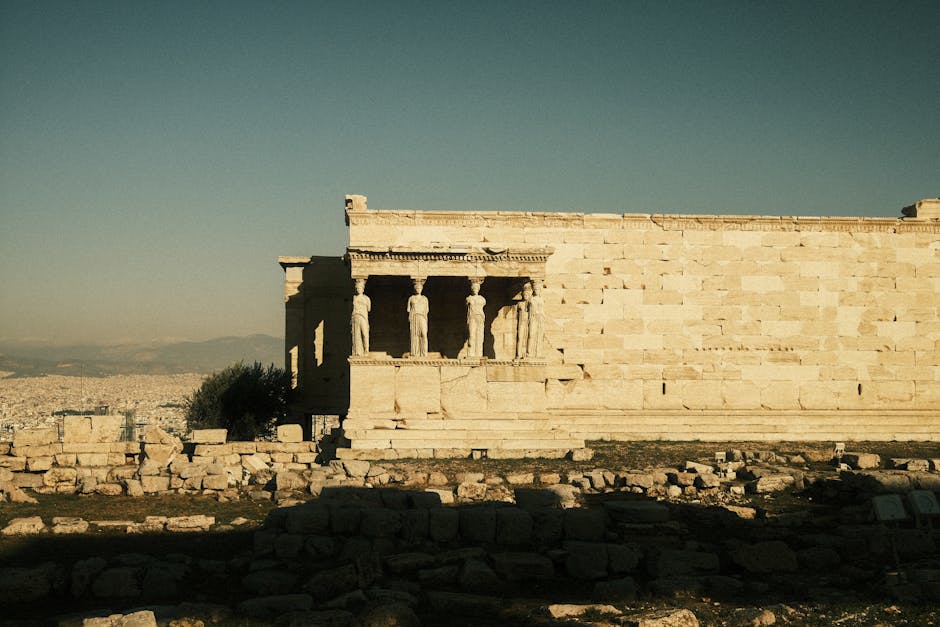
These seventeen remarkable facts merely scratch the surface of ancient Greek civilization's complexity and innovation. From governmental systems to scientific discoveries, from military tactics to philosophical inquiry, the Greeks pioneered developments that shaped human history. Their achievements in democracy, mathematics, medicine, engineering, and the arts established foundations upon which later civilizations built. The ancient Greeks proved that human creativity, reason, and ambition could transform the world—a lesson that resonates just as powerfully today as it did thousands of years ago in the shadow of the Acropolis.