








1 / 10 Questions
0 Points

What is the term for a baby kangaroo?

Joey

Pup

Cub

Calf

Points won
0
Correct score
0%

More Questions

More Articles

10 Amazing Facts About American Presidents

10 Amazing Facts About American Presidents

⏱️ 7 min read

The American presidency stands as one of the most fascinating institutions in modern political history. Throughout more than two centuries, 46 presidents have led the United States, each bringing their own unique quirks, accomplishments, and surprises to the office. From unexpected career paths to remarkable personal achievements, the men who have occupied the Oval Office have left behind a treasure trove of intriguing stories that often go untold in standard history books. These lesser-known facts reveal the human side of leadership and demonstrate that even the most powerful position in the world has been held by individuals with extraordinary and sometimes surprising backgrounds.

Remarkable Presidential Trivia

1. Thomas Jefferson's Mammoth Cheese Gift

In 1802, President Thomas Jefferson received one of the most unusual gifts ever presented to a sitting president: a 1,235-pound block of cheese. Created by Baptist elder John Leland and his Massachusetts congregation, this massive dairy product was dubbed the "Mammoth Cheese." The cheese wheel measured four feet in diameter and required the milk from 900 cows to produce. Jefferson displayed the enormous cheese in the East Room of the White House for visitors to admire, and it took more than a year for the president and his guests to consume it entirely. This bizarre gift symbolized democratic principles, as every participant in its creation contributed equally, regardless of their social status.

2. George Washington's Incredible Physical Strength

The nation's first president was not only a skilled military leader but also possessed remarkable physical prowess. George Washington stood approximately 6'2" tall, making him considerably taller than the average man of his era. According to historical accounts, Washington could throw a stone across the Rappahannock River, a feat requiring extraordinary arm strength. He was also known for his ability to crush walnuts between his thumb and forefinger. Despite popular belief, Washington never had wooden teeth; his dentures were actually crafted from materials including human teeth, animal teeth, and ivory, held together with metal springs and fasteners.

3. Abraham Lincoln's Wrestling Championship Status

Before becoming one of America's most revered presidents, Abraham Lincoln earned recognition as an accomplished wrestler. During his youth in New Salem, Illinois, Lincoln participated in approximately 300 wrestling matches and lost only one. His reputation as a formidable grappler was so well-established that he was eventually inducted into the National Wrestling Hall of Fame in 1992. Standing 6'4" with long limbs and unusual strength, Lincoln's wrestling prowess helped establish his reputation for physical courage and determination, qualities that would serve him well during the Civil War.

4. The Patent-Holding President

Abraham Lincoln holds another unique distinction among American presidents: he remains the only president to hold a patent. In 1849, Lincoln received Patent No. 6,469 for a device designed to lift boats over shoals and other obstacles in shallow water. The invention featured adjustable buoyant chambers that could be expanded when needed to lift vessels. Although Lincoln's invention never achieved commercial success, it demonstrated his mechanical aptitude and innovative thinking. The patent model he created is now displayed at the Smithsonian Institution, representing his unique contribution to American innovation.

5. Theodore Roosevelt's Blindness While in Office

Theodore Roosevelt, known for his robust "rough rider" image, suffered a serious injury that few Americans knew about during his presidency. In 1904, while boxing with a military aide in the White House, Roosevelt took a punch to his left eye that detached his retina. The injury eventually left him completely blind in that eye, though he kept this disability secret from the public for years. Despite this handicap, Roosevelt continued his physically demanding lifestyle, including his famous expedition to explore the River of Doubt in Brazil after leaving office, demonstrating remarkable resilience in the face of personal adversity.

6. John Quincy Adams's Daily Swimming Ritual

The sixth president of the United States maintained an unusual daily routine that would seem shocking by modern security standards. John Quincy Adams regularly swam naked in the Potomac River at 5 a.m., considering it essential exercise for maintaining his health. Legend has it that Anne Royall, one of America's first female journalists, once sat on his clothes on the riverbank and refused to leave until he granted her an interview, making it potentially the first presidential interview conducted with the chief executive in such a vulnerable position. Adams was also an avid reader who mastered multiple languages and installed the first billiard table in the White House.

7. James Madison's Diminutive Stature

James Madison, often called the "Father of the Constitution," holds the distinction of being America's shortest president. Standing just 5'4" tall and weighing approximately 100 pounds, Madison proved that physical stature has no bearing on intellectual might or leadership capability. Despite his small frame, Madison demonstrated enormous courage during the War of 1812, becoming the only sitting president to personally witness enemy combat when he rode to Bladensburg, Maryland, during the British advance on Washington. His wife, Dolley Madison, famously saved the portrait of George Washington from the White House before British forces burned the building.

8. Woodrow Wilson's Movie Screening Innovation

Woodrow Wilson made history by hosting the first-ever movie screening at the White House in 1915. The film was "The Birth of a Nation," D.W. Griffith's controversial epic about the Civil War and Reconstruction. Wilson, a former professor and president of Princeton University, allegedly said the film was "like writing history with lightning," though historians debate whether he actually made this statement. Regardless of the controversy surrounding that particular film choice, Wilson's screening established a precedent that continues today, with the White House theater remaining a fixture of presidential life and entertainment.

9. Harry Truman's Late-Life Education Achievement

Harry S. Truman remains the last U.S. president who did not earn a college degree, yet his lack of formal higher education never hindered his effectiveness as a leader. After high school, Truman worked various jobs including timekeeper for a railroad construction company, bank clerk, and farmer before serving in World War I. Despite not attending college, Truman was an voracious reader who had consumed every book in his local library by age fourteen. His self-education and practical experience prepared him to make some of the most consequential decisions in American history, including the authorization to use atomic weapons and the desegregation of the military.

10. Gerald Ford's Modeling Career

Before entering politics, Gerald Ford enjoyed a brief career as a professional fashion model. While attending Yale Law School in the 1930s, Ford helped pay his tuition by modeling for Look magazine and appearing on the cover of Cosmopolitan magazine in 1942. The athletic and photogenic Ford had been a star football player at the University of Michigan, where he helped lead his team to national championships. He received offers to play professional football from both the Detroit Lions and Green Bay Packers but chose to attend law school instead, setting himself on the path that would eventually lead to the presidency following Richard Nixon's resignation.

The Human Side of Presidential History

These remarkable facts about American presidents illustrate that the individuals who have held the nation's highest office were far more than the formal portraits and political legacies suggest. From Jefferson's mammoth cheese to Ford's modeling career, these stories humanize the presidency and remind us that great leaders come from diverse backgrounds with varied experiences. Whether through physical feats, intellectual achievements, unusual hobbies, or unexpected career paths, each president brought unique qualities to the office. Understanding these lesser-known aspects of presidential history enriches our appreciation for both the office itself and the remarkable individuals who have served in it, demonstrating that leadership takes many forms and that the presidency has always been shaped by distinctly human characteristics alongside political acumen.
Did You Know? 10 Fun Facts About Microscopic Life

Did You Know? 10 Fun Facts About Microscopic Life

⏱️ 6 min read

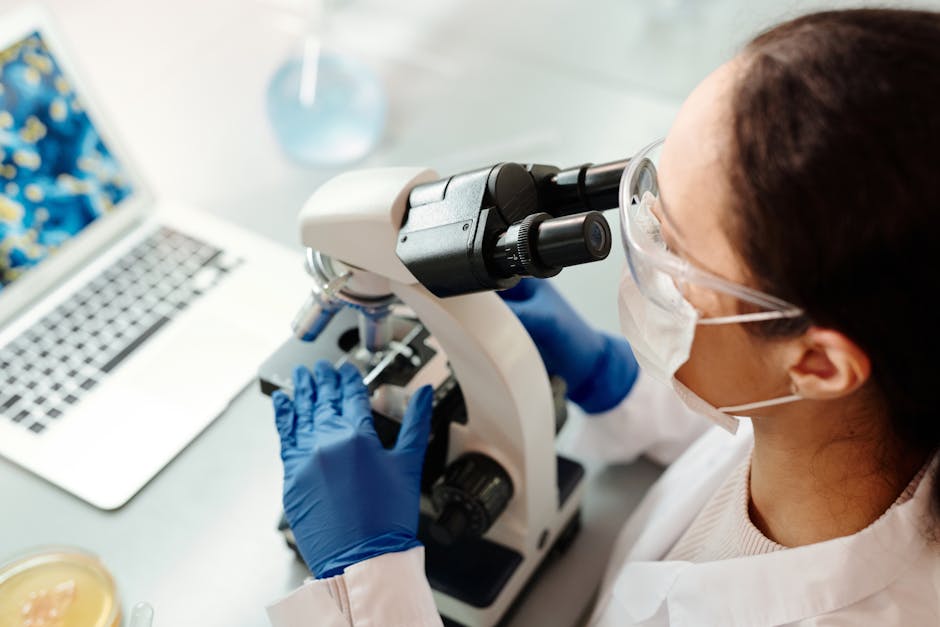
The microscopic world teems with extraordinary organisms that challenge our understanding of life itself. These tiny creatures, invisible to the naked eye, play crucial roles in maintaining Earth's ecosystems, influencing our health, and even shaping the planet's atmosphere. From bacteria that can survive in extreme environments to single-celled organisms with remarkable abilities, the realm of microscopic life is filled with surprises that reveal just how diverse and resilient life can be.

Discovering the Hidden Wonders of the Microscopic World

1. Tardigrades Can Survive in the Vacuum of Space

Tardigrades, also known as water bears or moss piglets, are microscopic animals measuring only 0.5 millimeters in length. Despite their tiny size, these eight-legged creatures are virtually indestructible. They can survive extreme temperatures ranging from near absolute zero to 300 degrees Fahrenheit, withstand pressures six times greater than those found in the deepest ocean trenches, and endure radiation levels that would kill most other organisms. Most remarkably, tardigrades have survived exposure to the vacuum of space during experiments aboard satellites. They achieve this by entering a state called cryptobiosis, where they expel almost all water from their bodies and essentially shut down their metabolism until conditions improve.

2. A Single Teaspoon of Soil Contains More Microorganisms Than People on Earth

The biodiversity beneath our feet is staggering. Just one teaspoon of healthy soil can harbor up to one billion bacteria, several yards of fungal filaments, thousands of protozoa, and dozens of nematodes. This means that a small handful of soil contains more living organisms than the entire human population of the planet. These microorganisms work together in complex networks, breaking down organic matter, cycling nutrients, and helping plants absorb water and minerals. This hidden ecosystem is essential for agriculture and the health of terrestrial environments worldwide.

3. Microbes Produce Half of Earth's Oxygen

While rainforests are often called the "lungs of the Earth," microscopic phytoplankton in the oceans deserve equal recognition. These tiny photosynthetic organisms, including cyanobacteria and algae, produce approximately 50 to 80 percent of the world's oxygen through photosynthesis. The most abundant of these is Prochlorococcus, a genus of cyanobacteria so small that millions could fit in a single drop of seawater. Despite their minuscule size, these organisms collectively have an enormous impact on Earth's atmosphere and climate, making complex life as we know it possible.

4. Some Bacteria Can Generate Electricity

Certain species of bacteria possess the remarkable ability to transfer electrons to metals and other materials, effectively generating electricity. These "electrogenic" bacteria, such as Geobacter and Shewanella species, evolved this capability to breathe in oxygen-poor environments by using metals as electron acceptors instead of oxygen. Scientists are now exploring ways to harness these microbes in microbial fuel cells that could convert organic waste into clean energy, treat wastewater, and even power small electronic devices. This discovery has opened up exciting possibilities for sustainable energy production and bioremediation.

5. The Human Body Contains More Microbial Cells Than Human Cells

Each person carries trillions of microorganisms, collectively known as the human microbiome. Recent estimates suggest that microbial cells in the human body roughly equal or slightly outnumber human cells, with the ratio hovering around 1:1. These microbes, primarily bacteria residing in the gut, play vital roles in digestion, vitamin production, immune system regulation, and even influence mood and behavior through the gut-brain axis. The combined genetic material of these microorganisms contains millions of genes, dwarfing the approximately 20,000 genes in the human genome and essentially giving us capabilities we wouldn't otherwise possess.

6. Microscopic Diatoms Create Intricate Glass Shells

Diatoms are single-celled algae that construct elaborate protective shells called frustules from silica, the same material found in glass. These microscopic artists create shells with stunning geometric patterns, featuring intricate perforations, ridges, and ornamentations that rival the finest lacework. Each of the estimated 100,000 diatom species has its own unique shell design. These silica structures are so durable that they accumulate on ocean floors over millions of years, forming diatomaceous earth, a substance used in filtration systems, polishes, and even toothpaste. The precision and complexity of diatom shells continue to inspire nanotechnology researchers.

7. Ancient Bacteria Can Revive After Millions of Years

Scientists have successfully revived bacteria that had been trapped in suspended animation for millions of years. In one extraordinary case, researchers extracted salt crystals from a New Mexico cave and discovered bacterial spores that were approximately 250 million years old. After providing the right conditions, these ancient microbes came back to life and began reproducing. This remarkable survival ability demonstrates the incredible resilience of bacterial life and raises intriguing questions about the potential for life to persist in extreme environments on other planets or moons within our solar system.

8. Bioluminescent Bacteria Light Up the Ocean

Many marine bacteria possess the ability to produce light through a chemical reaction called bioluminescence. These glowing microbes are responsible for the mesmerizing phenomenon of bioluminescent bays and the sparkling trails left by boats moving through certain waters at night. Some species form symbiotic relationships with marine animals, living in specialized organs and providing light that helps their hosts attract prey, communicate with mates, or camouflage themselves against moonlight filtering through the water. The squid-bacteria partnership is one of the most studied examples of this remarkable mutualistic relationship.

9. Microscopic Fungi Form the Internet of Plants

Beneath forests and grasslands exists an extensive underground network of microscopic fungal threads called mycorrhizae. These fungi form partnerships with plant roots, creating what scientists call the "wood wide web." Through this network, plants can share nutrients, send chemical warning signals about pest attacks, and even support their offspring or neighboring trees in need. Mother trees have been observed using these fungal networks to nurture their seedlings by sharing carbon and nutrients. This discovery has revolutionized our understanding of plant communication and forest ecology, revealing that trees are far more interconnected and cooperative than previously imagined.

10. Microbes Can Clean Up Oil Spills and Toxic Waste

Certain microorganisms possess extraordinary appetites for substances that are toxic to most life forms. Oil-eating bacteria like Alcanivorax borkumensis naturally break down petroleum hydrocarbons, making them invaluable for cleaning up oil spills. Other microbes can metabolize heavy metals, radioactive materials, and industrial pollutants. Scientists are increasingly turning to these microscopic environmental engineers for bioremediation projects, using them to clean contaminated soil and water. Some bacteria can even break down plastic, offering hope for addressing one of the most pressing environmental challenges of our time.

The Invisible Foundations of Life

These ten fascinating facts merely scratch the surface of the microscopic world's incredible diversity and importance. From producing the oxygen we breathe to maintaining the health of ecosystems and our own bodies, microscopic life forms are essential partners in Earth's web of life. Their remarkable abilities—surviving in space, generating electricity, creating intricate structures, and cleaning our environment—demonstrate that size is no measure of significance. As research technologies advance, scientists continue to discover new species and capabilities among these tiny organisms, each finding adding to our appreciation of life's complexity and resilience at the smallest scales. Understanding and protecting microscopic life is not just scientifically fascinating; it's essential for the health of our planet and our own survival.