
⏱️ 8 min read
The Vikings have long captured our imagination as fierce warriors who sailed across treacherous seas over a thousand years ago. However, beyond the popular image of horned helmets and bloodthirsty raiders lies a fascinating culture filled with surprising innovations, complex social structures, and remarkable achievements. These Norse seafarers left an indelible mark on European history that extends far beyond their reputation for conquest. Here are ten captivating facts that reveal the true complexity and ingenuity of Viking civilization.
The Truth Behind Viking Appearance and Grooming
1. Vikings Were Exceptionally Clean and Fashion-Conscious
Contrary to popular depictions of dirty, unkempt barbarians, Vikings were remarkably hygienic for their time. Archaeological evidence reveals that Vikings bathed at least once a week, which was significantly more frequent than most Europeans during the medieval period. They crafted specialized grooming tools including tweezers, razors, combs, and ear cleaners, often made from animal bones and antlers. These grooming implements were so important that they were frequently buried with their owners. Viking men took particular pride in their beards and hair, often bleaching them with a special soap that contained high levels of lye. This practice not only lightened their hair to a fashionable blonde shade but also helped kill head lice. Their dedication to personal appearance was so notable that Saxon chroniclers in England actually complained that Norse men were attracting English women because of their cleanliness and well-groomed appearances.
2. The Horned Helmet Myth Never Existed
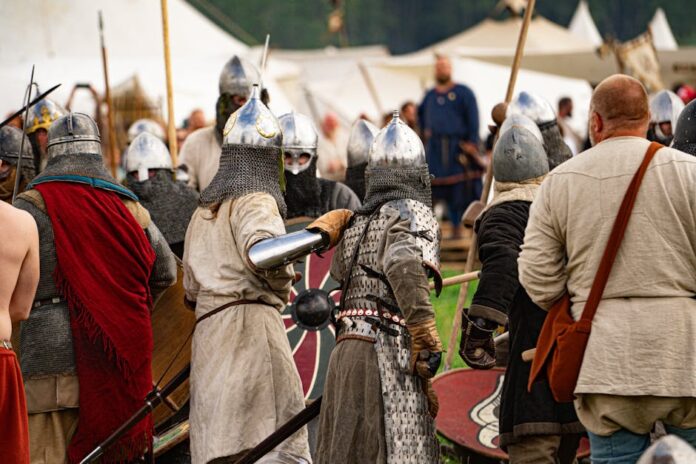
One of the most persistent misconceptions about Vikings is that they wore horned helmets into battle. In reality, there is no archaeological evidence supporting this iconic image. The few Viking helmets that have been discovered, such as the famous Gjermundbu helmet found in Norway, feature simple rounded designs made from iron, often with a nose guard for protection. Horned helmets would have been impractical in combat, providing enemies with something to grab and compromising the warrior’s safety. This myth actually originated in the 19th century when Scandinavian artists and costume designers romanticized Viking imagery for theatrical productions, particularly Wagner’s opera cycle “Der Ring des Nibelungen.” The horned helmet became permanently associated with Vikings through popular culture, despite its complete historical inaccuracy.
Viking Innovation and Exploration
3. Vikings Reached North America 500 Years Before Columbus
Long before Christopher Columbus set sail in 1492, Viking explorers had already established settlements in North America. Around the year 1000 CE, Norse explorer Leif Erikson led an expedition that reached the shores of what is now Newfoundland, Canada. The archaeological site at L’Anse aux Meadows provides concrete evidence of this Viking settlement, featuring the remains of eight Norse buildings. The Vikings called this land “Vinland,” likely due to the wild grapes they found growing there. While the settlement was ultimately abandoned after just a few years, possibly due to conflicts with indigenous peoples and the challenge of maintaining supply lines across the Atlantic, this achievement demonstrates the extraordinary seafaring capabilities of the Vikings and their willingness to venture into unknown territories.
4. Viking Ships Were Masterpieces of Engineering
The longship stands as one of the most significant technological achievements of the Viking Age. These vessels were marvels of engineering that combined speed, flexibility, and shallow draft in a way that no other European ships of the era could match. The clinker-built construction method, where overlapping planks were fastened together with iron rivets, created a hull that was both strong and flexible enough to withstand rough ocean waves. Viking ships could sail in as little as three feet of water, allowing them to navigate rivers and make surprise inland attacks. The symmetrical bow and stern design meant the ship could reverse direction without turning around, crucial for quick getaways. These ships were so well-designed that modern reconstructions have successfully crossed the Atlantic Ocean, proving that the original vessels were genuinely ocean-worthy craft.
Viking Society and Culture
5. Women Held Surprising Power and Independence
Viking women enjoyed rights and freedoms that were exceptional for medieval Europe. They could own property, request divorces, and reclaim their dowries if their marriages ended. When their husbands traveled or died, women assumed control of households and farms, making all major decisions. Some women even became wealthy merchants and traders in their own right. Archaeological evidence has revealed that a high-status Viking warrior burial in Birka, Sweden, long assumed to be male, actually contained the remains of a woman buried with a full complement of weapons and tactical gaming pieces, suggesting she may have been a warrior or military strategist. While female warriors were likely rare, their existence challenges our assumptions about rigid gender roles in Viking society.
6. Vikings Had a Democratic Assembly System
Despite their reputation for chaos and lawlessness, Vikings developed sophisticated legal and governmental systems centered around assemblies called “things.” These gatherings brought together free men to make laws, settle disputes, and make important community decisions. The Althing in Iceland, established in 930 CE, is considered one of the world’s oldest surviving parliaments. At these assemblies, even common farmers could voice opinions and vote on matters affecting their communities. While not democratic by modern standards—women, slaves, and non-landowners couldn’t participate—the thing system represented a remarkably progressive approach to governance for its time, emphasizing collective decision-making over absolute monarchy.
Daily Life and Beliefs
7. Vikings Used Unique Navigation Techniques
Without compasses or sophisticated navigation instruments, Vikings developed ingenious methods to traverse vast oceans. They used sun compasses, observed bird flight patterns, monitored wave formations, and tracked the position of stars. Perhaps most intriguingly, they may have used “sunstones”—crystals such as calcite or cordierite that can detect polarized light and locate the sun’s position even on cloudy days. Recent scientific experiments have confirmed that these crystals could indeed provide accurate navigation assistance. Vikings also memorized detailed mental maps of coastlines and ocean routes, passing this knowledge down through oral tradition. Their navigation skills were so advanced that they successfully established trade routes from Baghdad to Greenland.
8. Viking Funerals Featured Elaborate Ship Burials
The Vikings’ relationship with death and the afterlife manifested in spectacular burial practices. High-status individuals were sometimes buried in ships, surrounded by grave goods they might need in the afterlife, including weapons, tools, jewelry, food, and even sacrificed animals or slaves. The famous Oseberg ship burial in Norway contained a beautifully decorated vessel along with two women and an astonishing array of artifacts including sleds, carts, and textiles. Not all Vikings received ship burials—this honor was reserved for the elite—but even common graves often contained personal belongings. Some Vikings were cremated, with their ashes placed in urns, while others were buried in stone settings shaped like ships. These practices reflected their belief in an afterlife where warriors might feast in Valhalla or join their ancestors in other realms.
Viking Influence and Legacy
9. The Viking Alphabet Was Magical and Practical
Vikings used a writing system called runes, consisting of angular characters called the “Futhark” alphabet after its first six letters. These symbols weren’t just for communication—Vikings believed runes held magical properties and could provide protection, bring victory, or curse enemies. Runes were carved into stone monuments, wooden sticks, metal objects, and even bones. The angular design of runes made them practical for carving into hard surfaces like wood and stone. Runic inscriptions have been found across the Viking world, from Greenland to Greece, providing invaluable information about Viking travels, beliefs, and daily life. Some runes recorded epic deeds, while others contained simple messages like “Thorfast carved these runes.” These inscriptions give us direct access to Viking voices across the centuries.
10. Vikings Transformed into European Nobility
The Viking Age eventually ended not with a catastrophic defeat but through gradual assimilation and transformation. Many Viking raiders settled in the lands they once attacked, becoming farmers, merchants, and eventually noblemen. In France, Viking settlers in Normandy became so thoroughly French that their descendants conquered England in 1066 under William the Conqueror. In Russia, Swedish Vikings called the Rus founded trading settlements that evolved into major cities and eventually gave their name to the entire nation. Vikings in Ireland established Dublin as a trading center. Through intermarriage and cultural exchange, Viking DNA, customs, and words spread throughout Europe. Many English words, including “sky,” “window,” “husband,” and “knife,” derive from Old Norse, demonstrating the lasting linguistic legacy of these seafaring peoples.
Conclusion
The Vikings were far more than the one-dimensional raiders depicted in popular culture. They were skilled craftspeople, innovative engineers, intrepid explorers, shrewd traders, and developers of early democratic institutions. Their influence shaped the genetic, linguistic, and cultural landscape of Europe in ways that persist to this day. From their exceptional seafaring technology to their surprisingly progressive social structures, the Vikings demonstrated adaptability, ingenuity, and ambition that allowed them to leave a mark on history far exceeding what might be expected from the relatively small populations of Scandinavia. Understanding these fascinating facts about Viking civilization allows us to appreciate the complexity of medieval Norse culture and recognize that history is always more nuanced and interesting than simplified stereotypes suggest.